Two foreign-flagged oil tankers carrying Iraqi fuel oil erupted in flames this week after what Iraqi authorities described as an act of sabotage inside the country’s territorial waters, escalating fears over maritime security in a region already strained by rising geopolitical tensions.
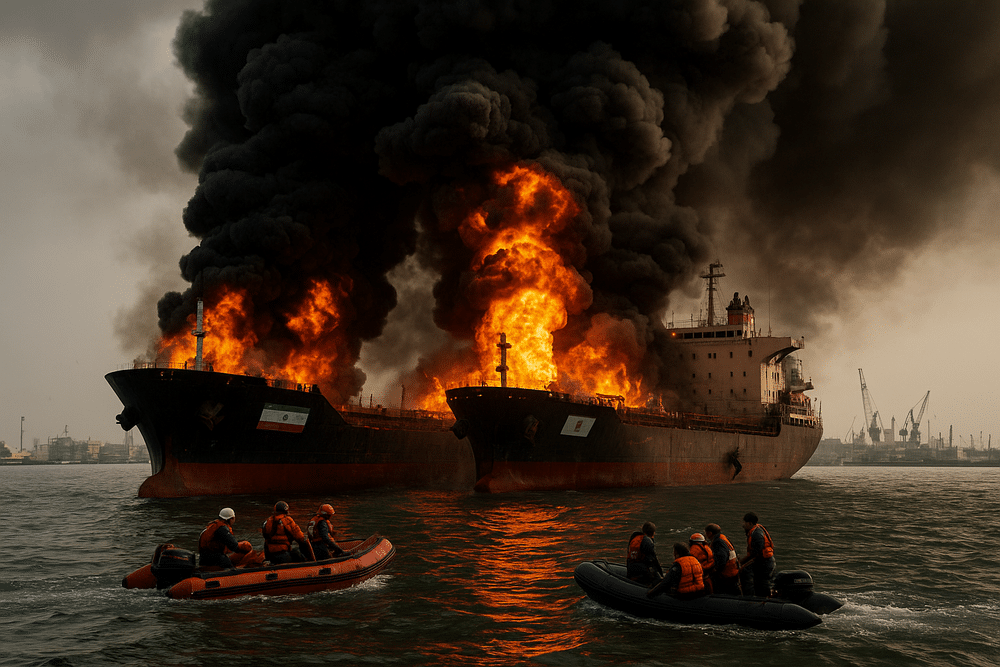
The vessels — Safesea Vishnu, flagged in the Marshall Islands, and Zefyros, flagged in Malta — were attacked between the evening of March 11 and early March 12 near the ship-to-ship loading area off Basra port in southern Iraq. Iraqi officials confirmed that both ships caught fire. One crew member was killed, and between 25 and 38 personnel were evacuated by rescue teams.
Iraq’s head of the Security Media Cell, Saad Maan, described the attack as a “cowardly act of sabotage” carried out inside Iraqi territorial waters, underscoring what Baghdad says is a breach of its sovereignty.
Fires Break Out Near Basra Oil Hub
The two vessels had been loaded with Iraqi fuel oil during ship-to-ship operations when they were struck by what officials characterized as unidentified attacks. Footage released by Iraq’s ports media office showed flames and smoke rising from the tankers.
An Iraqi ports official said, “Two foreign tankers carrying Iraqi fuel oil have been subjected to unidentified attacks within Iraqi territorial waters, causing both to catch fire.”
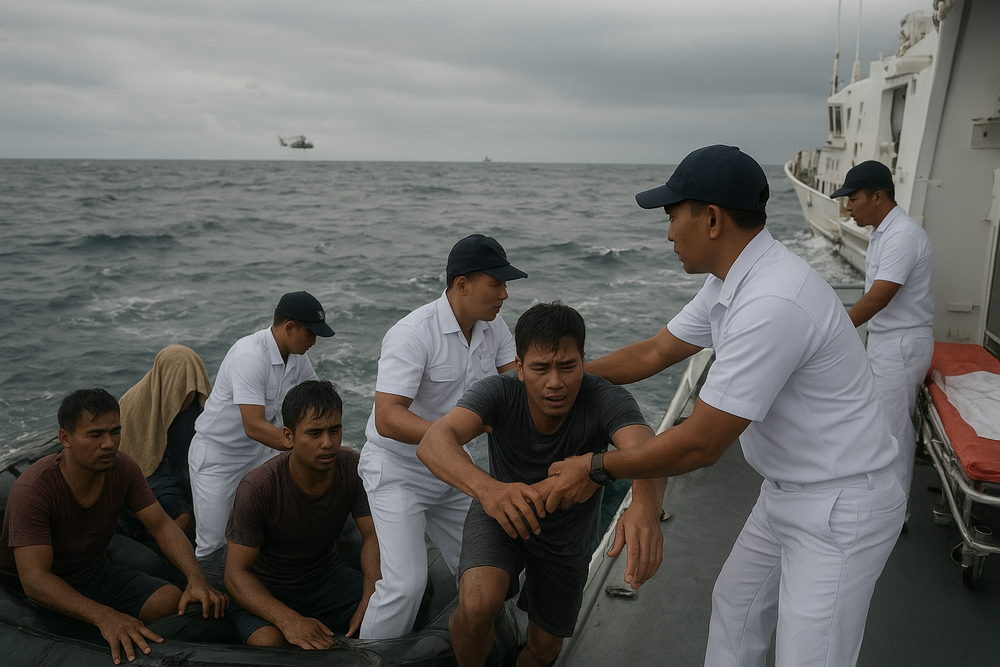
Emergency teams deployed six rescue vessels to evacuate crew members. The fires were reported to have continued burning after the evacuations, though authorities have not disclosed the full extent of the damage to the ships or cargo.
Government Condemns ‘Sabotage’ and Signals Legal Action
Baghdad moved swiftly to condemn the incident. In addition to labeling the attack an act of sabotage, officials indicated Iraq reserves the right to pursue legal measures in response to the violation of its territorial waters.
The State Organization for Marketing of Oil (SOMO) said in a statement: “This event negatively impacts Iraq’s security and economy, and poses a threat to the safety of maritime navigation and oil activities in Iraqi territorial waters.”
Operations at nearby oil terminals were suspended following the incident, reflecting concerns that the attack could signal a broader threat to shipping lanes vital to Iraq’s export economy.
Part of Wider Regional Escalation
The attacks occurred against the backdrop of intensifying regional tensions that have unsettled maritime routes in and around the Persian Gulf since late February. While no group has claimed responsibility, security analysts have been closely watching a pattern of tanker incidents amid friction involving Iran and broader US-Israel regional dynamics.
The waters near Basra sit at the northern end of the Gulf — a strategic artery through which millions of barrels of oil pass daily. Any disruption there ripples quickly through global markets, similar to a blockage in a main water pipe feeding multiple cities.
Authorities in other Gulf ports have reportedly adopted precautionary measures in recent days amid concerns over drones or explosive-laden boats. However, no direct link has been publicly established between those precautions and the Basra attack.
Implications for Malta and Global Shipping
One of the stricken vessels, Zefyros, sails under the Maltese flag, placing the Mediterranean island nation once again in the spotlight of complex global shipping tensions. Malta operates one of the largest ship registries in the world, a hub for international maritime commerce.
As of March 14, no Maltese crew involvement has been confirmed, and Maltese authorities have not publicly reported additional details regarding the vessel’s ownership structure or cargo losses. Under international maritime law, including principles outlined in the United Nations Convention on the Law of the Sea, flag states maintain certain responsibilities over vessels registered under their jurisdiction.
The incident serves as a reminder that Malta’s maritime registry, though geographically distant from conflict zones, is closely intertwined with the world’s most volatile trade corridors.
Energy Markets on Edge
Although Iraq has continued exporting oil in the aftermath, the temporary suspension of terminal operations and heightened security concerns could pressure supply chains if instability persists.
Even limited disruptions in Gulf shipping tend to tighten global supply expectations, potentially driving up fuel prices worldwide. For energy-importing nations, including Malta and other European states, that could translate into higher costs for transport, electricity generation and consumer goods.
For now, officials in Iraq are focused on containing the immediate fallout, restoring safe operations, and investigating responsibility for the attack. The identity of the perpetrators — and whether this event marks an isolated strike or the start of wider maritime unrest — remains uncertain.
What is clear, however, is that the waters off Basra, a lifeline of Iraq’s economy, have become another flashpoint in a region where oil and geopolitics are inseparable. Each spark on the sea carries consequences far beyond the horizon.