The recent spike in global oil prices, fueled by escalating tensions in the Middle East, is beginning to ripple through household budgets across the Philippines, pushing up the cost of basic food items and threatening to accelerate inflation in the months ahead.
Data released for February 2026 show headline inflation rising to 2.4% year-on-year, up from 2% in January. Food inflation quickened even more sharply, climbing to 1.6% from 0.7%, as higher fuel prices fed into transportation and distribution costs. While inflation remains within the Bangko Sentral ng Pilipinas’ 2–4% target range, economists warn that sustained volatility in oil markets could push it beyond that ceiling.
The Philippines, which imports roughly 90% of its oil from the Middle East, is acutely exposed. A prolonged surge in global crude prices could act like a rising tide, lifting costs across nearly every sector of the economy.
From Fuel Pumps to Market Stalls
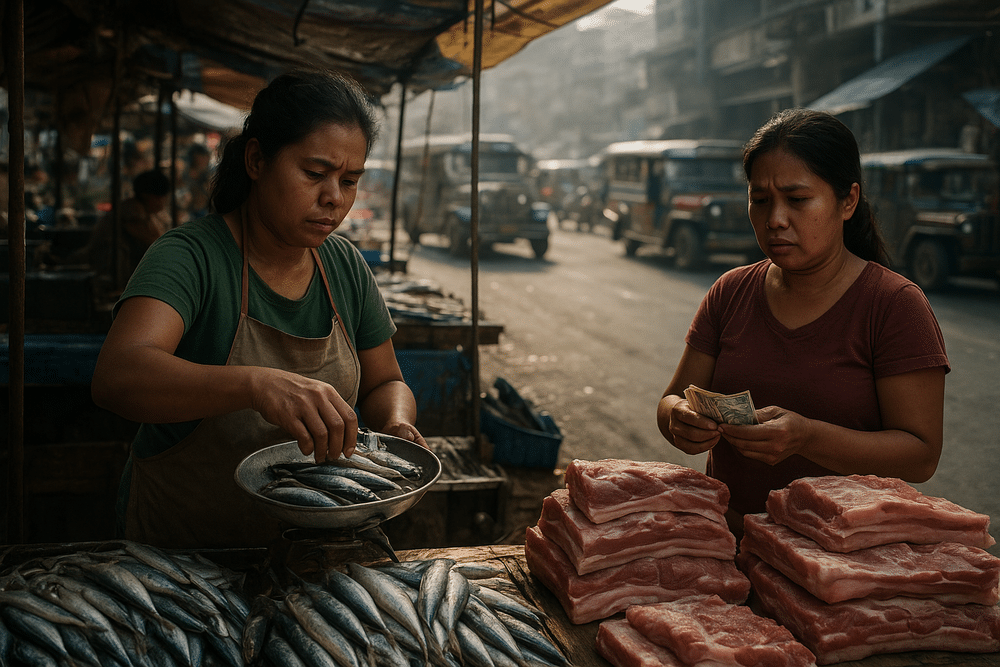
The effect is already visible in wet markets and neighborhood stores.
At some stalls, galunggong — a staple fish for many families — jumped from P260–P280 per kilo to P340 within days. “We were selling them yesterday for P260 to P280. Today, it’s P340 because the price went up. That’s a huge increase,” said fish vendor Romana Losugero.
Pork belly (liempo) rose by around P30 per kilo to P380. “The price of pork belly (liempo) has increased by about P30. It really comes down to the cost of moving goods,” said Agriculture spokesperson Arnel de Mesa.
Retailers say transport costs are the primary culprit. “If prices go up one more time, we’ll have to shoulder a P10 difference. Costs are rising because gasoline prices went up, which pushed up transportation expenses,” said pork seller Vilma Mameng.
Vegetables such as potatoes and Baguio beans have also inched higher. Rice, the country’s most sensitive staple, is expected to follow as higher fuel costs raise both farmgate and distribution expenses.
Inflation Risks Mount
Analysts warn that the current uptick may only be the beginning.
According to government economic managers, a 20% increase in oil prices could add roughly 0.5 percentage point to headline inflation if fully passed on to consumers. Projections indicate inflation could exceed 4% in 2026 without mitigating measures, potentially shaving 0.2 to 0.3 percentage points off GDP growth.
“Oil prices affect practically all goods and services produced in this economy, so the effect is considerable,” said Department of Economy, Planning and Development Secretary Arsenio M. Balisacan.
The warning extends to monetary policy. “If WTI crude remains at or above $80 per barrel through June and/or rice inflation keeps accelerating, the BSP’s inclination to ease may be significantly limited,” said BPI economist Jun Neri. ING’s Deepali Bhargava added that “the rise in oil price inflation requires close observation, especially since retail fuel prices in the Philippines are linked to market conditions.”
Government Weighs Tax Suspension
To contain fallout, the government is considering the temporary suspension of fuel excise taxes under provisions of the TRAIN law (R.A. No. 10963), which allows suspension when global oil prices exceed $80 per barrel. The House Ways and Means Committee has advanced a proposal granting the President authority to suspend these taxes if necessary.
Economic managers estimate that suspending the excise tax between March and May could keep inflation within 3.6% to 4.2%, compared with potentially breaching the 4% ceiling without intervention.
The Department of Agriculture is also preparing fuel subsidies for farmers and fisherfolk and has repurposed P10 billion from agricultural funds to cushion the impact of rising input costs.
Meanwhile, the Department of Energy has ordered several fuel retailers to explain unauthorized price increases, signaling tighter oversight amid volatile market conditions.
The Burden on Ordinary Families
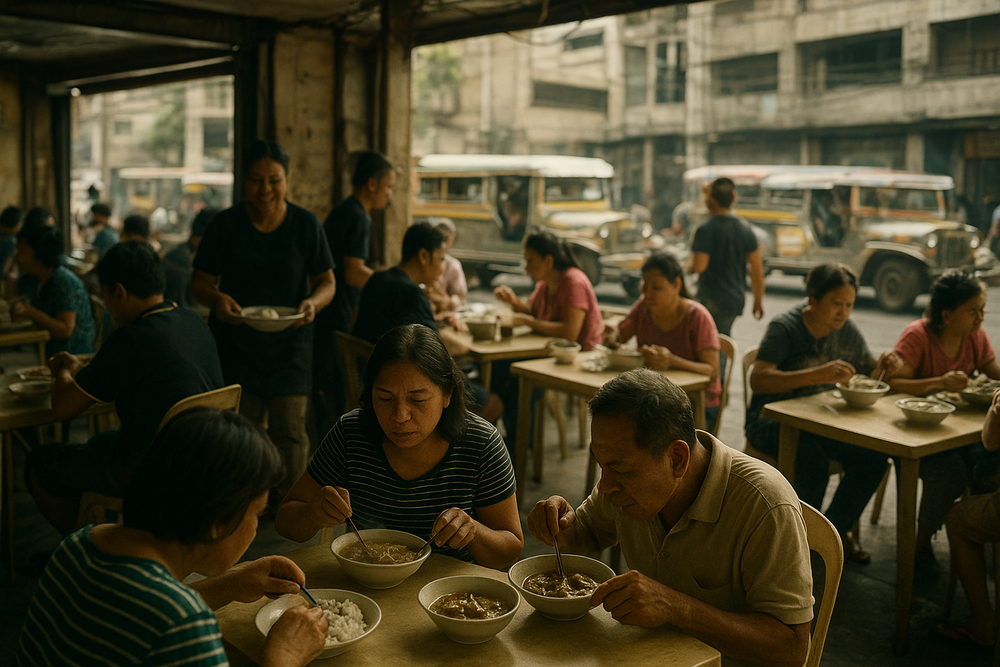
Behind the economic indicators are households already adjusting their weekly budgets. For families dependent on modest wages — including minimum earners in Metro Manila making P645 per day and less in other regions — incremental increases in fish, pork, vegetables and rice accumulate quickly.
Transport fare pressures compound the strain, as jeepney operators and logistics providers absorb higher diesel costs. In a country where food and fuel account for a large share of household spending, inflation behaves less like a statistic and more like a slow leak in a family’s wallet.
With more than 20 million households considered food-insecure, economists caution that even moderate price shocks can erode purchasing power and deepen vulnerability.
A Fragile Balance
The Philippines entered 2026 with inflation under control and growth targets of 5–6%. But the oil surge has introduced new uncertainty.
For now, inflation remains within the central bank’s target band. What happens next depends largely on forces far beyond the archipelago’s shores — geopolitical tensions, crude supply routes, and global market reactions.
As policymakers weigh tax suspensions and subsidies, the central question is how long the oil shock will last — and how much more Filipino consumers can absorb before the pressure at the pump becomes a crisis at the table.