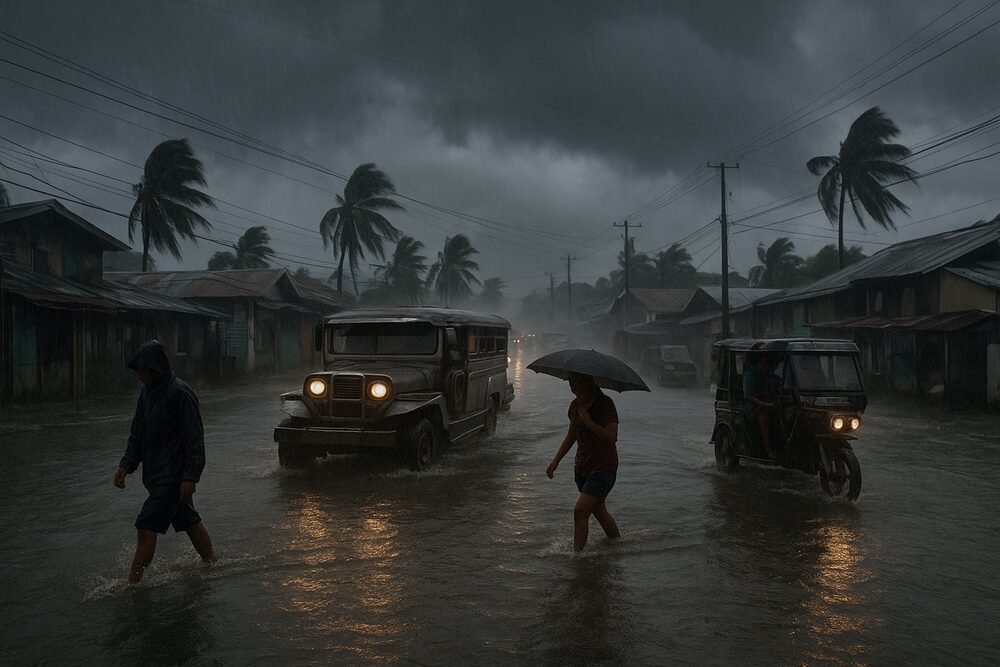
The northeast monsoon, locally known as Amihan, is set to sweep rain clouds across parts of Luzon and the Visayas from March 12 to 16, according to the Philippine Atmospheric, Geophysical and Astronomical Services Administration (PAGASA). Weather officials say the combined effects of the monsoon and prevailing easterlies could bring light to moderate rainfall, with 10% to 40% chances of rain in several key cities, even as temperatures remain seasonally warm.
No tropical cyclones are expected to enter the Philippine Area of Responsibility during the period, but shifting wind patterns tied to the weakening La Niña continue to shape the country’s rainfall outlook.
Rains Expected in Eastern Luzon and Visayas
PAGASA’s extended forecast, activated March 12, indicates that eastern sections of Luzon and the Visayas are most likely to experience scattered showers.
Metro Manila: 23°C to 31°C, with a 30% chance of rain on March 12
Cagayan de Oro: 24°C to 30°C, with a 30% to 40% chance of rain
Tuguegarao: 24°C to 34°C, with a 10% chance of rain
Laoag: 22°C to 30°C, with a 20% to 40% chance of rain
Daytime conditions will remain warm and humid, with temperatures across monitored areas ranging from 21°C to 34°C. The pattern reflects seasonal norms during the country’s transition from the cool northeast monsoon toward the hotter pre-summer months.
La Niña Weakening, Neutral Conditions Ahead
The current weather conditions are unfolding against the backdrop of a fading La Niña. In its February 25 climate outlook, PAGASA noted: “A transition from La Niña to ENSO-neutral is expected in February-April 2026 (60% chance).”
La Niña, characterized by cooler-than-average sea surface temperatures in the central and eastern Pacific, typically enhances rainfall over the Philippines. As it weakens toward neutral conditions, forecasters expect more variable precipitation patterns.
PAGASA’s broader outlook for March through August highlighted the continuing influence of monsoon systems and easterlies, under the heading: “Weather systems that may affect the country (MARCH–AUG 2026).” Forecasters anticipate fluctuations in dry days across Luzon and Mindanao, depending on month-to-month shifts in dominant wind systems.
Regional Rainfall Outlook
Rainfall projections for March show notable variation between regions:
Region VI (Western Visayas): Aklan is projected to receive an average of 116.9 mm of rain.
Region III (Central Luzon): La Union may see around 93.6 mm, while Ilocos Sur could receive approximately 85.9 mm.
In practical terms, this means intermittent showers rather than prolonged downpours. For many communities, especially those in low-lying coastal or river-adjacent areas, even modest rainfall can trigger minor flooding if drainage systems are clogged or overwhelmed.
Everyday Disruptions for Commuters and Families
For urban workers, particularly daily wage earners, sudden rains often translate into longer commutes and higher transport costs. Slippery roads raise accident risks, while localized flooding can slow jeepney and bus operations. Transport groups have historically urged real-time traffic advisories during similar weather episodes.
Schoolchildren in affected areas may also face potential class suspensions if heavier showers materialize, disrupting work schedules for parents and guardians.
Mixed Outlook for Farmers and Fisherfolk
In agricultural provinces such as Aklan, moderate rainfall can benefit dry-season crops, including palay and vegetables. However, uneven distribution—too little in one town, too much in another—complicates planting decisions.
Farmers’ cooperatives in the Visayas monitor these forecasts closely. Monthly rainfall projections ranging from 78 mm to 159 mm in some areas can influence harvest timing and, ultimately, wet market prices.
Along the eastern seaboard of Luzon, fisherfolk may encounter rougher seas under strengthened monsoon winds. Reduced catches can ripple quickly through coastal markets, potentially driving up the price of staple fish such as sardinas, a key protein source for low-income households.
Preparedness Mandated by Law
Under Republic Act No. 11315, the PAGASA Modernization Act of 2019, the agency is mandated to enhance its weather forecasting and early warning systems. Meanwhile, Republic Act No. 10121, or the Philippine Disaster Risk Reduction and Management Act of 2010, requires local government units to implement preparedness measures for hazards intensified by rainfall.
The National Disaster Risk Reduction and Management Council and local disaster offices are expected to remain on alert, particularly in flood-prone communities.
Vigilance Without Alarm
Authorities emphasize that the current forecast does not signal severe weather but calls for caution. The combination of Amihan and easterlies, shaped by a weakening La Niña, represents a seasonal shift rather than an extraordinary event.
Still, in a country where wind direction can mean the difference between a dry afternoon and waist-deep floodwater, even ordinary weather systems demand attention. For now, forecasters advise residents in Luzon and the Visayas to monitor updates, plan travel accordingly, and prepare for intermittent rains through the weekend.