From unsolicited catcalls on crowded streets to explicit messages sent online, gender-based sexual harassment in the Philippines now falls under one sweeping national law. The Safe Spaces Act, officially known as Republic Act No. 11313, extends legal protection far beyond offices and classrooms, covering public spaces, transportation, digital platforms, and domestic workplaces nationwide.
Signed into law on April 17, 2019, the measure—popularly called the “Bawal Bastos Law”—marked a significant shift in how the state defines and penalizes harassment. It transformed what was once dismissed as everyday “street behavior” into punishable acts and imposed clear responsibilities on employers, schools, transport operators, and local governments across the country’s 17 regions.
A Nationwide Law With Expansive Reach
The Safe Spaces Act applies across all municipalities and cities in the Philippines. Its reach covers both public and private areas that are openly accessible to the public. The law defines public spaces broadly, including:
Streets, alleys, roads, and sidewalks
Parks and recreational areas, such as cinema halls, spas, bars, clubs, resorts, and water parks
Schools, churches, public buildings, and government offices
Malls, restaurants, cafes, internet shops, and public markets
Transportation terminals and common carriers, including jeepneys, buses, and tricycles
Private vehicles under app-based transport network services
Hotels, casinos, evacuation centers, and public washrooms
The law applies “regardless of ownership” so long as the area is accessible to the public. In Metro Manila, the Metro Manila Development Authority plays a specific implementing role for street-level enforcement.
Beyond the Workplace: Filling Legal Gaps
Before 2019, the primary legal shield against sexual harassment was the Anti-Sexual Harassment Act of 1995, which focused largely on abuse committed in employment or educational settings where a power imbalance existed.
The Safe Spaces Act went further. It recognized that harassment can occur between strangers in streets, between commuters in public transport, and through anonymous accounts online. It also removed the strict requirement of authority or moral ascendancy in certain contexts, acknowledging that intimidation can come from peers and even passersby.
What Conduct Is Prohibited?
The law penalizes various forms of gender-based sexual harassment (GBSH). These include:
Unwelcome sexual advances or solicitations
Requests for sexual favors
Sex-based remarks or conduct that are offensive, degrading, or intimidating
Persistent and unwanted comments or actions that create a hostile environment
Online harassment, such as cyberstalking, incessant messaging, and non-consensual sharing of intimate images or personal data
These acts may be committed verbally, physically, or through technology, including text messages, email, and social media platforms.
Protection in Workplaces and Schools
In offices, factories, and shops, employers must establish a Committee on Decorum and Investigation (CODI) to address complaints. Committees are required to:
Investigate and decide cases within 10 days or less upon receipt
Observe due process
Protect complainants from retaliation
Guarantee confidentiality and gender-sensitive handling
Failure of employers or persons in authority to act on reported harassment may result in liability.
Educational institutions, from primary schools to universities, must implement immediate intervention protocols once they become aware of acts that create a hostile environment. School heads carry the responsibility to respond swiftly and establish referral systems for students who file complaints.
Public Transport and Daily Commutes
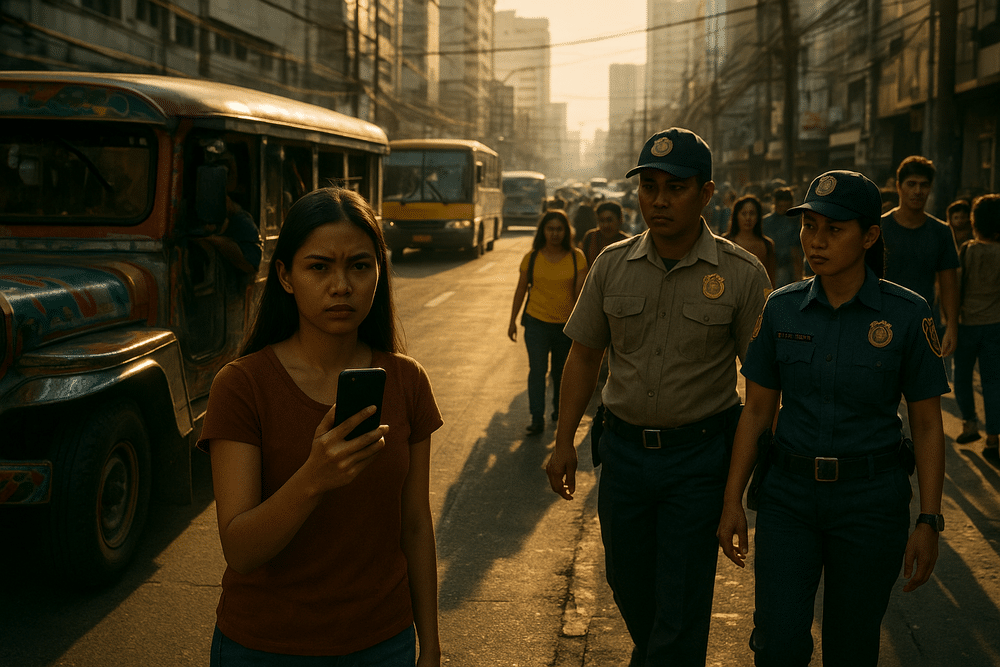
For millions of Filipinos who rely on daily public transport, the law provides explicit coverage. Acts of harassment inside public utility vehicles (PUVs) can result in penalties not only for perpetrators but also administrative consequences for operators, including potential license cancellation.
By placing responsibility on operators and authorities, lawmakers sought to transform public transport from an unregulated corridor into a monitored space where misconduct carries consequences.
Online Spaces Now Included
The Safe Spaces Act recognizes the internet as an extension of public life. Online harassment—once difficult to prosecute—falls squarely within the law’s framework. The Philippine National Police Anti-Cybercrime Group handles such complaints, addressing acts like cyberstalking and the unauthorized sharing of intimate content.
In effect, the legislation treats digital platforms as modern public squares where dignity must be equally protected.
Grassroots Enforcement and Reporting Channels
Enforcement responsibilities are shared among national agencies and Local Government Units (LGUs). Within 60 days of the law’s effectivity, LGUs were required to pass local ordinances aligning with the Act and to establish support structures such as:
Barangay Anti-Sexual Harassment (ASH) Desks
Local anti-sexual harassment hotlines
CCTV installations in major roads and alleys
Training programs for barangay officials and traffic enforcers
Victims may file complaints through multiple channels, including:
Barangay ASH Desks
PNP Women and Children Protection Desks
The Department of Labor and Employment (DOLE)
The Commission on Human Rights
The Public Attorney’s Office
Provincial or City Prosecutor’s Offices
DOLE maintains a 24/7 hotline (1349) for workplace-related complaints and conducts random inspections to monitor compliance.
A Policy Rooted in Human Dignity
The law declares as state policy the duty “to value the dignity of every human person and guarantee full respect for human rights.” That principle underpins its broad scope: the street vendor, the student, the office worker, the domestic helper, and the commuter are equally entitled to protection.
By expanding the definition of harassment and multiplying avenues for redress, the Safe Spaces Act reframes public conduct standards. It signals that behavior long normalized in everyday settings—from sidewalks to smartphones—now carries legal weight.
Seven years after its enactment, the law stands as one of the Philippines’ most comprehensive efforts to confront gender-based sexual harassment, embedding accountability not only in institutions but also in the ordinary spaces where daily life unfolds.