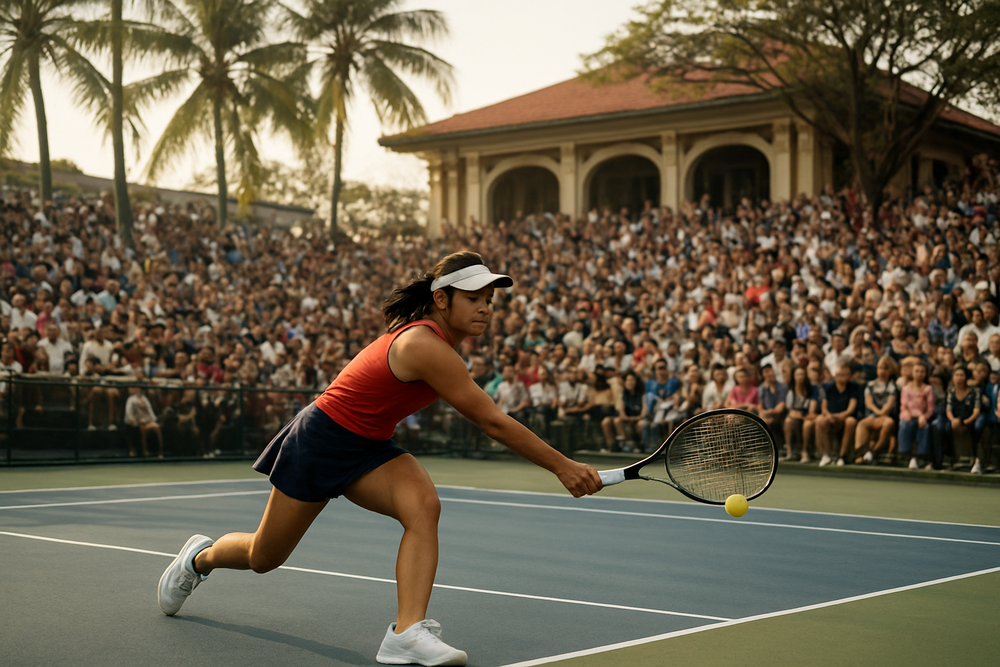
Venus Williams’ return to the BNP Paribas Open ended abruptly on Tuesday night, as the 45-year-old former world No. 1 fell in straight sets to a qualifier in the first round at Indian Wells. The loss marked another early exit for one of tennis’s most decorated champions, underscoring both her enduring resolve and the widening gap between generations on the WTA Tour.
An Early Exit in the Desert
Playing under the bright desert lights of the Indian Wells Tennis Garden in California, Williams confronted a younger opponent who had battled through qualifying to earn a place in the main draw. The qualifier seized her opportunity, defeating Williams in straight sets and controlling key stretches of the match with steadiness from the baseline.
For Williams, the defeat was swift and decisive. Though she showed flashes of the powerful serve and groundstrokes that once defined her reign at the top of the sport, she struggled to sustain momentum against a player competing with little to lose and everything to gain.
The result ends Williams’ campaign at Indian Wells before it could gather pace, cutting short what had been billed as another chapter in her long-running comeback attempts.
A Career of Endurance
At 45 years old, Williams remains an outlier in a sport that prizes youth and physical endurance. Few players in the Open Era have competed at the elite level into their mid-40s. Her longevity stands as a testament to her fitness, discipline and competitive will.
Yet time remains tennis’s most unforgiving opponent. The speed of the modern game, coupled with a relentless tour calendar, demands levels of recovery and explosive movement that grow harder to sustain with age. Williams’ presence in the draw was itself a statement of resilience. The outcome highlighted the sport’s natural cycle of renewal.
Indian Wells: A Complex Stage
The BNP Paribas Open, often described as the sport’s unofficial “fifth Grand Slam,” carries unique weight. Played in the dry winds of California’s Coachella Valley, the tournament tests precision and patience. The slower hard courts can extend rallies and reward consistency—qualities that favor players able to absorb and redirect pace over long stretches.
For veterans, the conditions can pose a double challenge. Longer rallies tax stamina, while windy spells demand sharp concentration. Against a qualifier eager to make her mark, Williams could not tilt those elements to her advantage.
Generations Collide
The match served as a snapshot of women’s tennis in transition. Williams, a seven-time Grand Slam singles champion and former world No. 1, helped redefine power and athleticism in the women’s game at the turn of the century. Her impact reshaped expectations for what female athletes could achieve on and off the court.
Across the net stood a player representing the sport’s next wave—athletes who grew up studying Williams’ game, now armed with comparable power and honed by a deeper global field. What once set Williams apart has become standard equipment on tour.
In that sense, Tuesday night’s contest was less an upset than a reflection of tennis’s evolution. The baton continues to pass, one match at a time.
What Comes Next
Williams has not indicated that retirement is imminent, and her recent appearances suggest a desire to compete on her own terms rather than stage a formal farewell tour. Each entry into a tournament draw carries the possibility of a vintage performance, even as early exits become more frequent.
For now, the spotlight at Indian Wells shifts to the tournament’s emerging storylines. For Williams, the loss adds another chapter to a career already secure in sporting history—a reminder that even legends must contend with the sport’s relentless forward march.
In the quiet that followed match point, the arena bore witness to a familiar paradox: defeat on the scoreboard, endurance in spirit. At 45, Venus Williams remains a competitor. At Indian Wells, the result did not fall her way.