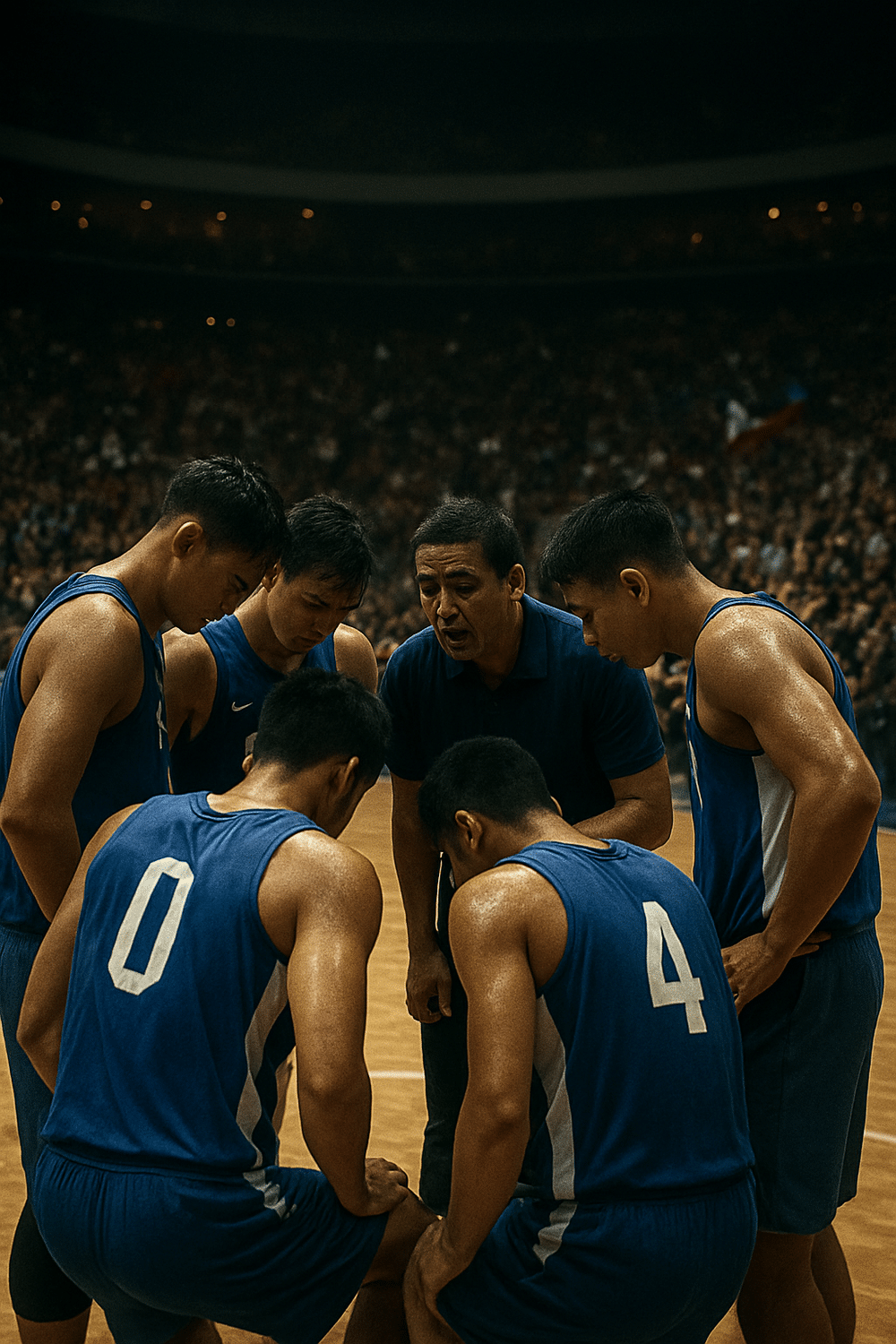
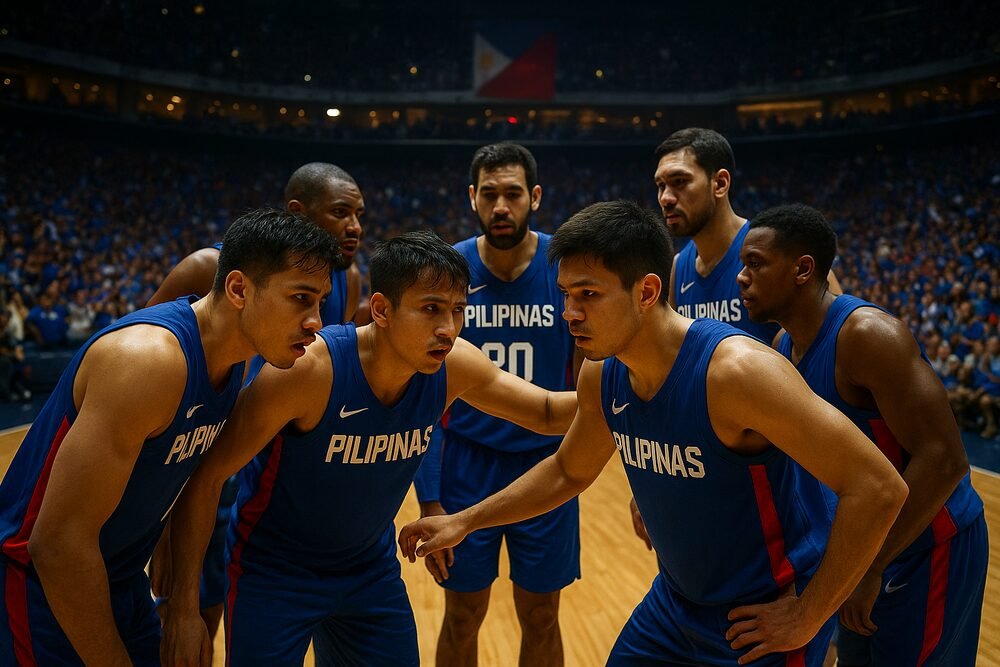
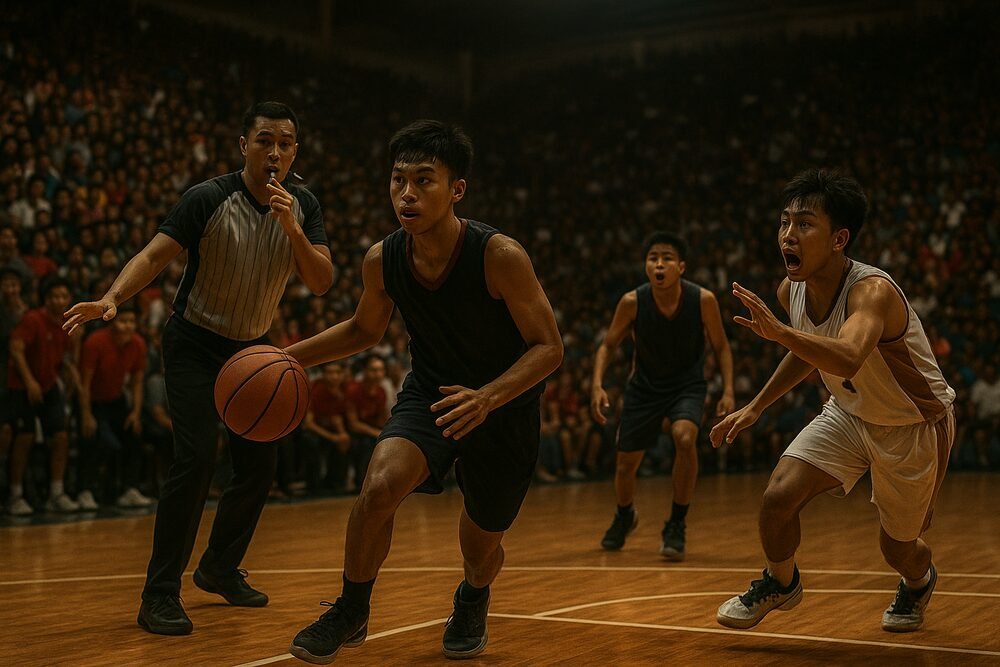
Gilas Pilipinas will return to the court in July with what head coach Tim Cone calls a “renewed fire,” after suffering two sobering defeats at home in the second window of the FIBA Basketball World Cup 2027 Asian Qualifiers.
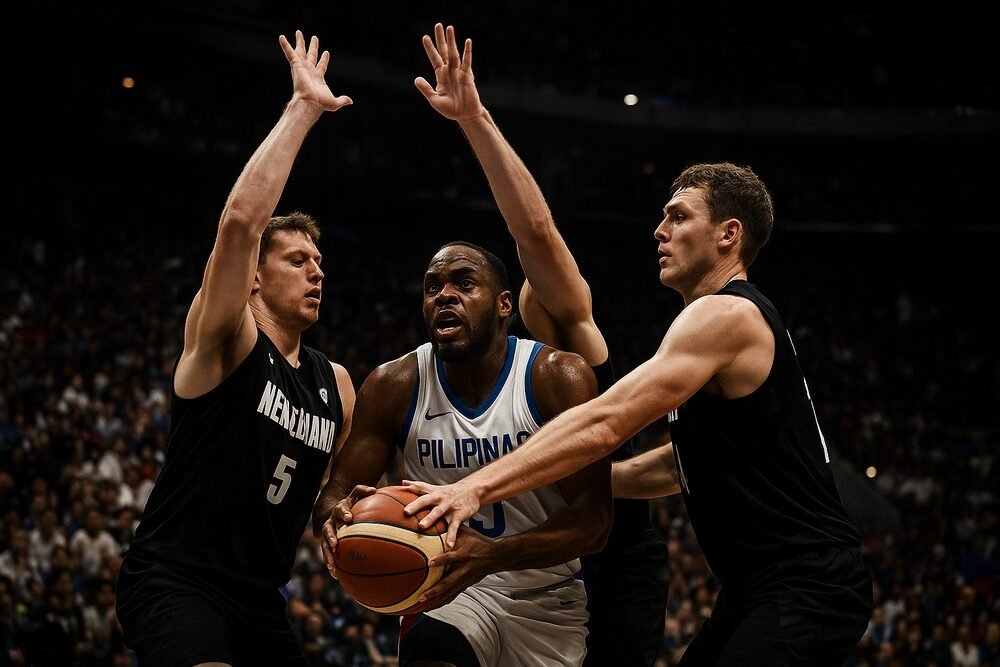
The Philippine national men’s team fell to New Zealand, 69–66, on February 26, before absorbing a heavier 93–66 loss to Australia on March 1 at the Mall of Asia Arena. The setbacks left Gilas with a 2–2 record in Group A, alongside Australia, New Zealand and Guam. While the team has already secured a place in the tournament’s second round, the defeats exposed weaknesses that Cone now intends to address before critical rematches in July.
“We’re gonna look forward to July,” Cone said after the losses. “When we come back together in July, it’s always gonna be a special thing and I think we’re gonna come back with renewed fire and it’s back to the drawing board for me a little bit.”
Home Defeats Sting, but Qualification Remains on Track
The losses were particularly painful because they came on home soil. The Philippines had entered Window 2 carrying momentum from dominant performances against Guam in November, including an 87–46 victory to open its campaign.
But against higher-ranked opposition, Gilas struggled to execute down the stretch. The narrow defeat to New Zealand turned on late possessions, while Australia’s size, depth and shooting created separation early and never relinquished control.
“Very, very painful here at home,” Cone said. “Just doing that in front of the home crowd was tough.”
Despite the defeats, Gilas remains firmly in contention. The top teams across the Asian qualifying groups advance in phases toward the 2027 FIBA Basketball World Cup in Qatar, with long-term implications that include positioning for the 2028 Los Angeles Olympic Games. The Philippines has already advanced to the second round, but seeding and momentum heading into the next phase remain at stake.
Shooting Woes Expose Offensive Gaps
A closer look at the numbers reveals the challenge. Across recent games, Gilas posted a 40.4 percent field-goal rate and a troubling 25.2 percent from three-point range, averaging just 6.5 triples on 25.8 attempts per game. In modern international basketball, where floor spacing often dictates outcomes, such inefficiency can prove fatal.
Cone acknowledged that adjustments are necessary.
“I think we’re going to have to look a little bit at our offense and maybe try to simplify things a little more,” he said following the Australian defeat.
Simplification may mean streamlining play calls and creating clearer scoring options for a roster drawn largely from the Philippine Basketball Association. The Window 2 squad featured familiar names such as Justin Brownlee, June Mar Fajardo, AJ Edu, Scottie Thompson, CJ Perez, Dwight Ramos and Calvin Oftana, blending veteran presence with youth.
While the team has shown flashes of cohesion, the cohesion has not consistently translated into efficient scoring against elite competition.
Preparing for Winter Battles in Oceania
The July rematches will test Gilas in unfamiliar conditions. On July 3, the Philippines will face New Zealand on the road, followed by a clash with Australia on July 6. Unlike the February and March fixtures played in Manila’s tropical climate, the games in Oceania will unfold during the Southern Hemisphere’s winter.
“We’re gonna have to go down there in their winter time so it’s gonna be a different field for us,” Cone said. “They came up here during summer. I think it’s one of the adjustments we’re going to have to make in July… We expect a colder weather, colder gym, and be ready for that.”
If basketball is often described as a game of rhythm, then temperature can subtly tune or disrupt that rhythm. Colder arenas can affect shooting touch and player comfort, factors Cone clearly intends to anticipate rather than confront unprepared.
Balancing Club and Country
Gilas draws heavily from the PBA, requiring players to shift between club responsibilities and national duty. Standouts such as June Mar Fajardo and Calvin Oftana anchor both their professional squads and the national team, managing different systems and expectations within tight schedules.
The Samahang Basketbol ng Pilipinas (SBP), which oversees the national program, operates under international guidelines set by FIBA. The qualification process follows a home-and-away format across multiple windows, demanding continuity and adaptability from rosters that cannot always train together extensively.
That structural reality places added emphasis on chemistry and clarity — both of which Cone suggested he will refine ahead of July.
A Nation Watches and Waits
Basketball holds a singular place in Philippine sporting culture. When Gilas plays, barangay courts and living rooms alike turn into satellite arenas. Home losses resonate beyond the hardwood, felt keenly by supporters who pack venues such as the Mall of Asia Arena or follow broadcasts nationwide.
The sting of defeat has not muted optimism. Instead, it has sharpened anticipation for redemption.
With qualification to the next round secured but pride and positioning still in play, Gilas Pilipinas approaches July at a crossroads. The team has glimpsed both its potential and its vulnerabilities. Whether the promised “renewed fire” can close the gap against Oceania’s heavyweights will determine not only its record, but its trajectory toward Qatar in 2027 and, potentially, Los Angeles in 2028.
For now, the blueprint is clear: recalibrate the offense, prepare for hostile courts and colder air, and return in July with sharper execution. As Cone put it, it is back to the drawing board — and back, soon, to the fight.