The United States has significantly escalated its military presence in the Caribbean, with recent sightings of U.S. Air Force and Navy assets operating out of Puerto Rico. The deployment, which began in late August 2025, centers on the strategic territory of Puerto Rico and involves an impressive assembly of naval and aerial capabilities poised to combat drug trafficking and reinforce regional security amid growing tensions with Venezuela.
Massive U.S. Military Buildup Anchored in Puerto Rico
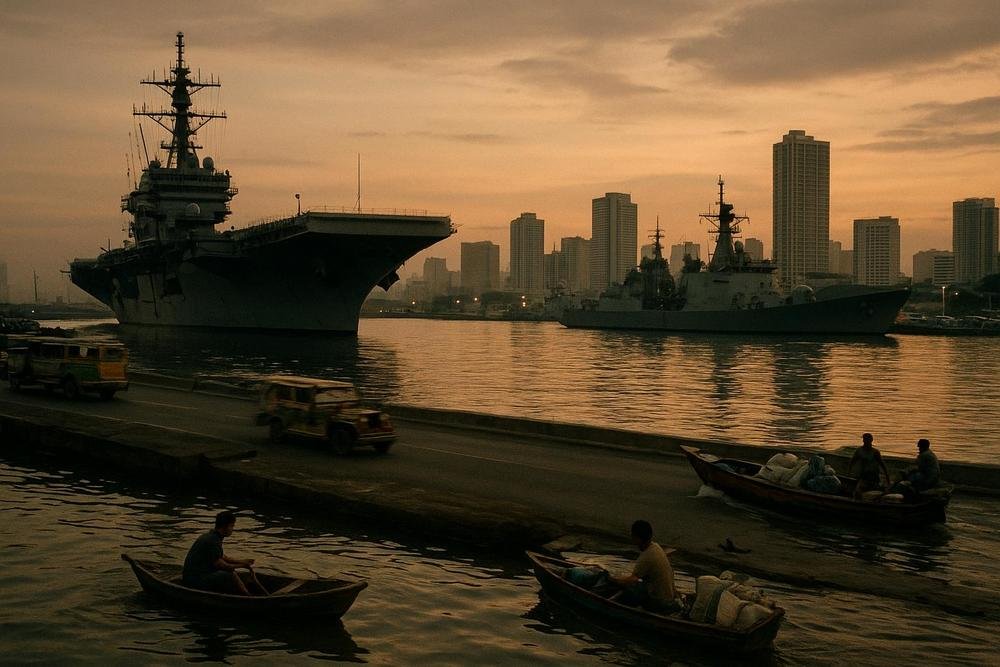
The buildup features the USS Gerald R. Ford, the largest aircraft carrier in the U.S. Navy, accompanied by a fleet comprising 11 warships—including five destroyers such as the USS Thomas Hudner and USS Gravely—three amphibious assault ships and two cruisers. Alongside these vessels are advanced fighter jets, surveillance aircraft, and approximately 15,000 military personnel deployed throughout the Caribbean.
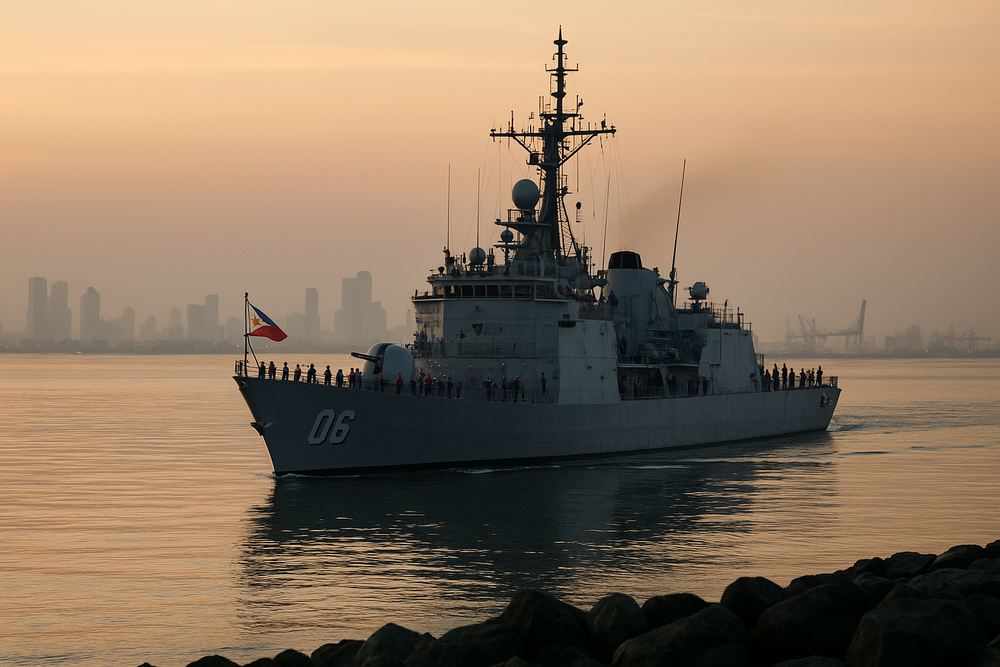
Recent operational activity was especially notable on December 20 and 21, 2025, when a U.S. Air Force C-17 Globemaster III departed from Mercedita Airport in Ponce, while the USS Thomas Hudner was seen leaving the Port of the Americas. These movements signal ongoing dynamic operations focused on the southern Caribbean region.
Counter-Narcotics Mission Amid Heightened Regional Tensions
According to official U.S. statements, the deployment’s primary goal is to combat the flow of illegal drugs originating from Venezuela and Colombia that threaten security throughout the Caribbean and beyond. The United States has framed this military presence as a crucial counter-narcotics operation designed to disrupt trafficking routes and dismantle maritime cargo networks employed by transnational criminal organizations.
Nevertheless, the proximity of these forces to Venezuelan territorial waters and the scale of the operation have exacerbated geopolitical tensions. Notably, on September 4, 2025, two Venezuelan Air Force F-16 fighter jets conducted what the U.S. Department of Defense termed a “highly provocative” flyover of the USS Jason Dunham destroyer. In response, the United States quickly bolstered its Puerto Rico-based air assets by deploying an additional 10 F-35 fighter jets and 2 MQ-9 Reaper surveillance drones, underscoring the fragile state of Washington’s relations with Caracas.
Advanced Hardware and Comprehensive Regional Footprint
The U.S. deployment integrates a wide array of cutting-edge military assets. The aircraft carrier USS Gerald R. Ford carries nearly 5,000 sailors alongside a complement of more than 75 aircraft, including F/A-18 fighters, Marine Corps F-35B Lightning II jets, EA-18G “Growler” electronic warfare planes, and maritime patrol P-8 Poseidons. Additionally, armed drones like the MQ-9 Reaper, capable of carrying up to eight laser-guided missiles, and AC-130J Ghostrider gunships participate in surveillance and strike missions.
Strategically, Puerto Rico functions as the primary command and logistics hub, with key infrastructure at the Mercedita Airport and the Port of the Americas facilitating rapid deployment and resupply. Adjacent regional satellites of the operation include bases in El Salvador—where air operations commenced in mid-October 2025—and Trinidad and Tobago, which hosts joint training and recently authorized U.S. military use of its airports for logistical support.
Timeline of Growing Military Activity and Cooperation
- Late August 2025: Commencement of a substantial U.S. naval buildup designed to address drug trafficking in the southern Caribbean.
- September 2025: First notable strike involving the sinking of a vessel carrying illegal drugs and gang members associated with Venezuela’s Tren de Aragua group, resulting in 11 fatalities.
- September 4, 2025: Venezuelan F-16 flyover intensifies confrontational posture, prompting U.S. reinforcement.
- October 15, 2025: Show of force with B-52 Stratofortress bombers and F-35 jets conducting a demonstration north of Caracas.
- Late November 2025: Installation of U.S. radar systems and expanded joint military drills with Trinidad and Tobago.
- December 2025: Formal approval from Trinidad and Tobago for U.S. military logistical operations at its airports.
- December 20-21, 2025: Movement of air and naval assets observed departing major Puerto Rican hubs, signaling dynamic operational tempo.
Regional Stakeholders and International Implications
The operations draw in governments across the Caribbean basin with varying degrees of cooperation. Trinidad and Tobago and El Salvador actively assist U.S. efforts through joint training and hosting military installations, amplifying regional security collaboration against organized crime. Meanwhile, Venezuela views the deployments with suspicion, interpreting them as a form of military encirclement and potential prelude to intervention.
Internationally, the operation exists within established frameworks including U.S. military authorization for counter-narcotics and compliance with the United Nations Convention on the Law of the Sea (UNCLOS) concerning maritime security operations. Host-nation agreements govern each bilateral engagement, ensuring legal legitimacy and operational coordination.
Assessing the Impact and Future Outlook
While the deployment’s direct effects on everyday life in Puerto Rico and neighboring Caribbean countries are limited, its broader reverberations may extend globally. Increased U.S. military presence could alter shipping routes and influence energy market stability linked to Venezuelan oil exports. These are factors that could indirectly affect distant nations, including the Philippines, through shifts in global commodity prices and trade logistics.
From a Philippine perspective, the operation faces no immediate territorial or security repercussions. However, it could serve as a strategic template for similar forward-deployed security efforts in the Indo-Pacific region amid shared concerns over drug trafficking and regional stability.
Balancing Security, Sovereignty, and Legal Scrutiny
The operation underscores the U.S. commitment to combating transnational crime but raises important questions about sovereignty and international law. The September 2025 sinking of a vessel carrying suspected drug traffickers and gang members, which resulted in 11 deaths, has drawn humanitarian concerns and calls for transparency regarding use-of-force protocols and civilian protections.
Official U.S. assessments justify these actions within the scope of counter-narcotics and security imperatives, while regional actors advocate for continued cooperation to stem illicit activities destabilizing their nations. Monitoring the evolution of these operations will be vital to understanding their implications for Caribbean security and international maritime governance.
Conclusion: A Strategic Pivot in the Western Hemisphere
The United States’ deployment of extensive military assets in Puerto Rico and the Caribbean represents an unprecedented forward presence in the region, fusing air and naval power to address narcotics trafficking and assert strategic influence. While framed primarily as a law enforcement mission, the scale and intensity suggest a nuanced posture aimed at deterring aggression from regional actors such as Venezuela.
As the situation develops, balancing operational objectives with diplomatic engagement will be critical. The Philippines and other nations observing from afar may glean lessons on the interplay between military buildup, regional cooperation, and the challenges of addressing complex transnational threats.