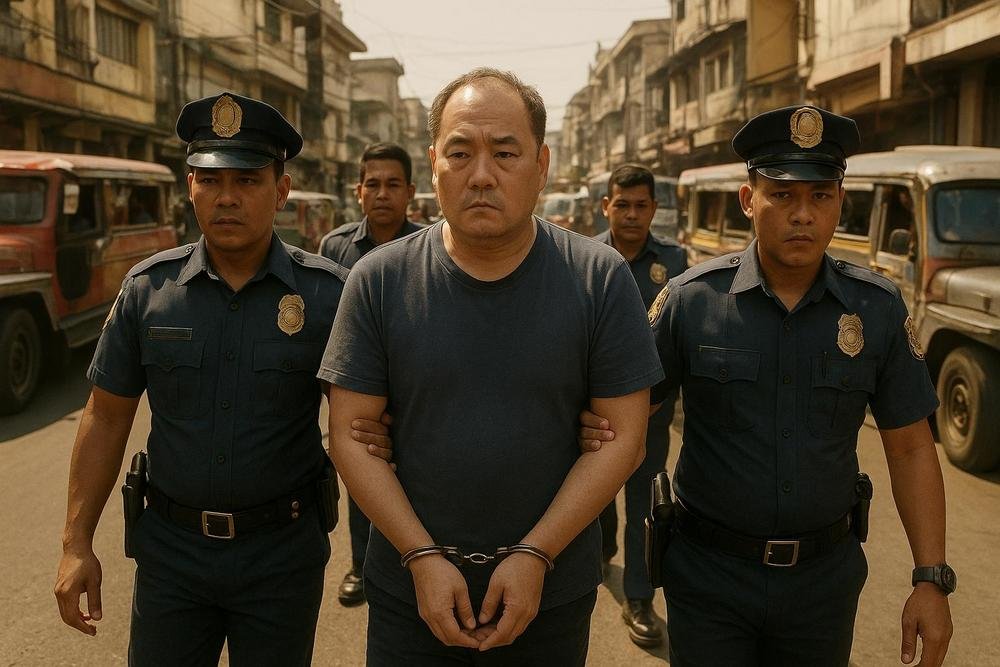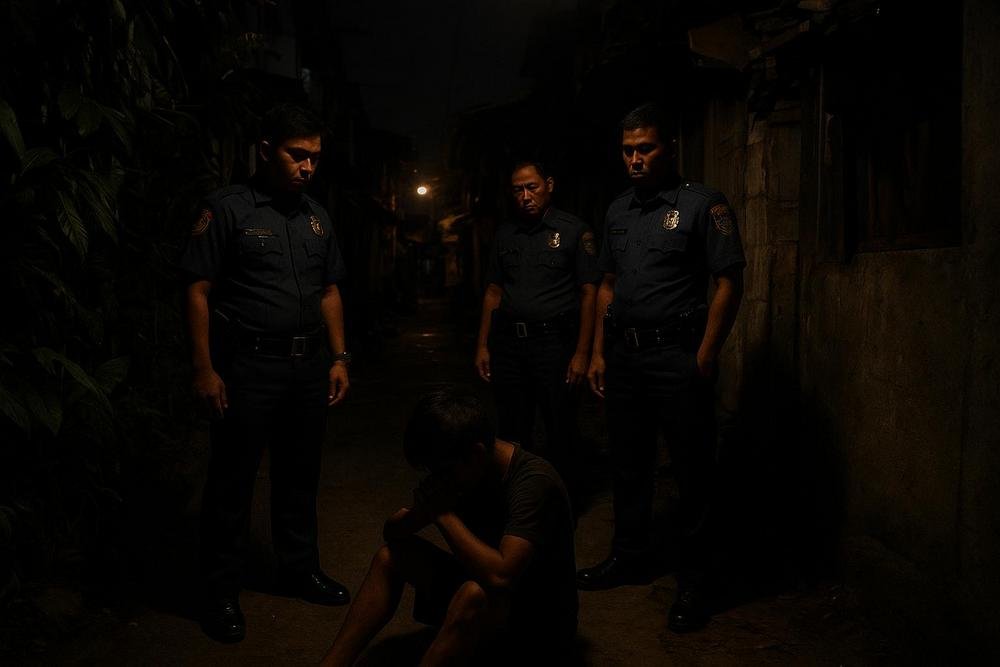
The Supreme Court has affirmed the murder conviction of three Caloocan City police officers responsible for the 2017 killing of 17-year-old Kian Loyd delos Santos during an anti-drug operation in Metro Manila. In a unanimous decision issued on December 22, 2025, the Court upheld the verdict that sentenced Officers Arnel G. Oares, Jeremias T. Pereda, and Jerwin R. Cruz to reclusion perpetua, equivalent to 40 years imprisonment each, and ordered them to jointly pay ₱275,000 in damages to the victim’s family. The ruling marks a pivotal moment in holding law enforcement accountable for extrajudicial killings linked to the government’s controversial war on drugs, especially within the National Capital Region.
Forensic Evidence Underlines Brutality of Killing
The Supreme Court highlighted the qualifying circumstance of treachery in its decision, emphasizing that delos Santos was likely kneeling or sitting when he was shot five times, including twice in the head, from behind. The Court’s detailed examination of the forensic medico-legal report and witness testimonies left no doubt that the killing was an execution-style murder rather than a legitimate police operation. Bullets entered from the side and back of the victim’s head, demonstrating that he was defenseless and unsuspecting during the shooting.
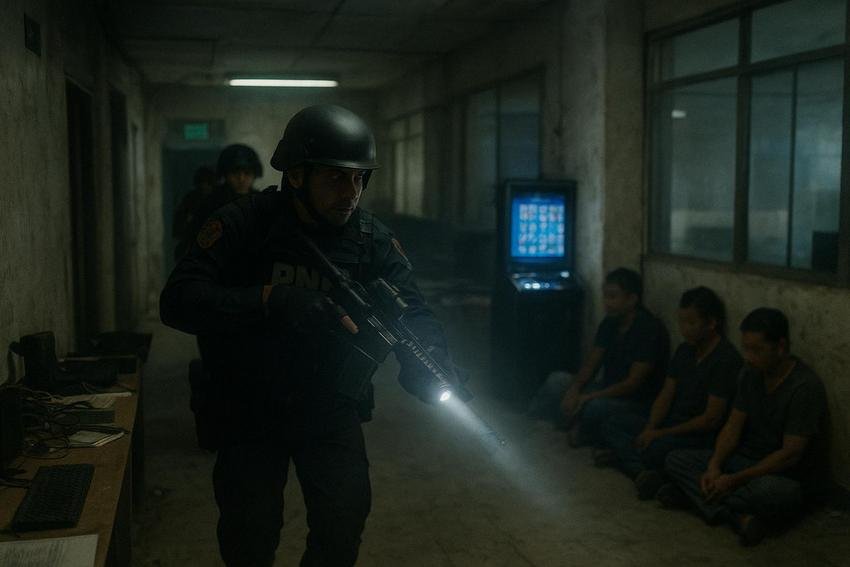
During the August 16, 2017 anti-drug sting under the Philippine National Police’s “one-time, big-time” anti-illegal drugs campaign called Oplan Galugad,
delos Santos—a high school student from Barangay 160, Baesa, Caloocan City—was forcibly dragged into a secluded alley after being frisked and punched despite his repeated pleas that he had an important school exam the following day.
From Accusations to Conviction: A Legal Journey
The initial police report claimed that delos Santos fired first and that officers recovered a .45 caliber handgun and illegal drugs at the scene. However, the victim’s family dismissed these allegations, and subsequent investigations revealed no evidence supporting these claims. The police narrative unraveled under scrutiny from multiple angles, including CCTV footage, corroborating witnesses, and official forensic findings, which altogether contradicted claims of resistance or self-defense.
In 2018, the Caloocan Regional Trial Court Branch 122 indicted Officers Oares, Pereda, and Cruz, eventually convicting them of murder on November 29, 2018. The court sentenced each to 40 years imprisonment without parole, emphasizing that the killing was “not a function of law enforcement,” as famously noted by RTC Judge Rodolfo Azucena. The verdict was the first known high-profile conviction involving police officers in connection with President Duterte’s controversial drug war, which has faced widespread criticism for allegedly enabling extrajudicial killings.
Supreme Court Ruling Reaffirms Accountability
The Supreme Court’s December 2025 ruling consolidated and cemented these findings, explicitly rejecting arguments that the killing could be justified under lawful police duty. The Court underscored that “the killing of a minor could not be considered standard in this operation” and categorically stated that “performance of duties does not include murder.” It further dismissed claims that evidence was planted, stressing that such fabrications cannot exonerate the accused.
The verdict serves as a stark reminder to police ranks that even in aggressive anti-drug campaigns, human rights and due process must prevail. The joint civil indemnity, moral damages, and exemplary damages amounting to ₱275,000 represent an acknowledgment of the profound loss suffered by the family of the teen, whose life was cut short under chilling circumstances.
Community Impact: Fear and Distrust in the Slums
The killing of Kian delos Santos sent shockwaves through the tight-knit but economically marginalized communities of Baesa and other slum areas in Caloocan and Metro Manila. Residents recount a pervasive atmosphere of fear, uncertainty, and mistrust toward police officers during night patrols and drug operations. The incident shattered confidence in the Philippine National Police’s approach to maintaining peace and order, particularly in densely populated urban poor neighborhoods where ordinary citizens often bear the brunt of aggressive law enforcement tactics.
Many community members, especially young students and parents, found their evening routines and commutes disrupted by operations that sometimes devolved into violence. The killing of an innocent student who pleaded to be spared because of his school exam became a symbol of the human costs embedded within the broader “war on drugs.” It illuminated the desperate need for reform in police conduct and operational procedures aimed at safeguarding the dignity and lives of all Filipinos, particularly vulnerable youth.
Opposition and Calls for Legal Reforms
The delos Santos case has continued to fuel legislative efforts aimed at reining in police abuses under the guise of drug enforcement. The Akbayan party-list, among several civil society groups, championed the “Kian Bill” (House Bill 11044) in 2024. This proposed legislation seeks to ban practices such as tokhang (house-to-house police visits), the creation of drug watchlists, and the use of torture—tactics widely criticized for enabling human rights violations during anti-drug campaigns.
While the bill is pending in Congress, the Supreme Court’s ruling offers a judicial counterbalance by clarifying the limits of police authority and emphasizing that even amid state efforts to combat illegal drugs, murder of a minor and planting of evidence have no place in law enforcement. The decision thus elevates the standards of accountability for public officials and reinforces the rule of law in the face of controversial government policies.
Voices from the Victim’s Family and Court
Throughout the judicial process, the family of Kian delos Santos maintained that neither illegal drugs nor firearms belonged to their son. Their firm stance found support in the forensic evidence and witness accounts, which documented that Kian was punched despite his cries and pleas to be released so he could study for his exam.
The Supreme Court echoed these testimonies, citing that the victim “likely did not see his attackers” due to bullets entering from behind while in a helpless position. Such findings expose a brutal disregard for due process and human life, calling into question the legitimacy of operations that result in the death of minors.
A Defining Moment in the National Drug War
The affirmation of the murder conviction against Officers Oares, Pereda, and Cruz stands as a rare but critical example of how the country’s justice system can confront and remedy abuses during a fraught period marked by rising violence and contested law enforcement methods. It highlights the enduring challenges of balancing aggressive crime-fighting with protections for civil liberties.
More broadly, the ruling provides a legal and moral benchmark for future cases involving police conduct in anti-drug operations, reinforcing that no individual, regardless of position, is above the law. For the bereaved delos Santos family and communities grappling with the shadow of violence, the decision offers a measure of vindication and hope for genuine accountability in the years ahead.