President Marcos Automates Electricity Subsidy Enrollment
President Ferdinand R. Marcos Jr. has ordered the automatic enrollment of millions of low-income Filipinos into the government’s electricity subsidy program, removing what officials acknowledge had become a major barrier to assistance reaching the poor.
Speaking on February 14 at an energy sector event in Pasig City, Mr. Marcos announced that all beneficiaries of the Pantawid Pamilyang Pilipino Program (4Ps) will now be automatically registered under the Lifeline Rate Subsidy Program (LRSP). The reform takes effect this month and will be implemented in coordination with distribution utilities nationwide.
“Ngayong buwan, ipatutupad natin, kasama ng distribution utilities o DU, ang automatic registration ng lahat ng benepisyaryo ng 4Ps sa ilalim ng LRSP,” Mr. Marcos said. He added in English: “This reflects the type of governance we champion. It should not be the responsibility of Filipinos to seek assistance; rather, support should be provided to them.”
Addressing Chronic Underutilization
The move responds to stark figures showing that the subsidy program has reached only a fraction of its intended beneficiaries. As of November 2025, just 334,000 households were registered under the LRSP—roughly 11 percent of the estimated 3 million 4Ps beneficiaries nationwide.
Under the revised guidelines, 4Ps households consuming 50 kilowatt-hours (kWh) or less per month will receive a 100 percent discount on electricity rates, regardless of which distribution utility serves their area.
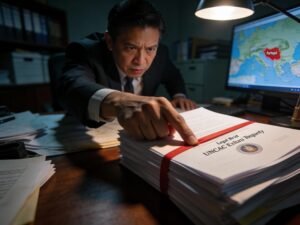
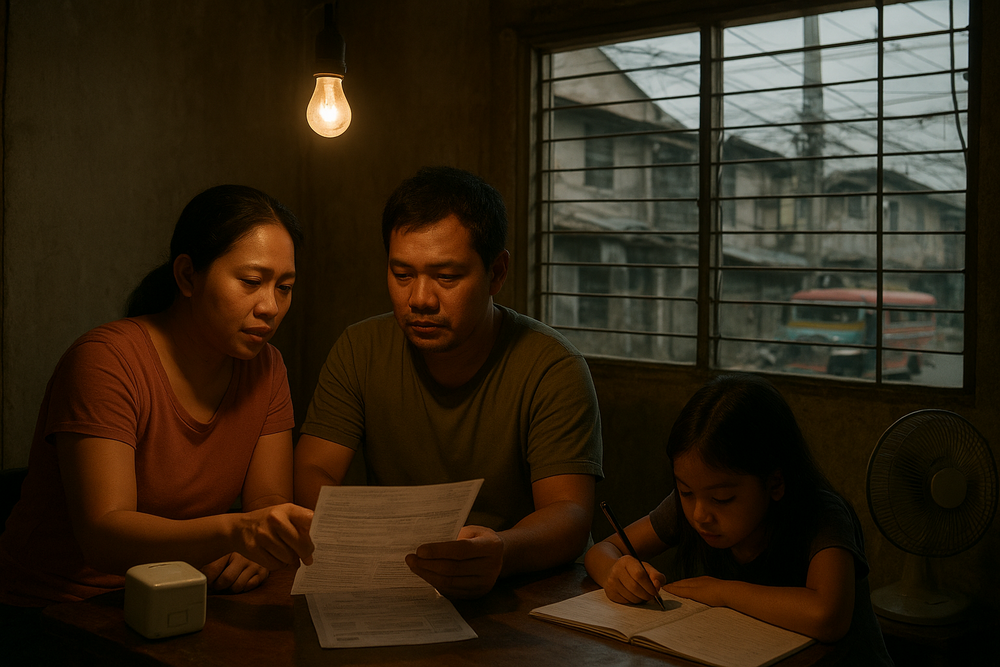
Previously, qualified households had to apply through local utilities, a process that required paperwork, travel, and in some cases repeated follow-ups. For families living hand-to-mouth, those additional steps often meant the subsidy remained out of reach.
By linking 4Ps data directly with distribution utilities, the government aims to flip the burden of proof—placing the responsibility on the system rather than on the beneficiary.
Expanded Access for Other Low-Income Households
The reforms also maintain a pathway for non-4Ps households living below the poverty threshold to access the subsidy. For example, a household with at least four members and a combined monthly income of P12,030 or less, consuming up to 100 kWh per month, may still apply for the LRSP.
Officials say simplifying eligibility rules and automating enrollment will lower electricity costs for families who typically use power for basic lighting, electric fans, phone charging, and small refrigerators—essentials that anchor daily life and, in many cases, home-based livelihoods.
In rural and remote areas, where transport costs and bureaucratic hurdles can deter applications, the impact could be particularly significant.
Streamlined Solar Net-Metering
Alongside the subsidy overhaul, Mr. Marcos announced reforms to the government’s Net-Metering Program, which allows households and businesses with rooftop solar panels to sell excess electricity back to the grid.
A joint memorandum circular issued by the Department of Energy (DOE), Department of the Interior and Local Government (DILG), and Department of Public Works and Highways (DPWH) directs local governments to adopt standardized application forms and procedures.
In addition, an order from the Energy Regulatory Commission now requires distribution utilities to complete net-metering interconnection within 20 working days from acceptance of a letter of interest.
“In essence, the policy has been clarified, and the process is expedited,” Mr. Marcos said. “This administration is committed to collaborating with the private sector to create systems and policies that ensure electricity is accessible, affordable, and dependable.”
Energy industry groups have welcomed the clearer timelines, noting that regulatory delays have long slowed household adoption of solar technology.
Private Sector Role in Expanding Supply
The administration’s subsidy and policy announcements come against the backdrop of expanded renewable energy investments.
In November 2024, Mr. Marcos led the groundbreaking ceremony for the Terra Solar project in Nueva Ecija, a large-scale development led by Meralco PowerGen Corporation. The project is designed to deliver up to 3,500 megawatts of capacity once complete.
Meralco Chairman and CEO Ray C. Espinosa, referencing company president Manuel V. Pangilinan, said the firm is preparing to inject initial capacity into the national grid. “We are currently energizing this large solar facility and anticipate selling around 85 MW of power to the National Grid Corporation of the Philippines (NGCP) by February 25,” he said.
Separately, the House of Representatives earlier this month passed House Bill 6676, also known as the Energy Storage Systems Act, which seeks to strengthen grid stability as renewable capacity expands. The measure is now pending Senate approval.
Relief at the Household Level
For low-income families, the financial arithmetic of electricity is unforgiving. A few additional kilowatt-hours can mean the difference between staying within subsidy limits or paying full rates.
With automatic registration now in place, the government is effectively widening the doorway to assistance that had been open but difficult to reach. For a household consuming 50 kWh or less, the full discount could translate into savings that cover food staples, school supplies, or transport costs.
By tightening the link between social welfare data and energy distribution systems, the administration is betting that administrative reform—not just new funding—can deliver immediate relief.
Whether the changes significantly boost enrollment beyond the previous 11 percent coverage will become clearer in the months ahead. For now, officials say the goal is straightforward: ensure that subsidies promised on paper arrive as light in homes that need it most.