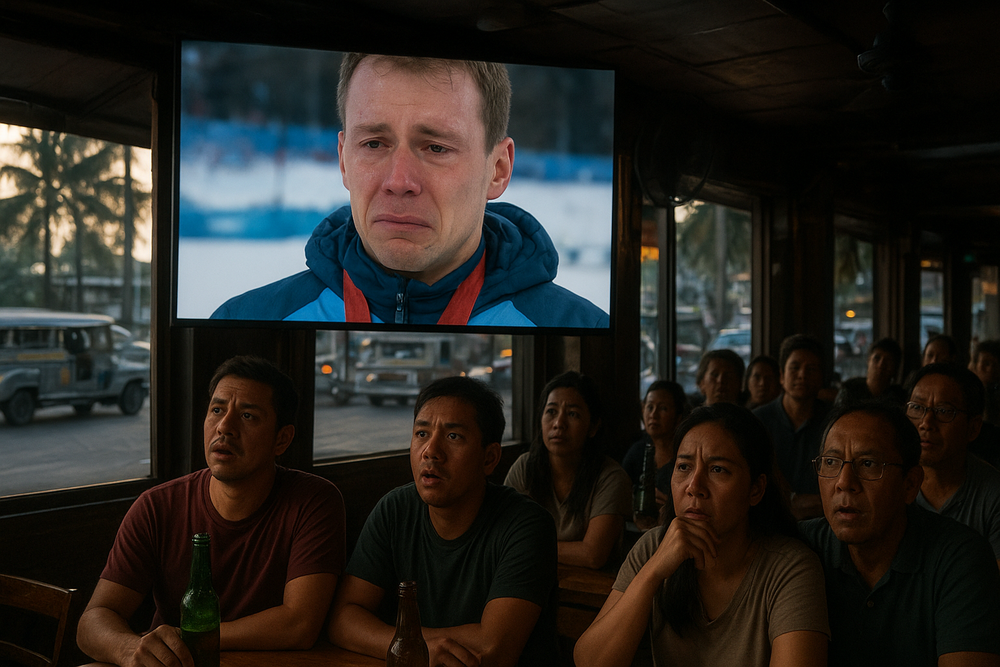
Moments after securing a bronze medal at the 2026 Winter Olympics in Milano Cortina, Norwegian biathlete Sturla Holm Laegreid, 28, stood before television cameras and delivered a confession that stunned viewers far beyond the snow-covered course. Through tears, he admitted to cheating on his girlfriend three months earlier and publicly begged for her forgiveness.
The emotional disclosure, aired live on Norwegian state broadcaster NRK on February 10, transformed what should have been a triumphant sporting moment into an intimate reckoning played out on a global stage.
A Podium Finish Overshadowed
Laegreid had just finished third in the Olympic biathlon event, trailing fellow Norwegian Johan-Olav Botn, who claimed gold, and France’s Eric Perrot, who secured silver. The podium placed Norway firmly at the forefront of the sport once again.
Yet it was not his marksmanship or ski time that drew the world’s attention.
“There’s someone I wanted to share it with who might not be watching today,” Laegreid began. “Six months ago I met the love of my life — the most beautiful and kindest person in the world. Three months ago I made my biggest mistake and cheated on her. I told her about it a week ago. It’s been the worst week of my life.”
His voice trembled as he spoke, cutting a sharp contrast to the composure typically expected of elite athletes moments after competition.
A Relationship Laid Bare
According to Laegreid’s own timeline, he met his girlfriend roughly six months ago and described her as “the woman in my life.” Three months into the relationship, he was unfaithful. He said he confessed to her about a week before the Olympic race, a revelation that ended the relationship.
“I realised that this is the woman in my life, and I can’t live my whole life keeping it a secret from her,” he later said. “My only way to solve it is to tell everything and put everything on the table, and hope that she can still love me. I’ve done that for her, and now for the whole world. I have nothing to lose.”
The decision to turn a personal failing into a public declaration appeared deliberate. In another interview, he acknowledged the consequences. “I told her a week ago, and then it ended, of course. I’m not ready to give up… I’m taking the consequences for what I’ve done, I regret it with all my heart.”
Her Response: “It Hurts”
His former girlfriend responded publicly the following day, expressing both pain and frustration at the spotlight thrust upon her.
“It’s hard to forgive. Even after a declaration of love in front of the whole world. I did not choose to be put in this position, and it hurts to have to be in it.”
Her remarks underscored a tension inherent in Laegreid’s approach: while he framed the confession as accountability, it also made a deeply private matter part of Olympic spectacle.
Grief and Emotional Strain
The confession came against the backdrop of personal and team tragedy. In December 2025, Laegreid’s teammate Sivert Guttorm Bakken died, an event that weighed heavily on Norway’s biathlon community. Laegreid has suggested that the period following the loss contributed to his emotional turmoil.
Elite sport often demands compartmentalisation — a steady aim despite crosswinds, literal and emotional. In biathlon, athletes must calm their breathing after intense skiing before pulling the trigger. For Laegreid, that discipline appeared to falter off the track.
An Unusual Olympic Moment
Olympic podiums are typically reserved for national anthems and flag ceremonies, not personal confessions. Laegreid’s admission stands out in recent Games history for its candour and timing.
The incident carries no legal implications and does not involve sporting violations. Instead, it has ignited debate across social media and sports circles about public vulnerability, accountability, and the boundaries between private lives and professional triumph.
As the Winter Games continue, Laegreid remains an Olympic medallist. But his bronze finish will likely be remembered as much for what he revealed as for how he raced — a reminder that behind the precision and poise of elite athletes are lives capable of veering off course.
Whether the public plea softens personal consequences remains uncertain. For now, the medal hangs around his neck, and his appeal for forgiveness lingers in the cold Italian air.