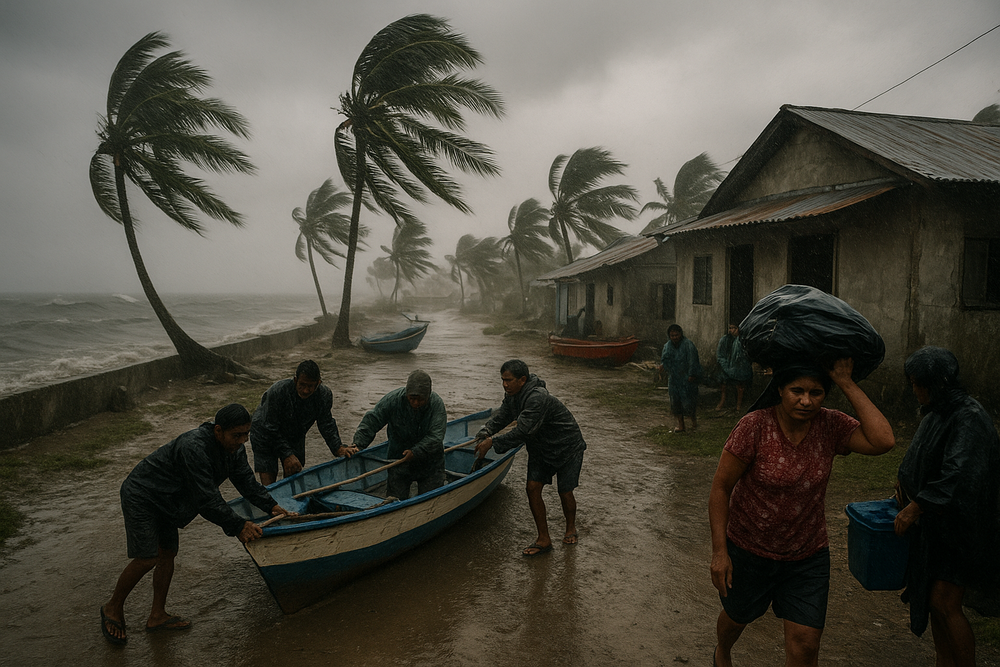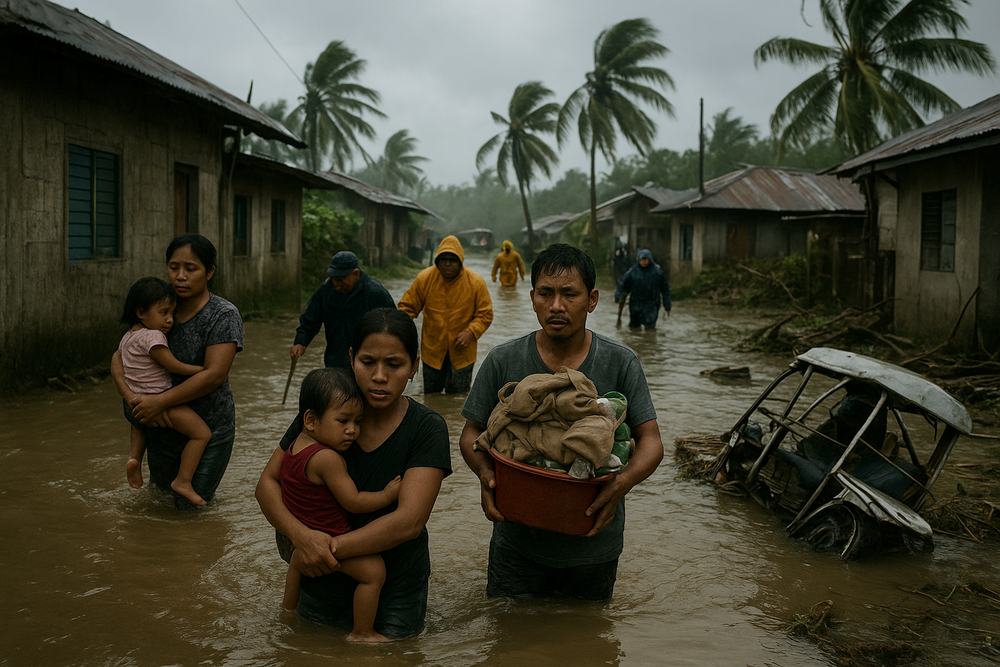
Tropical Storm Basyang, internationally known as Penha, has weakened into a tropical depression as it moves over Negros Oriental, leaving at least four people dead and prompting storm warnings across 14 areas in the Visayas. State weather bureau PAGASA said the system is expected to deteriorate further into a low-pressure area within hours, but heavy rains, gusty winds and the risk of flooding and landslides persist.
As of the latest advisory, Basyang was last tracked in the vicinity of Ayungon, Negros Oriental, packing maximum sustained winds of 45 kilometers per hour near the center and gusts of up to 55 kph. Authorities continue to urge vigilance, especially in low-lying and mountainous communities already saturated by days of rain.
14 Areas Remain Under Signal No. 1
PAGASA has placed 14 areas under Tropical Cyclone Wind Signal No. 1, warning of light to moderate winds that may still pose risks to light structures and exposed coastal communities.
- Cuyo
- Cagayancillo Islands
- Western portion of Leyte (including San Isidro, Calubian, Leyte, Tabango, Villaba, Matag-Ob, Kananga, Palompon, Isabel, Merida, Ormoc City, Albuera, Burauen, Baybay City, Inopacan, Hindang, Hilongos, Bato and Matalom)
- Western portion of Southern Leyte (including Maasin City and Macrohon)
- Bohol
- Cebu
- Siquijor
- Negros Oriental
- Negros Occidental
- Guimaras
- Iloilo
- Capiz
- Aklan
- Antique
PAGASA cautioned that “local winds may be slightly stronger/enhanced in coastal and upland/mountainous areas exposed to winds. Winds are less strong in areas sheltered from the prevailing wind direction.”
Earlier, several parts of Mindanao and the Visayas had been placed under Signal No. 2, including Siquijor, parts of Negros Oriental, Cebu, Bohol, and provinces in northeastern Mindanao, as Basyang approached land.
Landfall in Surigao del Sur
The storm first struck land just before midnight on February 5. PAGASA weather specialist Benison confirmed: “Nag-landfall po siya sa may Bayabas, Surigao del Sur for the first time kagabi 11:50 p.m.”
As Basyang crossed Mindanao and entered the Bohol Sea, it began to lose strength. By the morning of February 6, PAGASA announced: “Naging tropical depression na lamang ito at may taglay na hangin na 55 km/h from 65 kph at may pagbugso hanggang 70 km/h.”
The storm is forecast to emerge over the Sulu Sea before crossing northern Palawan. No new tropical cyclones are expected to enter the Philippine Area of Responsibility in the next five days.
Fatal Landslide and Widespread Flooding
Despite its weakening, Basyang has already left a human toll. In Cagayan de Oro City, at least four people were killed after a landslide buried homes amid persistent rainfall.
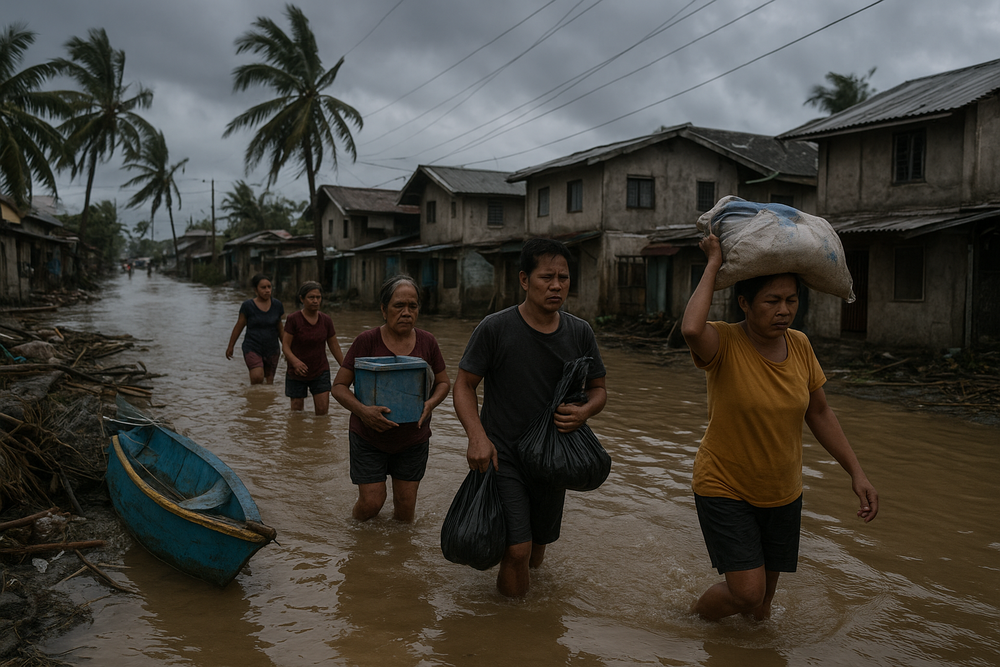
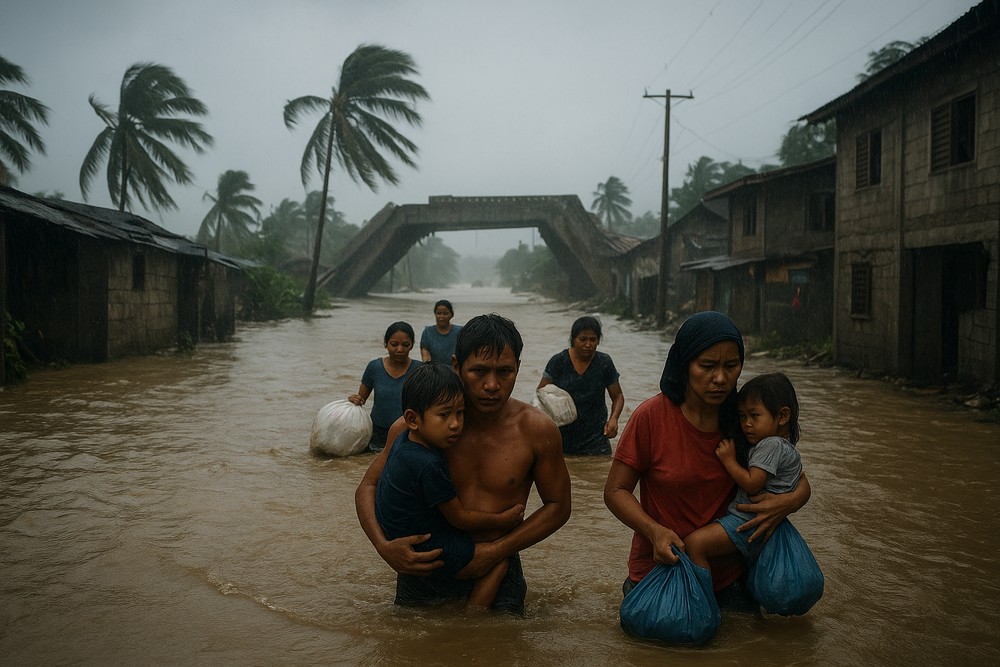
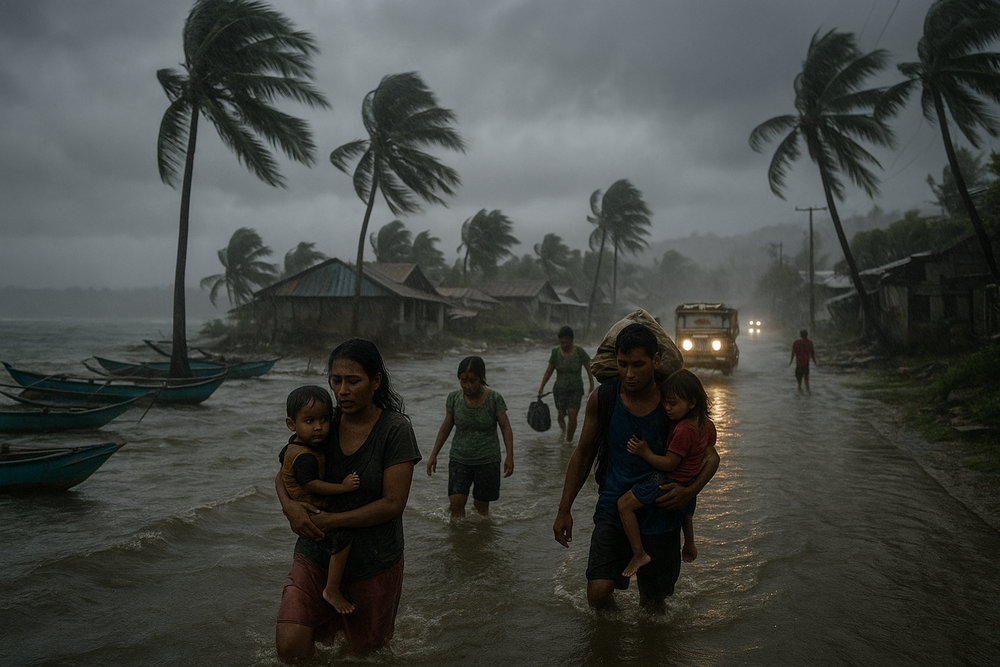
In Tandag City, Surigao del Sur, flooding was reported in Barangay San Antonio, prompting residents to seek shelter in barangay facilities. Several local government units ordered evacuations as rivers swelled and drainage systems overflowed.
Iligan City declared a state of calamity, enabling faster mobilization of emergency funds and relief supplies under Republic Act No. 10121, the Disaster Risk Reduction and Management Act.
Meanwhile, the Camiguin Airport Runway 07/25 was temporarily closed after water overflowed onto the tarmac, disrupting air travel and stranding passengers.
Storm Surge, Rough Seas Threaten Coastal Areas
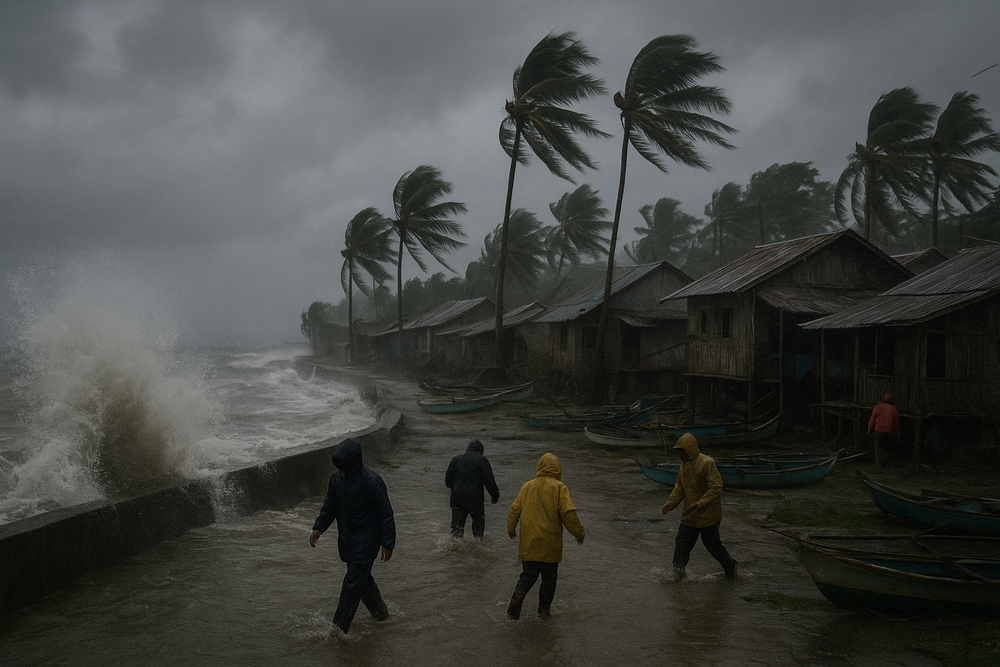
Even as winds weaken inland, coastal communities face continuing danger. PAGASA warned that a storm surge of up to two meters remains possible in areas including parts of Antique and Southern Leyte, especially during high tide.
Gale warnings remain in effect over several seaboards, with rough to very rough seas posing risks to small fishing vessels. Fisherfolk have been advised to remain in port until conditions improve.
Communities Disrupted
For many residents, the storm’s immediate impact is measured not only in wind speed but in daily disruption. Flooded roads in low-lying barangays have forced commuters to travel by foot or tricycle. Informal workers — from market vendors to construction laborers — face lost income as rains halt operations.
In agricultural communities across Negros Oriental and Surigao del Sur, farmers worry about flattened rice fields and delayed harvests. Small neighborhood stores report delivery setbacks as supply routes become impassable.
Such disruptions underscore how even a downgraded tropical system can ripple through local economies like a stone cast into still water — widening outward from coastal villages to city centers.
Government Monitoring and Response
PAGASA, operating under Republic Act No. 10692, continues to monitor Basyang and issue rainfall and wind advisories. Local governments have coordinated evacuations to covered courts, barangay health stations and other temporary shelters.
Authorities stress that while Basyang is weakening, saturated ground conditions increase the risk of landslides and flash floods. Residents in affected areas are advised to remain alert for updated bulletins.
As the system moves away and gradually dissipates, attention shifts to recovery — clearing debris, restoring transport links and assisting families displaced by floodwaters. For communities across the Visayas and Mindanao, the coming days will reveal the full scope of the storm’s impact.