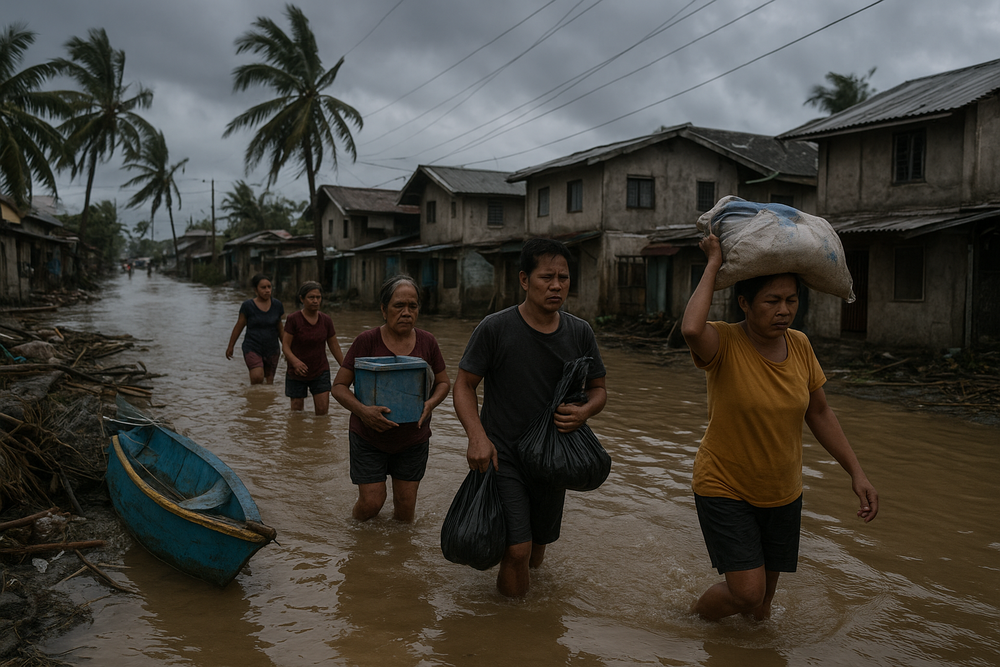
Tropical Storm Basyang, known internationally as Penha, made landfall over Bohol on Friday afternoon, weakening as it crossed the central Philippines but still triggering widespread weather alerts, including Tropical Cyclone Wind Signal No. 1 in at least 27 areas. Authorities reported flooding, landslides and mounting casualties as the storm disrupted daily life across the Visayas.
The Department of Science and Technology–Philippine Atmospheric, Geophysical and Astronomical Services Administration (DOST-PAGASA) confirmed that Basyang’s third landfall occurred in the coastal town of Dauis, Bohol, at 4 p.m. on February 6, by which time the system had weakened into a tropical depression.
Multiple Landfalls Mark a Weakened but Dangerous Storm
Basyang’s passage across the archipelago unfolded over little more than 24 hours, marked by a series of landfalls that steadily drained its strength but spread its impact.
The storm first struck Bayabas, Surigao del Sur, shortly before midnight on February 5 as a tropical storm, packing maximum sustained winds of 75 kilometres per hour and gusts reaching 90 kilometres per hour. It made a second landfall in Jagnâ, Bohol, late Friday morning, before hitting Dauis in the afternoon.
“Tropical Depression Basyang (international name: Penha) made a third landfall in Dauis, Bohol at 4 p.m. on Friday, February 6, 2026,” said Benison Estareja, a weather specialist at DOST-PAGASA, in a 5 p.m. advisory.
By Friday evening, the system was tracking westward across Cebu and Negros Island, before emerging over the Panay Gulf early Saturday and weakening further into a low-pressure area.
Storm Signals Raised Across Central Visayas
Despite its gradual weakening, Basyang prompted extensive weather warnings as it cut across densely populated islands.
Tropical Cyclone Wind Signal No. 1 was raised over 27 areas, warning residents of strong winds capable of damaging light structures and disrupting travel. More severe conditions led PAGASA to place Cebu City and several surrounding cities and municipalities under Signal No. 2, a level that indicates potentially dangerous winds and a higher risk of damage.
In a morning bulletin, PAGASA warned that “between morning and afternoon on Friday, Basyang may pass or make landfall over Bohol and portions of Cebu and Negros Oriental,” urging local authorities to prepare for flooding and wind damage.
Flooding, Landslides and a Rising Death Toll
On the ground, the storm’s effects were swift and, in some communities, devastating.
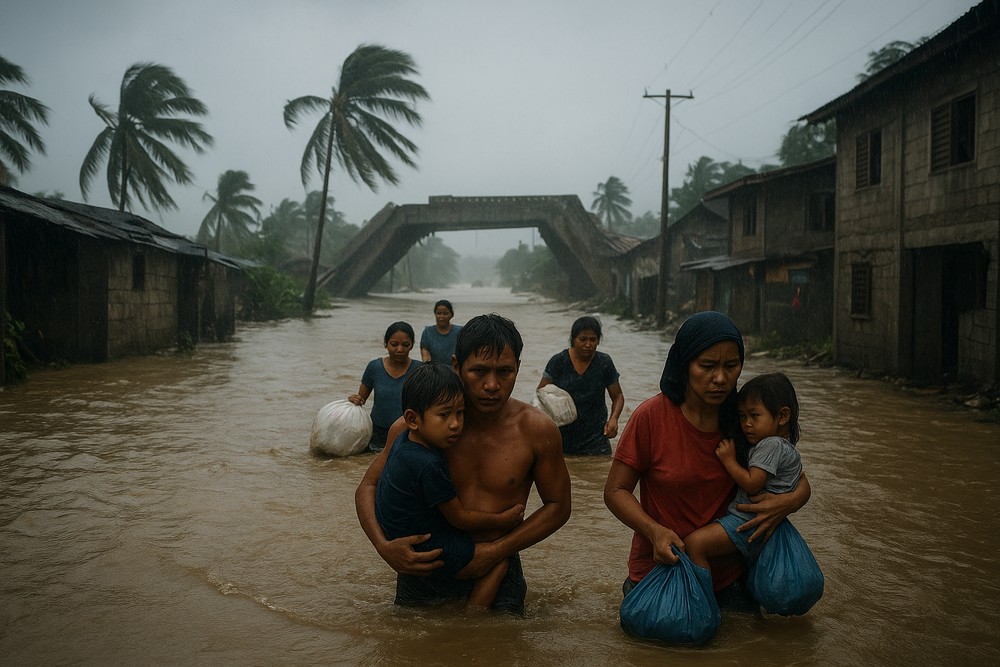
Local disaster officials reported flooding in several villages, including Poblacion, Tuod, Camanga, Cabalantian and Paniangan. In Tuod village, a landslide damaged homes perched on unstable slopes. One of the deadliest incidents involved a family of four who were killed when their makeshift shelter was struck and collapsed, officials said.
As of February 9, authorities confirmed at least 12 deaths and 36 injuries linked to Basyang, with figures expected to be reviewed as assessments continue in remote areas.
Daily Life Disrupted Across the Islands
Like a stone dropped into water, Basyang’s impact rippled outward from the coastlines into nearly every aspect of daily life.
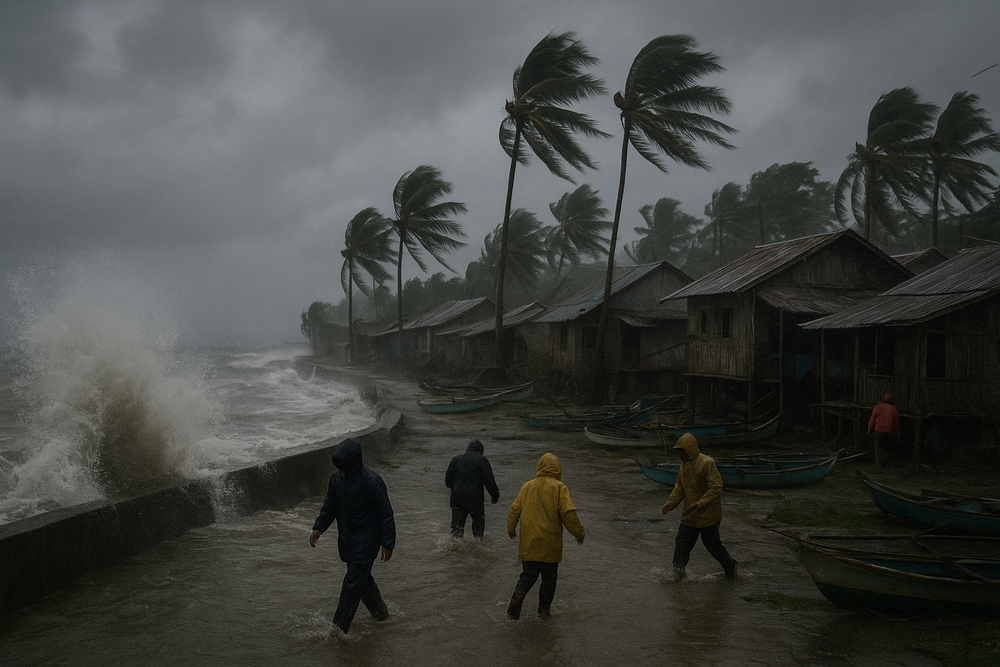
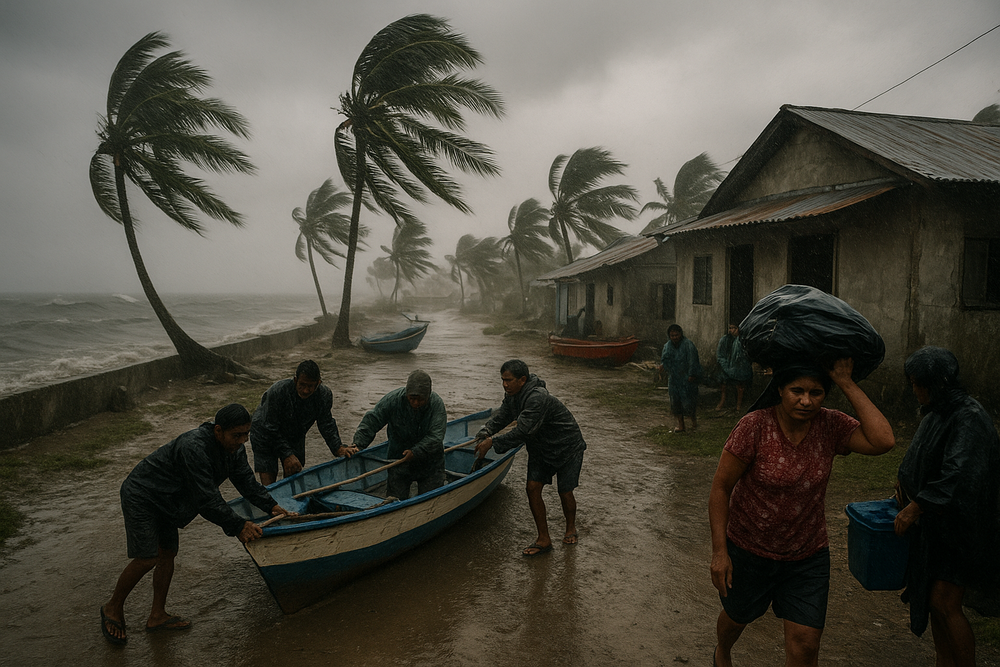
Sea travel was suspended across large parts of the Visayas as rough seas grounded ferries and small fishing boats, stranding passengers and cutting off income for coastal communities. Daily wage earners—including drivers, vendors and construction workers—lost precious days of work during the storm warnings.
Farmers reported flooded fields and damaged crops in Bohol, Cebu and Negros, raising concerns about short-term food supply and the cost of recovery ahead of the next planting cycle.
Emergency Response Under a National Framework
The government’s response unfolded under the country’s disaster management laws, led by local authorities and coordinated nationally.
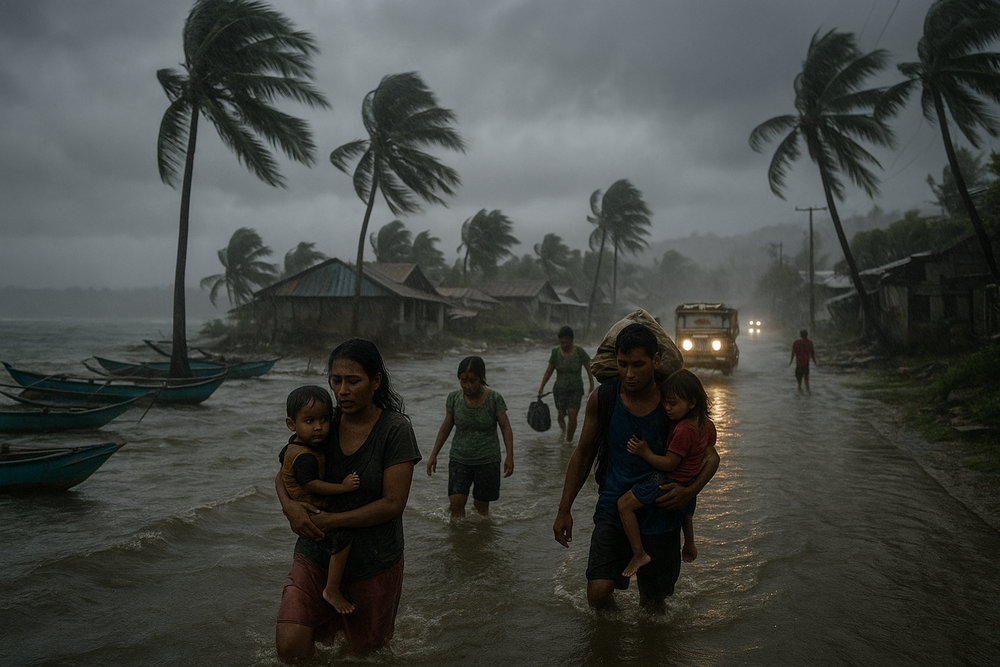
PAGASA provided continuous tracking and advisories, adjusting the storm’s classification as conditions changed. Local government units activated emergency protocols under Republic Act No. 10121, which governs disaster risk reduction and management, including evacuations, pre-positioning of relief goods and the opening of temporary shelters.
PAGASA said the system was expected to move into the Sulu Sea and approach the Cuyo Islands before traversing northern Palawan, though by then it had lost most of its destructive power.
Recovery Begins as the Storm Moves On
By the weekend, Basyang had faded from the maps, but the work of recovery was only beginning.
Damage assessments, cleanup operations and aid distribution continued across affected provinces, as officials and aid groups focused on helping families rebuild homes and livelihoods. For many communities, the storm served as another reminder that even a weakening system can leave deep scars when it crosses vulnerable land.
As the Philippines braces for the next weather system, authorities renewed their call for preparedness, warning that in a country crisscrossed by storms, early warnings save lives—but resilience is tested long after the winds die down.