The Islamic State group, which has claimed responsibility for a deadly attack in Pakistan, is a transnational jihadist organisation that has survived military defeats in the Middle East by transforming itself into a loose network of affiliates able to strike far beyond its original strongholds.
Once in control of large swathes of territory in Iraq and Syria, the group — also known as ISIS or ISIL — now operates through decentralised cells across parts of Asia, Africa and the Middle East. Its claim over the Pakistan attack reflects this evolution: a weakened core leadership still able to inspire, direct or endorse violence thousands of kilometres away.
From al-Qaeda offshoot to self-declared “caliphate”
The Islamic State traces its roots to al-Qaeda in Iraq, formed after the 2003 US-led invasion. It broke with al-Qaeda’s leadership and, in 2014, declared a so‑called Islamic caliphate, appointing Abu Bakr al‑Baghdadi as its leader.
Its ideology is grounded in an ultra‑rigid interpretation of Wahhabism, advocating violent jihad, the overthrow of existing states, and the imposition of its own version of Islamic law. At its height, IS ruled millions of people, funding itself through oil smuggling, taxation, extortion and trafficking.
Although the caliphate collapsed under sustained military pressure by 2019, the group did not disappear. Instead, it adapted — much like a virus mutating after treatment — abandoning territorial control in favour of insurgency, terror attacks and propaganda.
A global network of affiliates
Today, Islamic State functions as a brand claimed by affiliated groups across multiple regions. These local franchises pledge allegiance to IS leadership but operate independently, drawing on local grievances, criminal networks and sectarian tensions.
In Southeast Asia, IS has been active through factions in the southern Philippines. Groups such as Abu Sayyaf, the Maute Group, the Bangsamoro Islamic Freedom Fighters and others pledged allegiance between 2014 and 2017, turning parts of Mindanao and the Sulu archipelago into a regional front.
The most dramatic manifestation was the 2017 siege of Marawi City, when IS‑aligned fighters occupied a city of more than 200,000 people for five months. The battle killed hundreds, displaced entire neighbourhoods and underscored IS’s ambition to establish a foothold in Asia.
From large-scale sieges to hit-and-run attacks
After its defeat in Marawi, IS‑linked groups abandoned attempts to hold territory. Instead, they shifted to small, mobile cells carrying out ambushes, bombings and targeted killings.
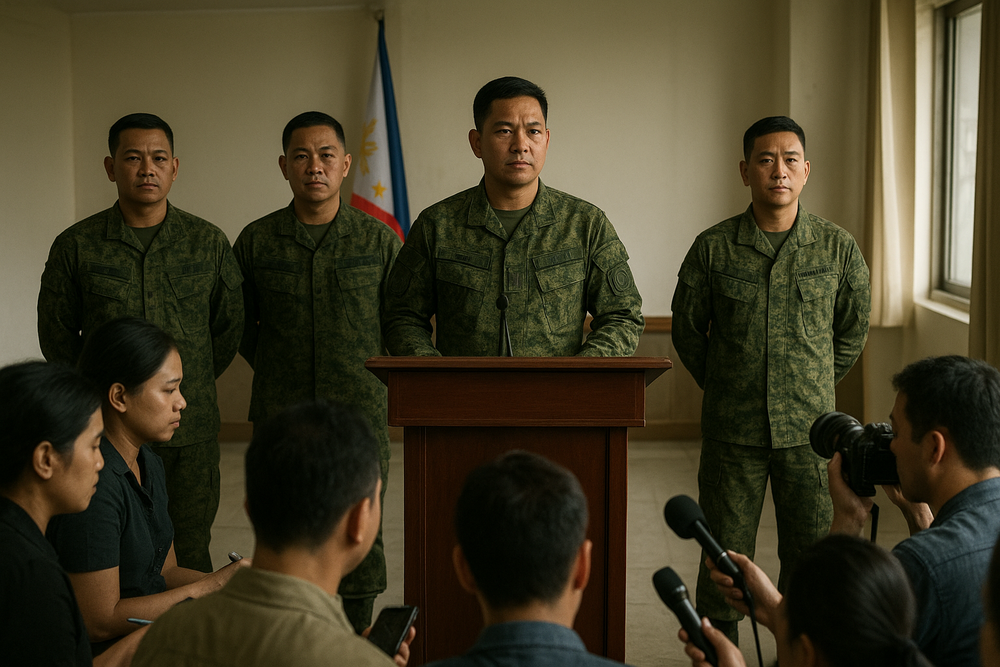
Recent years have seen a steady drumbeat of violence. IS claimed responsibility for a bombing at Mindanao State University in December 2023, as well as several attacks on Philippine soldiers in early 2026 that killed at least six troops.
Funding for these operations typically comes from kidnapping for ransom, extortion and other criminal activities, rather than centralised financing. Philippine authorities say the fragmented nature of the cells makes them harder to detect, even as their overall strength remains limited.
Why Islamic State matters beyond conflict zones
The group’s ability to inspire attacks in places like Pakistan highlights its broader strategy. Islamic State media has repeatedly urged supporters who cannot reach the Middle East to strike wherever they are.
One 2016 video appealed to would‑be fighters who “can’t go to the Middle East” to wage jihad instead in regions such as Southeast Asia. A later message, recovered during the Marawi battle, described violence as a pathway to recognition by IS leadership, calling for “widespread atrocities and uprisings”.
This approach allows IS to claim relevance even without direct operational control. An attack carried out by local militants, or even lone actors, can be rapidly absorbed into its global narrative.
Containment, but not eradication
Governments confronting IS affiliates increasingly view the threat as persistent but containable. In the Philippines, sustained military operations and the creation of the Bangsamoro Autonomous Region in Muslim Mindanao were designed to address both security and long‑standing political grievances.
Critics argue that earlier failures — including gaps in counter‑radicalisation and online monitoring — allowed IS ideology to take root. A 2017 US military assessment described the group’s rise in the Philippines as a “major failure” of existing containment strategies.
A shadow that continues to travel
For communities on the front lines, especially in parts of Mindanao or Pakistan’s conflict‑prone regions, IS‑linked violence brings daily insecurity. For the wider world, the danger is less about battlefield conquest than sudden, unpredictable attacks.
Deprived of its caliphate, Islamic State now survives as an idea: one that migrates across borders, latches onto local conflicts and resurfaces whenever conditions allow. The claim over the Pakistan attack is another reminder that, though diminished, the group’s capacity to destabilise has not been extinguished.