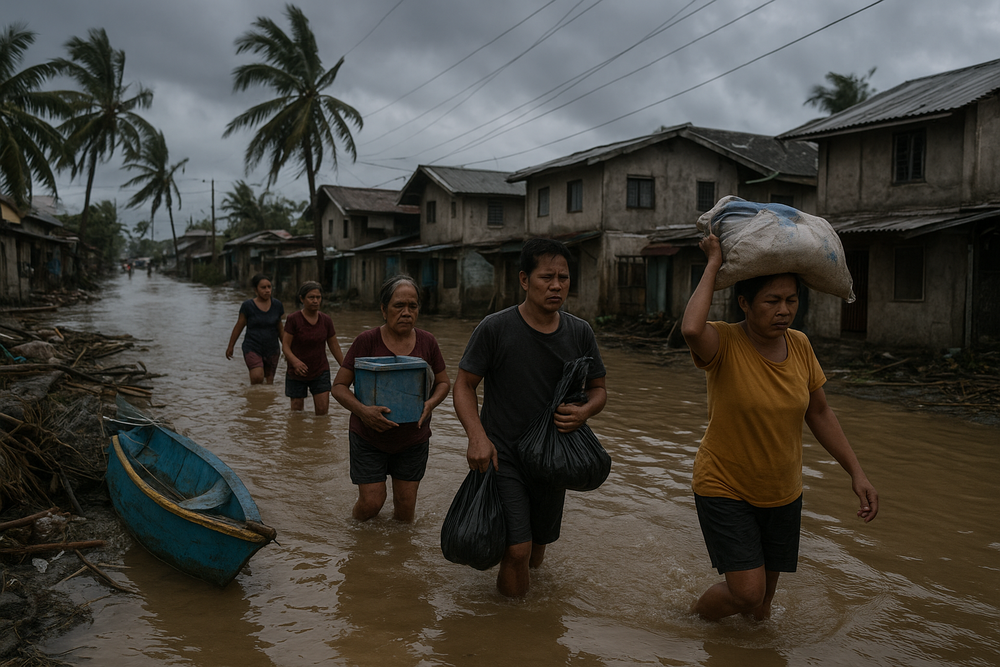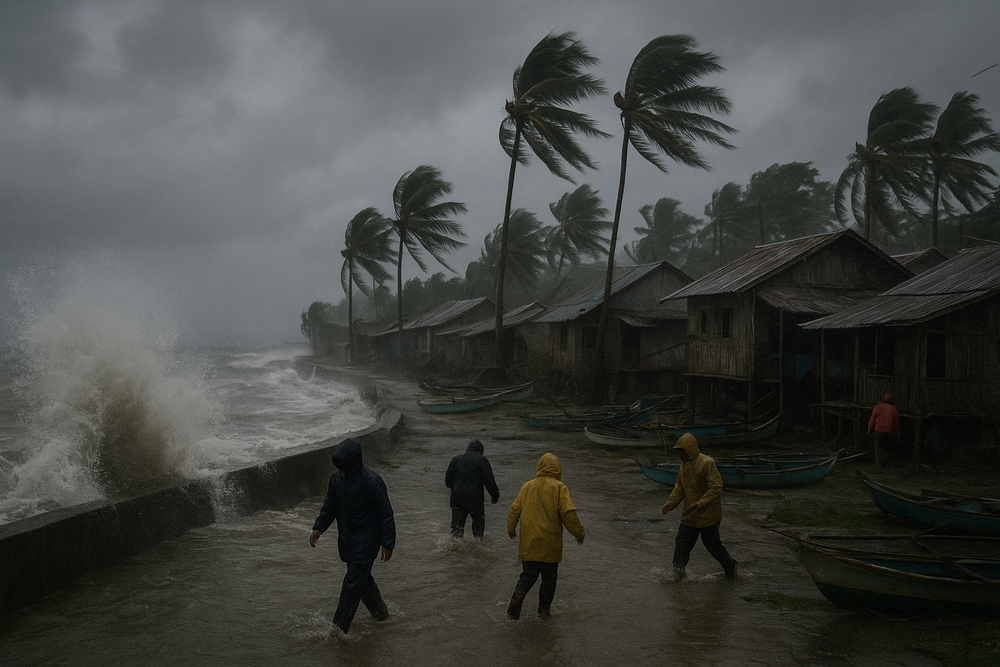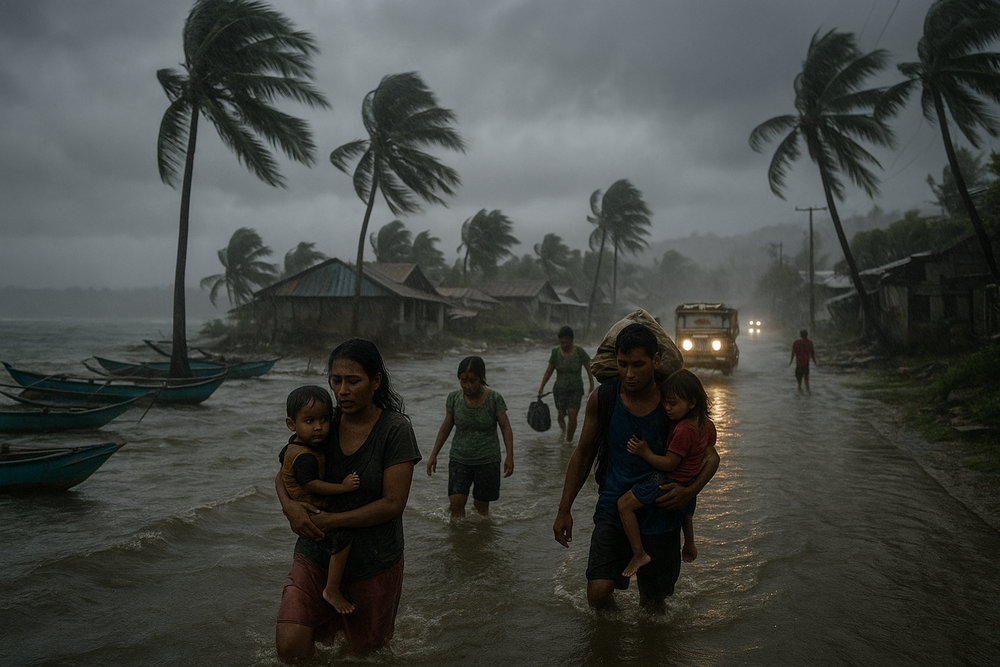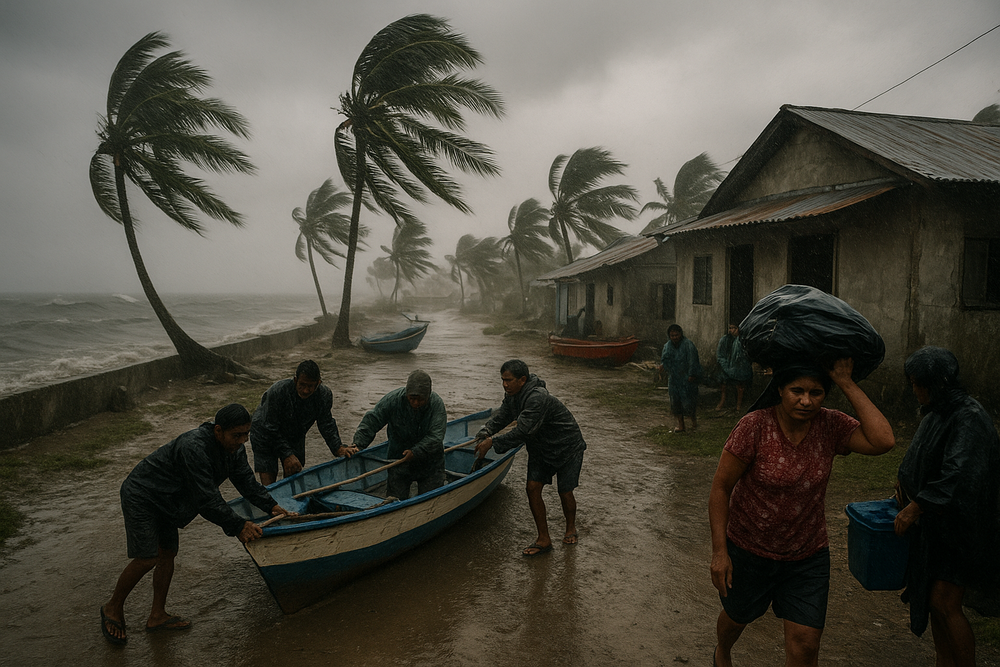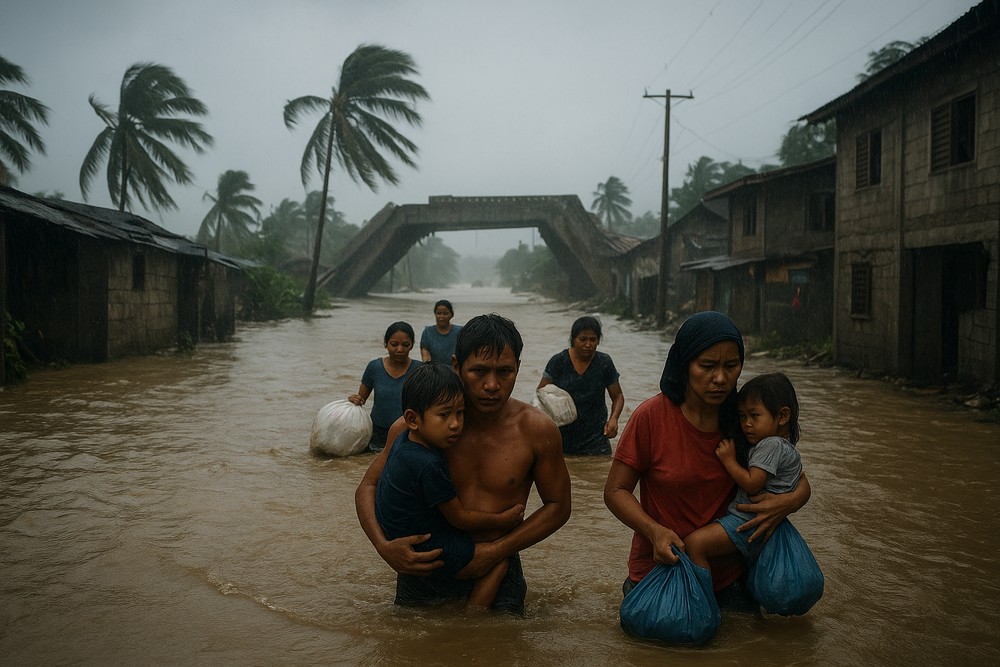
Tropical Storm Basyang maintained its strength on Thursday as it moved across Agusan del Norte, dumping torrential rain and lashing wide swathes of the central and southern Philippines, where flooding and landslides have killed at least 12 people and forced tens of thousands from their homes.
The storm, known internationally as Penha, carried maximum sustained winds of 65 kilometres per hour with gusts reaching 90 kilometres per hour as its centre passed over the town of Jabonga. Philippine forecasters hoisted Tropical Cyclone Wind Signal No. 2 over 16 areas in the Visayas and Mindanao, warning of damaging winds and dangerous seas.
A Storm That Refuses to Weaken
According to the Philippine Atmospheric, Geophysical and Astronomical Services Administration (PAGASA), Basyang was moving west-northwest at 25 kilometres per hour, with a sprawling wind field extending up to 330 kilometres from its centre.
“Basyang will likely remain a tropical storm while traversing the Central and Western Visayas. Further weakening into a tropical depression is possible tonight or tomorrow morning and will be downgraded into a low pressure area by Sunday morning,” PAGASA said in its latest bulletin.
Forecasters expect the system to cross parts of the Central Visayas before weakening further as it heads toward Palawan, with dissipation forecast by February 9. The storm is not expected to affect Luzon or the National Capital Region.
Rainfall Measured in Months
While winds remained moderate, rain proved devastating. Several provinces recorded more than 200 millimetres of rainfall in a matter of days — an amount meteorologists likened to a season’s worth of rain squeezed into a single event.
Areas hit hardest included Cebu, Negros Oriental, Bohol, Siquijor, Surigao del Norte, the Dinagat Islands, Agusan del Norte, Misamis Oriental and Camiguin. Rivers burst their banks, and saturated hillsides collapsed without warning.
Deaths, Displacement and Damage
The Office of Civil Defense (OCD) confirmed 12 fatalities as of early Friday evening, though several cases remained under validation. Nine deaths were reported in Region 10, including four people killed in a landslide in Cagayan de Oro. In the Caraga region, three people drowned — two in Surigao del Sur and one in Agusan del Norte.
Authorities also recorded 36 injuries and counted 64,360 families, or more than 232,000 people, affected across Regions 6, 7, 10 and Caraga. At least 16,528 families sought shelter in 480 evacuation centres, while thousands more stayed with relatives.
Infrastructure damage added to the disruption. Three bridges — one in Iligan City and two in Surigao del Sur — were swept away by floodwaters, severing key routes used by commuters and students. In response to the scale of destruction, Iligan City was placed under a state of calamity.
Seaports Shut, Thousands Stranded
Rough seas forced the closure of 82 seaports at the height of the storm, stranding 4,447 passengers, 1,481 rolling cargoes, 111 vessels and 20 motorbancas. For fisherfolk and daily wage earners, the shutdown meant not only lost income but prolonged separation from families.
The Department of Social Welfare and Development said it had begun releasing emergency assistance, with aid reaching tens of thousands of displaced residents. Previous allocations for storm response indicate support worth more than ₱43 million has been mobilised nationally.
The Human Cost Beyond the Numbers
In rural barangays across northern Mindanao and Caraga, the storm’s impact rippled through daily life. Flooded fields delayed planting of rice and copra, squeezing supplies and nudging food prices upward. Sari-sari stores closed under brown floodwater, while public transport routes vanished with collapsed bridges.
Inside evacuation centres, overcrowding and persistent rain compounded health risks, especially for children and the elderly. For ambulant vendors and construction workers paid by the day, each night away from home brought fresh economic strain.
Warnings, Preparation and Questions Ahead
Government agencies defended their response, saying early warnings and evacuations under the country’s disaster law helped prevent even greater loss of life during what one official described as a near “100-year return period” rainfall event.
The OCD said damage assessments were ongoing. “Some cases are still under validation,” the agency noted as it continued to verify reports from local governments.
As Basyang weakens and moves away, attention is turning to recovery — and to whether aging drainage systems and vulnerable bridges can withstand the next storm. For many communities still clearing mud from their homes, that question feels less like a policy debate and more like a warning written in water.