Tropical Storm Basyang tore through northern Mindanao this week, unleashing record-breaking rainfall that turned rivers into torrents and left at least five people dead across Lanao del Norte, including three confirmed fatalities in Iligan City. Officials warned that the toll could still rise as clearing operations continue and reports from remote communities are validated.
By Saturday evening, the Office of Civil Defense (OCD) confirmed a nationwide death toll of 12, with the storm—known internationally as Penha—affecting nearly 467,000 people across large swathes of Mindanao and the Visayas. Iligan City emerged as one of the hardest-hit urban centres, its flood-prone river systems overwhelmed by rainfall levels rarely seen in a century.
Iligan City Swamped by Historic Rainfall
From the morning of February 5 to early February 6, rain gauges in Iligan registered staggering totals: 383 millimetres in Barangay Tipanoy and 361 millimetres in Barangay Pugaan. According to the Philippine weather bureau, this volume exceeded a 100‑year return period and was double the peak rainfall recorded during Tropical Storm Sendong in 2011, a disaster still etched in the city’s memory.
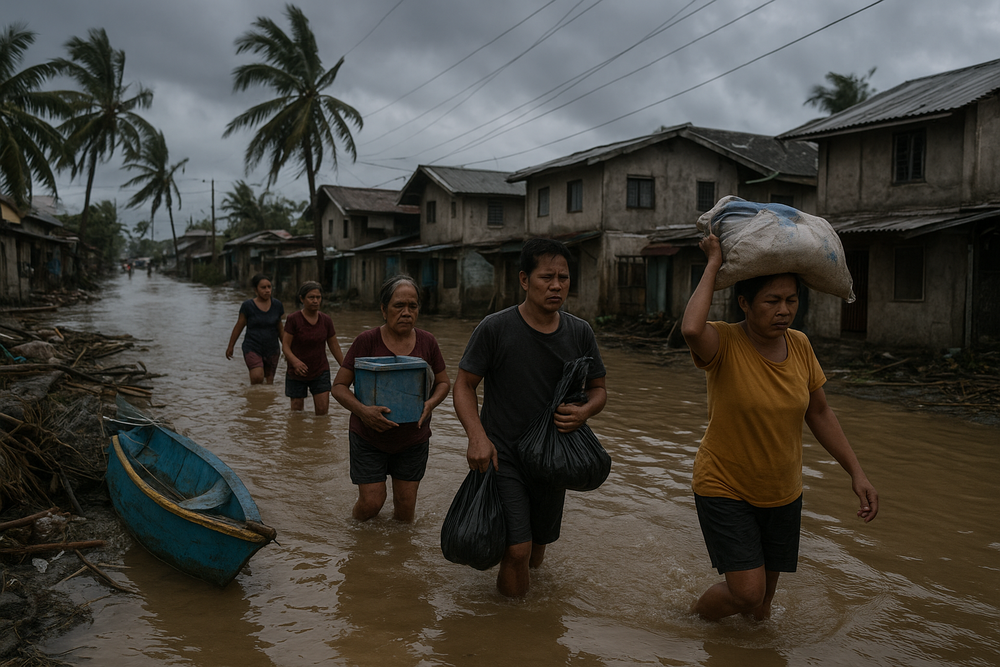
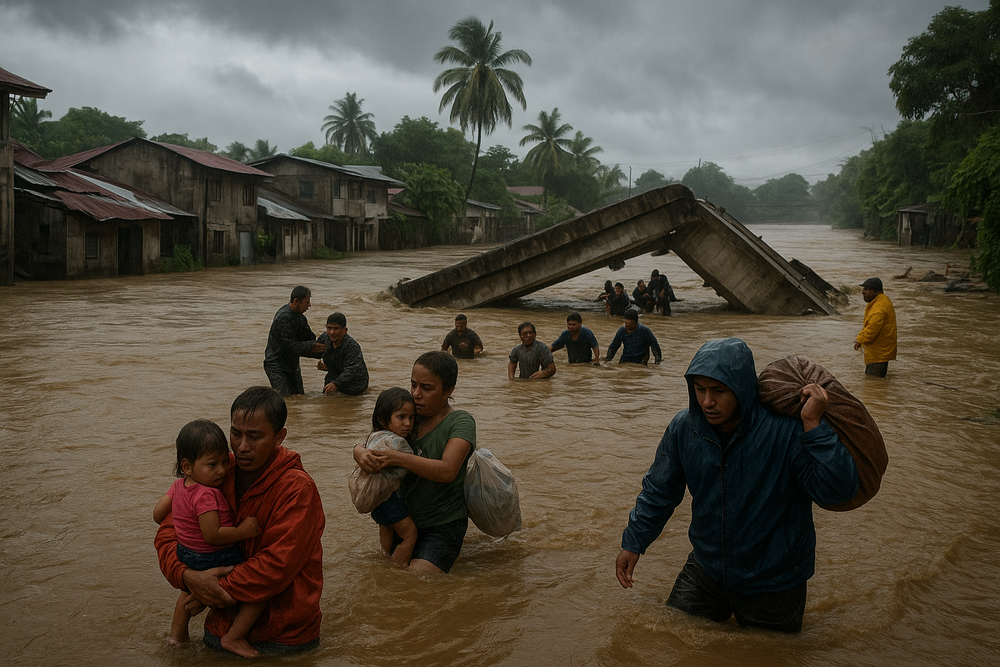
The deluge caused the Iligan River to burst its banks, flooding riverside communities and trapping residents in their homes. Authorities confirmed that three people drowned as fast-rising waters swept through low-lying neighbourhoods, while hundreds of families fled to evacuation centres in the middle of the night.
Deaths and Destruction Across Northern Mindanao
Beyond Iligan, the storm’s impact rippled across Region 10. In nearby Cagayan de Oro City, a landslide triggered by saturated soil ploughed through a residential area, killing four people. Additional deaths were recorded in Lanao del Norte and the Caraga region, where residents drowned after attempting to cross swollen rivers.
By 6 p.m. on February 7, the OCD said nine of the twelve confirmed fatalities were in northern Mindanao alone. “The death toll climbed to 12 while families affected reached around 132,000, equivalent to 467,000 persons,” OCD spokesperson Junie Castillo said in a radio briefing. He added that “clearing operations are now ongoing” as authorities assess the full extent of the damage.
Homes, Bridges and Transport Links Swept Away
The storm left a jagged trail of destruction. Across the affected regions, 445 houses were reported damaged, 38 of them totally destroyed. In Iligan City, a bridge was swept away by floodwaters, severing access to several barangays and complicating rescue and relief efforts.
Transport systems also ground to a halt. 82 seaports were temporarily closed, stranding thousands of passengers and disrupting the flow of goods between islands. Police assessments indicated that while major communication lines and supply chains remained operational, local bottlenecks were slowing the delivery of aid to isolated communities.
Thousands Evacuated as Schools and Work Shut Down
At the height of the storm, more than 16,000 families sought refuge in hundreds of evacuation centres, while thousands of others stayed with relatives or improvised shelters. Classes were suspended in 306 areas, and work was halted in 113 local government units, cutting off income for daily wage earners and small traders.
Inside evacuation centres, displaced residents faced crowded conditions and shortages of clean water. Relief assistance worth between ₱6.5 million and ₱18 million has been released so far, according to government figures, with food packs and basic supplies prioritised for families whose homes were destroyed.
Echoes of Sendong and Calls for Long-Term Solutions
For many in Iligan, the flooding revived painful memories of Tropical Storm Sendong, which killed hundreds in 2011. This time, officials noted, the devastation was largely confined to the Iligan River, sparing other waterways—but the scale of the rainfall exposed lingering vulnerabilities in drainage systems and riverside settlements.
The Philippine National Police, tasked with supporting local governments, said it would intensify supervision of post-disaster operations. “This will ensure effective supervision of post-disaster relief and rehabilitation operations,” said police chief Gen. Jose Melencio Nartatez Jr., noting that initial checks showed key infrastructure remained functional.
Storm Weakens, but Risks Remain
By Sunday morning, Basyang had weakened into a low-pressure area as it moved away from Mindanao. Yet disaster officials cautioned that saturated ground and damaged infrastructure continued to pose dangers, particularly the risk of further landslides and flash floods.
As Iligan begins the slow work of recovery, the storm has once again underscored a stark reality familiar to disaster-prone communities from Southeast Asia to the Mediterranean: when extreme weather meets fragile urban planning, the margin between survival and tragedy can vanish in a single night of rain.