The Philippines and Japan have finalized negotiations on an updated tax treaty, a move both governments say will modernize rules on cross-border income, curb tax evasion, and create a more predictable environment for trade and investment between two long-standing partners.
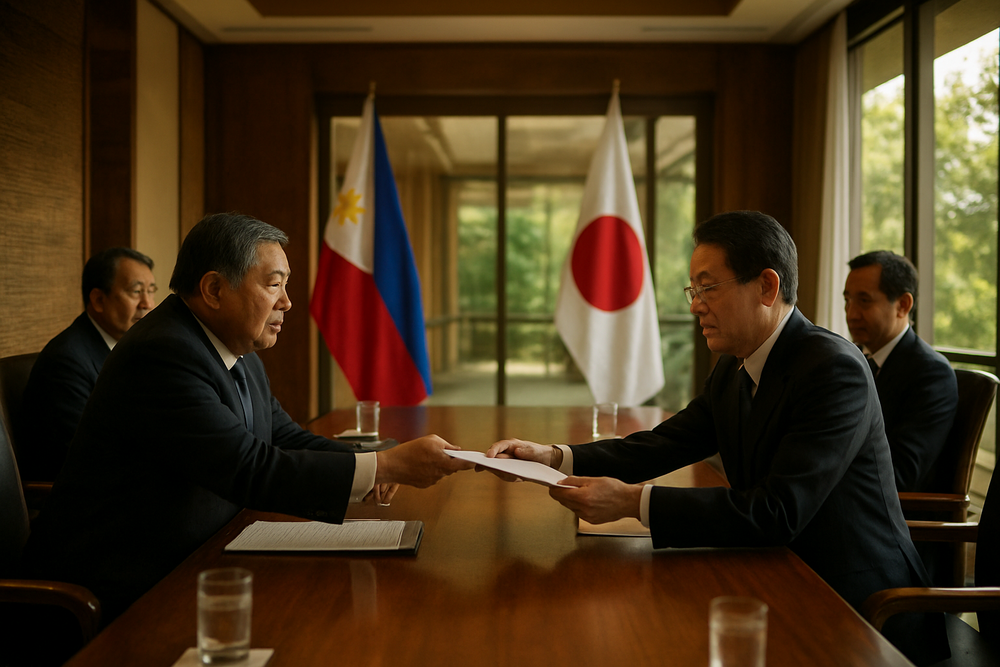
The revised Double Taxation Convention (DTC) was agreed in principle after a single round of formal talks held in the Philippines from January 27 to 30, 2026, according to the Philippine Department of Finance (DOF). The update replaces an agreement first signed more than four decades ago and marks the first substantive overhaul in nearly 20 years.
A treaty brought into the present
At its core, the updated convention is designed to prevent individuals and companies from being taxed twice on the same income while ensuring that taxes are paid where economic activity actually occurs. Officials on both sides described the agreement as an effort to align bilateral rules with contemporary international tax standards, particularly as business models become more digital and cross-border.
Finance Secretary Frederick D. Go said Japan remains one of the Philippines’ most vital economic partners, adding that the negotiations reflect a shared intention to reinforce that relationship.
“As one of the Philippines’ most vital and enduring economic partners, the negotiation with Japan underscores our countries’ mutual commitment to strengthening partnership by providing a clear, modern, and equitable tax treaty framework,” Mr. Go said.
The agreement updates provisions on income taxation, tax imposition, and the granting of credits for taxes paid in either country, offering clearer rules for citizens and residents engaged in cross-border work or business.
Why the update matters now
The original DTC between the Philippines and Japan was signed on February 13, 1980, with its first amendment executed in 2006 and taking effect in 2008. While serviceable, officials said the older framework no longer fully reflected current economic realities.
Revenue Operations Group Undersecretary Rolando Ligon said the renegotiation was driven by the need for certainty and fairness in taxation.
“Through these renegotiations, we seek to align our Convention with contemporary international standards, promote certainty and fairness for taxpayers, and reinforce our shared commitment to combating tax evasion and avoidance,” Mr. Ligon said.
In practical terms, the treaty functions like a set of traffic rules for taxation—reducing disputes, preventing loopholes, and allowing capital and labour to move with fewer fiscal surprises.
Boosting investment and worker confidence
While the DOF did not release projected revenue figures, officials said the update is expected to support investment and cross-border trade. Japanese companies are among the largest investors in the Philippines, with a footprint across manufacturing, infrastructure, and services.
For ordinary workers and families, particularly Filipinos employed by or doing business with Japanese firms, the impact is more indirect but significant. Clearer tax rules can reduce uncertainty over wages, professional fees, and remittances, potentially making such employment arrangements more attractive.
Over time, officials believe this could translate into more stable job opportunities, including in provinces where Japanese-backed projects operate, rather than immediate changes in consumer prices or daily expenses.
Part of a broader diplomatic milestone
The timing of the agreement carries symbolic weight. The finalized update comes as the two countries prepare to mark the 70th anniversary of formal diplomatic relations this year.
Japanese Embassy Minister for Economic Affairs Yokota Naobumi welcomed the progress and signalled hope for a swift conclusion of the remaining steps.
“I sincerely hope that the amendment to the tax treaty will be concluded at an early stage and that this year will truly become one of significant progress in our bilateral relationship,” Mr. Yokota said.
Announcements confirming the agreement were issued on February 4, 2026 by the DOF, the Japanese Embassy, and Japan’s ministries of finance and foreign affairs.
What happens next
Despite the agreement in principle, the updated DTC will not take effect immediately. It must still pass domestic approval processes in both countries—ratification by Congress in the Philippines and approval by the Diet in Japan.
Once signed and ratified, the treaty will enter into force 30 days after the exchange of diplomatic notes. Only then will taxpayers and businesses be able to apply the new provisions.
For now, officials on both sides are framing the deal as a carefully negotiated upgrade—one that tightens the bolts on an old framework and prepares it for a new era of economic exchange.