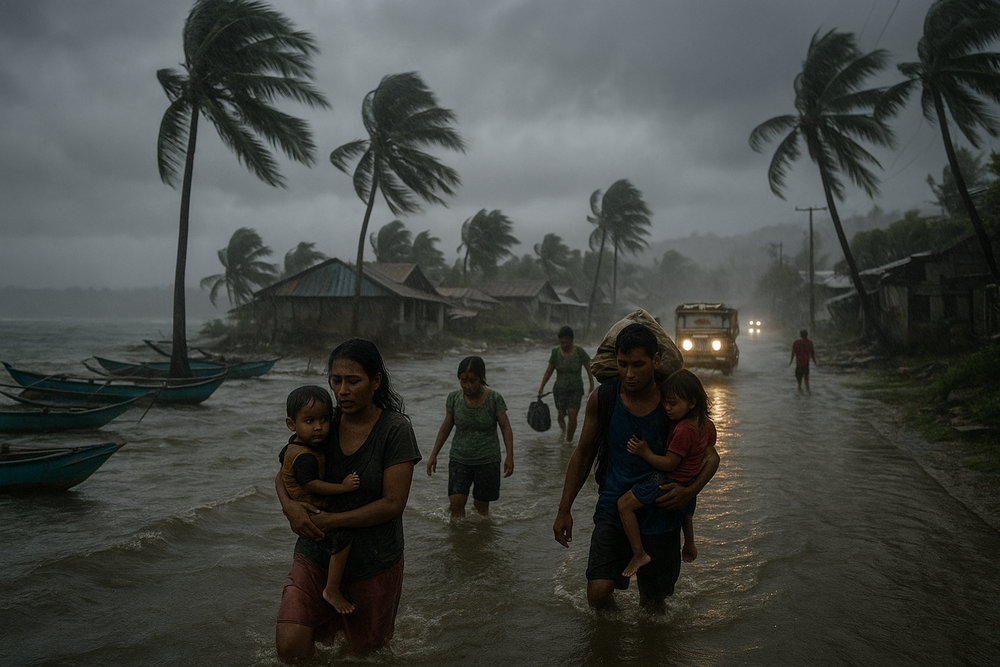
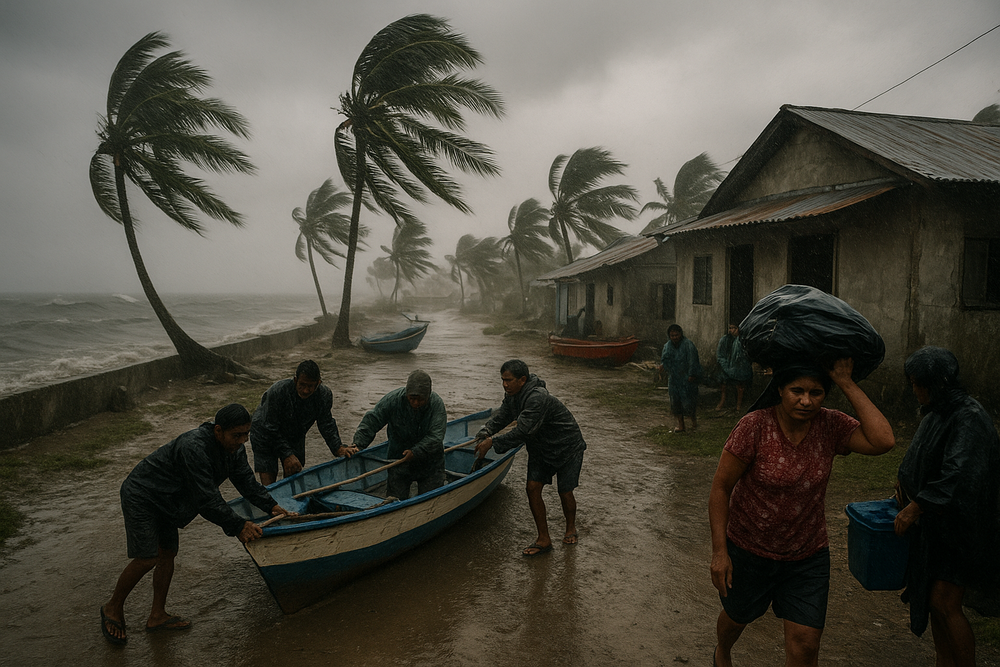
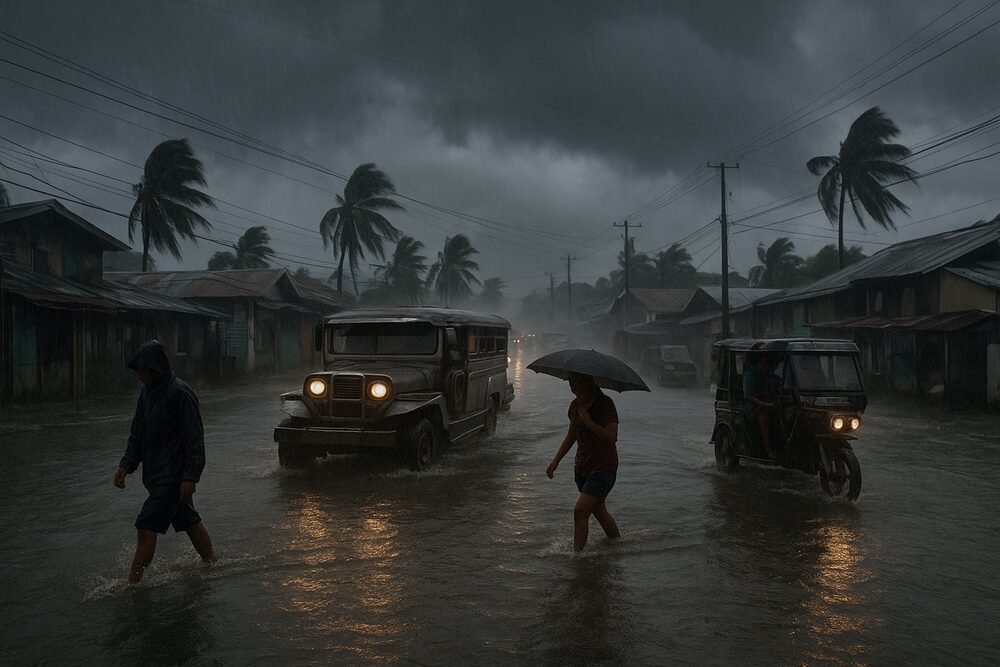
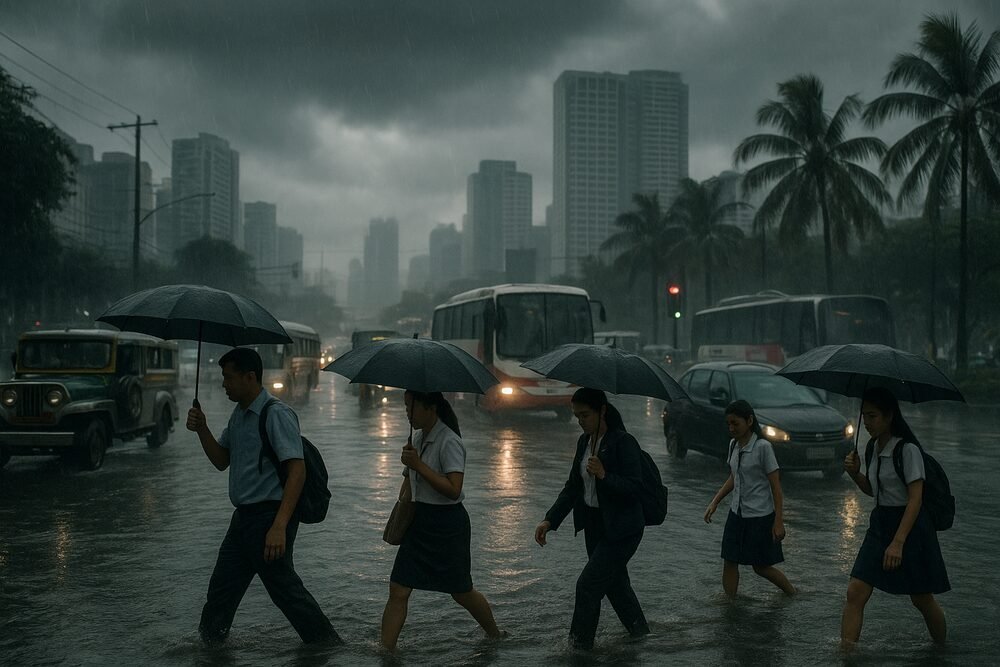
Tropical Depression Basyang is set to drench large swathes of the eastern Philippines with heavy to intense rainfall in early February, prompting flood and landslide warnings across Mindanao and the Visayas as authorities brace for a multi-day weather event.
The Philippine Atmospheric, Geophysical and Astronomical Services Administration (PAGASA) said the system, monitored east of Mindanao, is forecast to deliver widespread downpours from February 4 to 6, with the heaviest rainfall expected over eastern-facing provinces exposed to onshore winds and monsoon-enhanced showers.
Heavy Rainfall Concentrated in the East
According to PAGASA’s latest bulletin, rainfall totals of 100 to 200 millimetres are likely in parts of eastern Mindanao, including Surigao del Sur and the Dinagat Islands, as well as portions of Eastern Samar, Southern Leyte, and Aklan. Broader sections of Mindanao and the Visayas, along with Palawan and Oriental Mindoro in southern Luzon, could see 50 to 100 millimetres over the same period.
“100 to 200 mm of rain posibleng maranasan simula bukas hanggang sa darating na biyernes,” PAGASA officials said in a press briefing on February 4, warning that such volumes can overwhelm drainage systems and rivers.
Storm May Strengthen Ahead of Landfall
As of 11 a.m. on February 4, Basyang was located about 735 kilometres east of Hinatuan, Surigao del Sur, packing maximum sustained winds of 55 kilometres per hour with gusts up to 70 kph. While no tropical cyclone wind signals have been raised, PAGASA said the system could still intensify.
“Dahil ina-anticipate nga po natin ’yung posible pang paglakas ng bagyo, possibly umabot pa ng tropical storm category,” the agency said, adding that landfall over eastern Mindanao is possible late on February 5 or early the following day.
Flooding and Landslide Risks Heightened
The primary threat is not wind but water. Forecasters cautioned that prolonged rainfall could trigger flash floods in low-lying and river-adjacent communities, as well as landslides in mountainous terrain already susceptible to saturation.
“’Yung ganitong karaming pag-ulan po pwedeng magdulot ng mga pagbaha sa low-lying areas,” PAGASA said, specifically flagging settlements near rivers and creeks.
Rough to moderate seas are also expected along eastern seaboards as the depression interacts with the northeast monsoon, prompting advisories for fisherfolk and small vessels to avoid venturing offshore.
Local Authorities on Alert
Local Disaster Risk Reduction and Management Councils (LDRRMCs) across Caraga, Eastern Visayas, Northern Mindanao, and parts of the Visayas have been placed on heightened monitoring status. Provincial and city governments are reviewing evacuation plans and pre-positioning equipment in flood-prone barangays.
Under the Philippines’ Disaster Risk Reduction and Management Act of 2010, local governments are mandated to prepare for hydrometeorological hazards, including pre-emptive evacuations where warranted.
Impact on Daily Life and Livelihoods
For residents in the storm’s path, the rains threaten to disrupt daily routines and fragile livelihoods. Flooded roads can strand commuters and halt construction work, while farmers and fishers in eastern Mindanao and the Visayas face days of lost income.
There are also concerns that damage to crops and transport links could push up prices of rice and vegetables supplied from eastern farming areas, squeezing household budgets in urban centres across the Visayas.
Weather System to Track Westward
After making landfall, Basyang is forecast to cross central and western sections of the Visayas, including Cebu, before weakening as it moves toward the Sulu Sea. However, PAGASA cautioned that scattered to widespread rains could persist even after the system’s core weakens.
While Metro Manila and much of northern Luzon are not expected to be directly affected, forecasters urged continued vigilance, noting that February systems—though less frequent—can behave unpredictably.
For communities along the eastern Philippines, the coming days will test preparedness as rain clouds settle in, slow-moving and heavy, like a soaked blanket laid across the landscape.