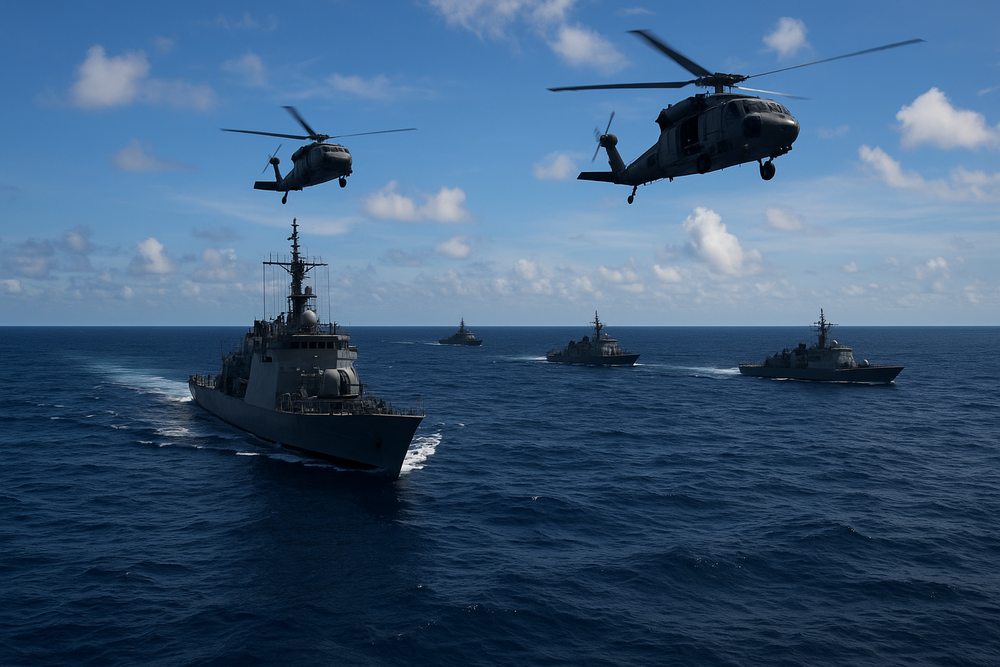
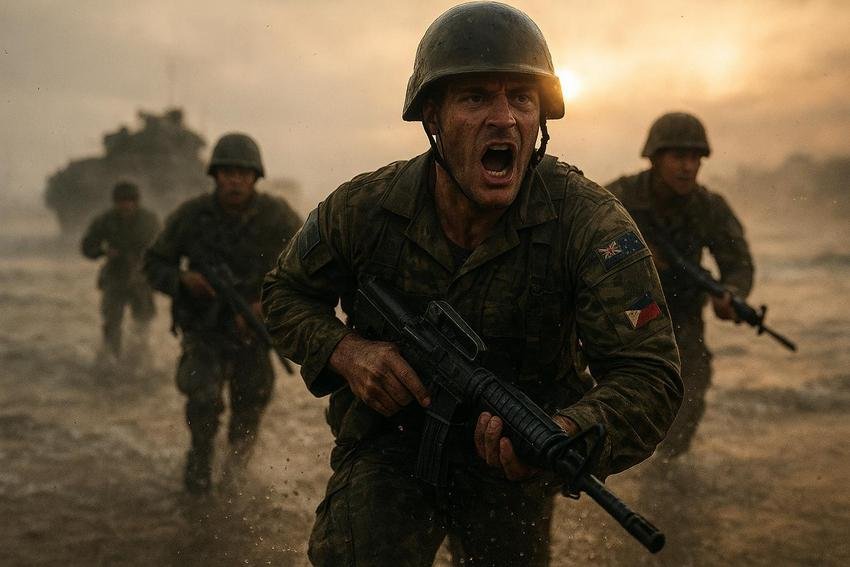
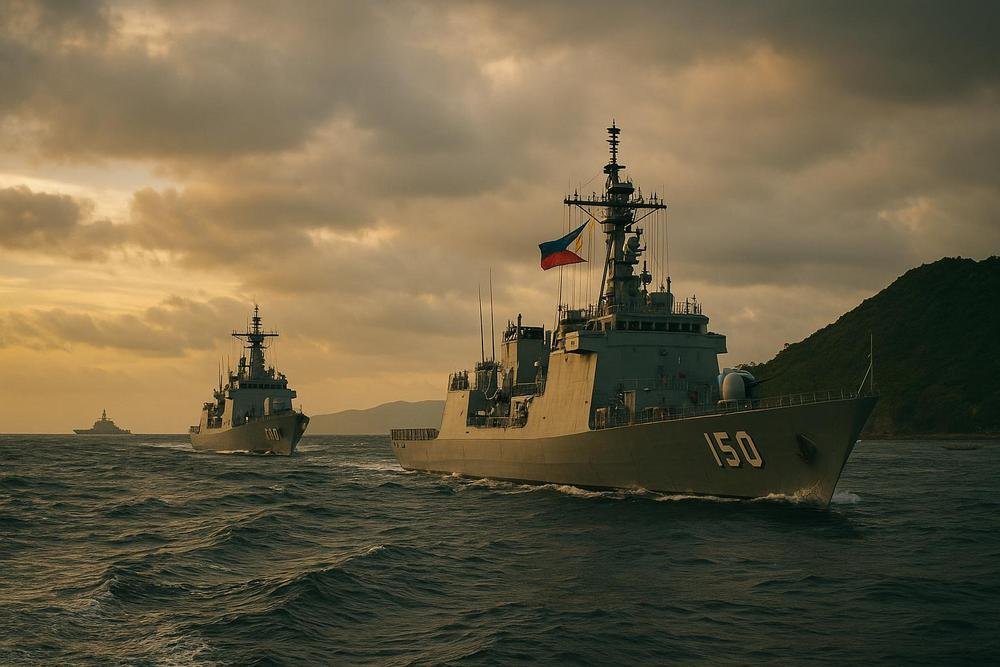
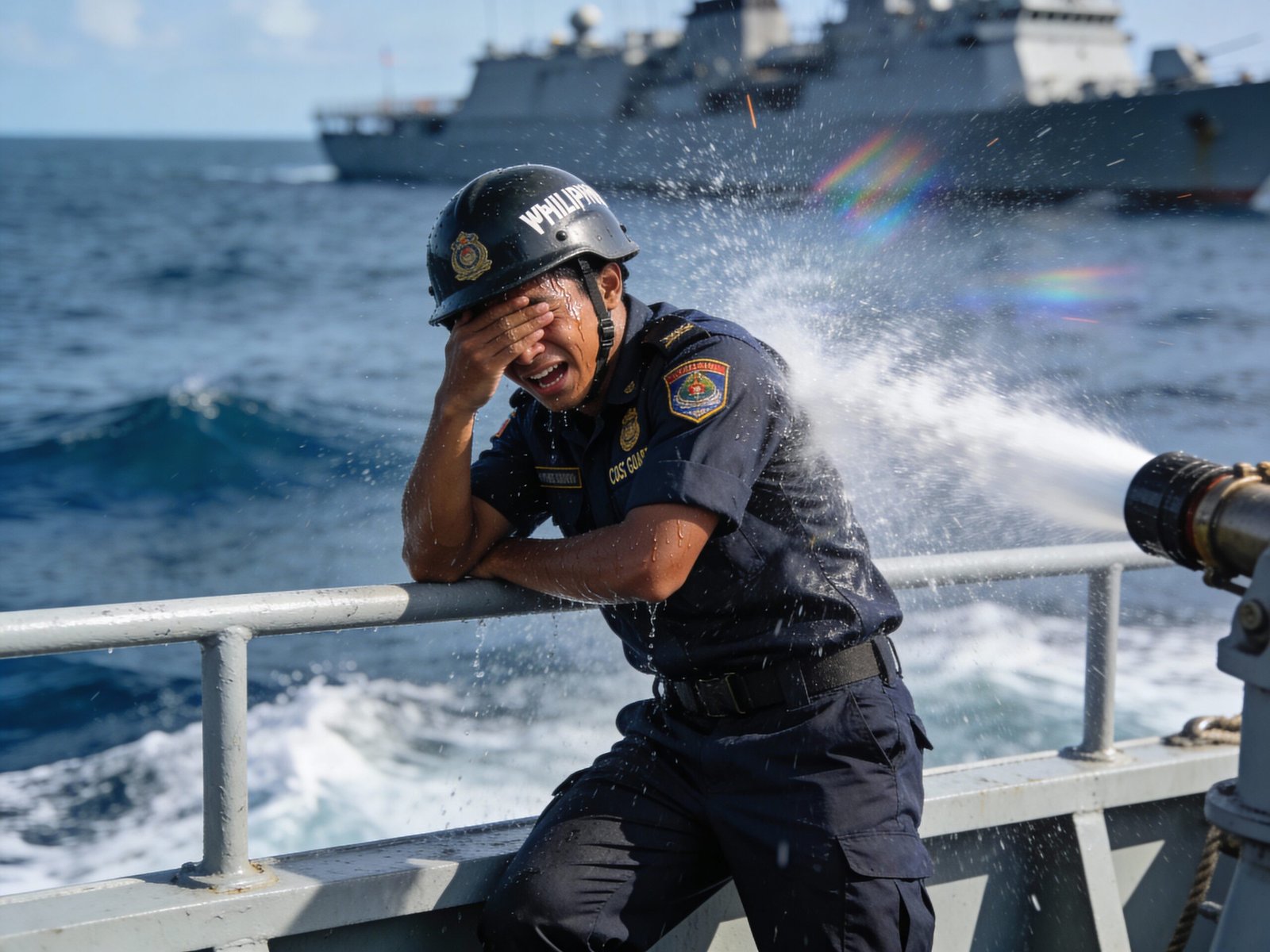
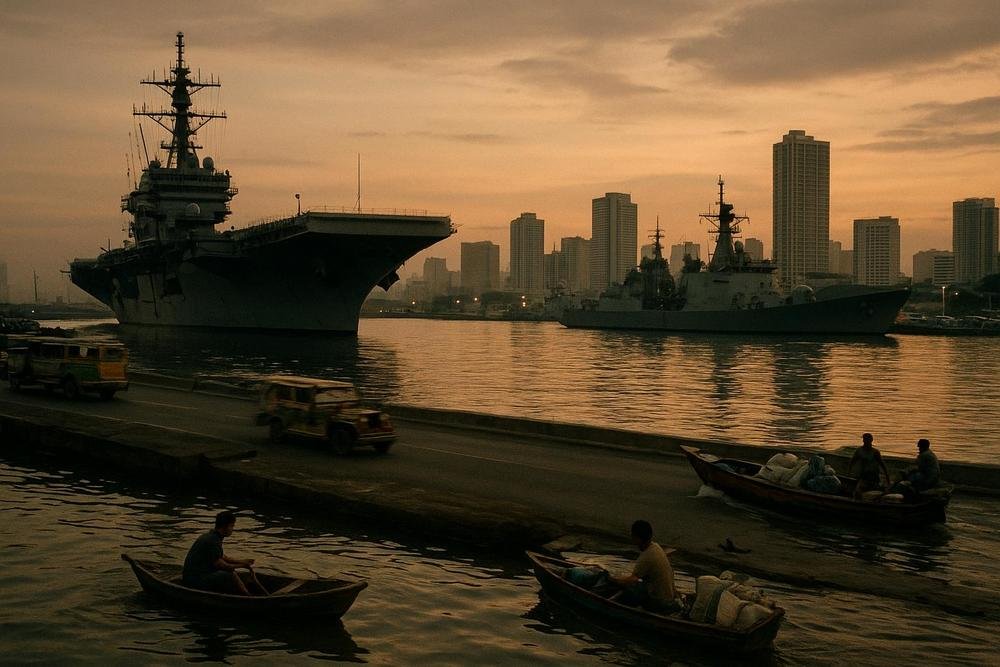
The Armed Forces of the Philippines (AFP) has confirmed the designation of a military exercise zone in the West Philippine Sea for a three‑month period starting in late January, a move that underscores rising regional tensions in one of the world’s most strategically vital maritime corridors.
The exercise zone, formally in effect from January 21 to March 31, 2026, will host coordinated operations involving the Philippines and several allied nations, including the United States, Australia, New Zealand, Japan and Canada. Philippine defence officials say the activities will take place entirely within the country’s exclusive economic zone (EEZ) and are fully compliant with international law.
A contested sea, a defined exercise zone
According to the AFP, the designated area covers parts of the West Philippine Sea — Manila’s official term for waters west of the Philippine archipelago — including Bajo de Masinloc, also known internationally as Scarborough Shoal.
The zone lies more than 600 nautical miles from mainland China, a fact stressed repeatedly by Philippine Navy officials following criticism from Beijing. China has accused the Philippines of deliberately heightening maritime tensions, a claim the AFP has firmly rejected.
Rear Admiral Roy Vincent Trinidad, the Philippine Navy’s spokesperson for West Philippine Sea operations, said the designation reflects Manila’s lawful rights under international maritime rules.
“These exercises are well within our exclusive economic zone, areas that we have sovereignty, sovereign rights and jurisdiction,” Trinidad said. “It includes Bajo de Masinloc. It is more than 600 nautical miles from mainland China. No provision of international law supports their claim or their accusation.”
Allied cooperation amid growing pressure
The upcoming drills form part of a broader expansion in Philippine defence cooperation, anchored by Status of Visiting Forces Agreements with five partner nations. These arrangements allow foreign troops to train and operate alongside Philippine forces and are increasingly central to Manila’s security strategy.
Philippine officials link the intensified cooperation directly to sustained Chinese activity in disputed waters. As recently as July 2025, more than 50 Chinese vessels were observed near Roquo Reef and Arina Shoal, areas also claimed by the Philippines.
“Analyzing trends from 2024 to 2025, we observe that the actions of the People’s Liberation Army Navy, the Chinese Coast Guard, and maritime militia are moving towards a consolidation of their respective forces,” Rear Admiral Trinidad said. “This integration will not only occur at sea but also in the air… This pattern is expected to continue into 2026.”
To Philippine planners, the exercise zone is less a provocation than a visible assertion of preparedness — a signal that Manila is not acting alone.
The legal backdrop: a ruling ignored
At the heart of the dispute lies the 2016 ruling of the Permanent Court of Arbitration in The Hague, which found that China’s expansive claims in the South China Sea had “no legal basis.” While the Philippines has consistently cited the decision, China has refused to recognise the ruling.
For the AFP, the exercise zone is an extension of that legal position into operational reality. “Historically, the Philippines has been on the receiving end of coercive and aggressive actions,” Trinidad said. “We have not claimed what is not ours.”
The West Philippine Sea label itself carries weight, reinforcing Manila’s claim over waters that include the Kalayaan Island Group and Bajo de Masinloc.
Implications beyond the drill area
While primarily military in nature, the exercise designation has implications well beyond naval manoeuvres. The South China Sea — of which the West Philippine Sea is part — carries more than $3 trillion in shipborne trade annually, making it one of the world’s busiest economic arteries.
For the Philippines, restricted zones during exercises may temporarily limit access for small‑scale fishermen, many of whom already operate under pressure from foreign coast guard and militia vessels. There are also knock‑on effects for commercial shipping, including potential increases in insurance premiums and routing adjustments.
The Manila Flight Information Region has also issued advisories tied to the exercise period, raising the possibility of limited airspace restrictions and minor flight delays — an issue watched closely by international carriers.
China’s response and competing narratives
Beijing has framed the exercise zone as destabilising, warning it could affect freedom of navigation and overflight. Some international observers have echoed concerns that extended military designations risk blurring the balance between security operations and civilian access under the United Nations Convention on the Law of the Sea.
Philippine officials counter that the greater risk lies in unchecked consolidation by Chinese forces. “Numbers do not lie. People do,” Trinidad said. “Facts will tell us that we have not been nor will we be the reason for aggression in the West Philippine Sea.”
Manila says it expects Chinese naval, coast guard and air patrols — including flights involving PLA Air Force bombers — to continue throughout 2026.
A signal felt far beyond Southeast Asia
Though geographically distant, developments in the West Philippine Sea resonate far from Southeast Asia, including across Europe and the Mediterranean. For trading states like Malta, whose economy depends on open sea lanes and predictable maritime rules, the dispute highlights how regional flashpoints can carry global consequences.
As the exercise period approaches, the West Philippine Sea once again becomes a testing ground — not only for ships and aircraft, but for the resilience of international law in increasingly crowded and contested waters.