Visita Iglesia: Filipinos Observe Holy Week Traditions
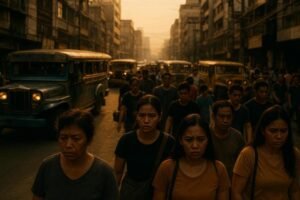
On Holy Week evenings in the Philippines, millions of Catholics spill into the streets after sunset, moving from one church to another in quiet prayer. Some walk barefoot. Others carry wooden crosses. A few go further, submitting their bodies to acts of pain known collectively as penitensya. To outsiders, the ritual blend can appear extreme or even anachronistic. Yet in the eyes of history—and increasingly through the lens of science—Visita Iglesia and penitential practices reveal how faith, culture and human psychology intersect.
For a country shaped by centuries of Catholicism and older indigenous belief systems, Holy Week rituals have become a living archive. They speak not only to theology, but to how communities endure hardship, find meaning in suffering, and adapt tradition to modern life.
A Pilgrimage Rooted in Europe, Transplanted to Asia
Visita Iglesia, literally “church visit,” refers to the practice of visiting seven churches—a number symbolising spiritual completeness—or fourteen, corresponding to the Stations of the Cross. Devotees typically undertake the pilgrimage on Maundy Thursday, after the Mass of the Lord’s Supper, when churches remain open until midnight.
The custom did not originate in Asia. Its roots trace back to Rome in the early 14th century, when Pope Boniface VIII granted indulgences to pilgrims visiting St Peter’s Basilica and St Paul Outside the Walls during the Holy Year of 1300. The practice was later formalised in 1553 by St Philip Neri, who organised a “Seven Churches Walk” to counter the excesses of Carnival.
Just over a decade later, the devotion travelled halfway across the world. In 1565, Augustinian missionaries introduced Visita Iglesia to the Philippines during the first years of Spanish colonial rule. At the time, the ritual was confined to the walled city of Intramuros, where seven major churches—including what would become the Manila Cathedral and San Agustin Church—stood within walking distance.
From Colonial Elite to Popular Faith
Initially observed by Spanish colonists and the local elite, the tradition gradually spread beyond Intramuros as churches multiplied and transport improved. By the late Spanish period, Visita Iglesia had become a practice of the masa, woven into family life across urban and rural communities.
Historian Dr Tyrone Nepomuceno of the University of Santo Tomas describes this evolution as a product of cultural blending.
“Cultures are not rigid. Traditions are not rigid. There has to be an adaptation to keep the tradition alive,” he explains, noting that Filipino Catholicism absorbed pre-Christian notions of bodily sacrifice and communal ritual.
Today, pilgrims often pray the Rosary or complete one or two Stations of the Cross in each church, rather than all fourteen in a single location. The Catholic Bishops’ Conference of the Philippines has even introduced online Visita Iglesia options for overseas workers and the infirm, underscoring how an old devotion continues to adjust to modern constraints.
Penitensya: Pain, Belief and the Human Mind
More controversial are the penitential practices that have become Holy Week fixtures in provinces such as Pampanga and Bulacan. These include self-flagellation—known locally as pabasa or penitensya—and, in rare cases, staged crucifixions.
The Catholic Church does not prescribe or endorse these acts, and local bishops routinely discourage them. Yet they persist, tolerated as expressions of free will rather than doctrine. From a historical perspective, scholars view them as products of syncretism, blending Catholic theology with indigenous ideas of atonement and sacrifice.
From a scientific standpoint, formal studies are limited. However, psychology offers one framework: acts of voluntary suffering can reinforce a sense of control, purpose and resilience. As Dr Nepomuceno observes, “The Filipino psyche places more importance on spirituality over the social, physical and mental aspect.” Pain becomes a language through which faith is made tangible.
Faith in Motion, Communities on the Move
Each Holy Week, Visita Iglesia reshapes daily life, especially in Metro Manila. Traffic slows near historic churches such as Quiapo and the Manila Cathedral. Families plan pilgrimages that double as walking tours of religious heritage sites. Informal vendors line the streets, selling food and candles, while almsgiving remains an integral part of the ritual.
In provincial towns, penitential processions draw large crowds, requiring local authorities to manage safety and health risks associated with open wounds and large gatherings. There are no official nationwide statistics on participation, but the scale is visible: these are among the most widely observed religious practices in the country.
Meaning Beyond the Numbers
Clergy repeatedly stress that the number of churches visited or the severity of the sacrifice matters less than intention. “What’s important is that the faithful prays intently and fervently from the heart,” says Rev Fr Louie Coronel, OP.
For many devotees, the rituals offer spiritual grounding amid economic uncertainty and personal struggle. As one widely echoed sentiment puts it, “Behind an imperfect life and challenges along the way, Filipinos often knew not to lose faith.”
An Old Devotion in a Modern World
Viewed from afar—whether from secular Europe or deeply Catholic Malta—Visita Iglesia and penitensya may seem like relics of another age. Yet their persistence suggests otherwise. Like a river fed by many streams, Filipino Holy Week traditions draw from Roman Catholicism, local history and human psychology.
They endure not because they are rigid, but precisely because they bend—absorbing new meanings, new routes and even digital platforms—while preserving a core belief: that faith, like suffering, is best understood when it is lived, step by step.