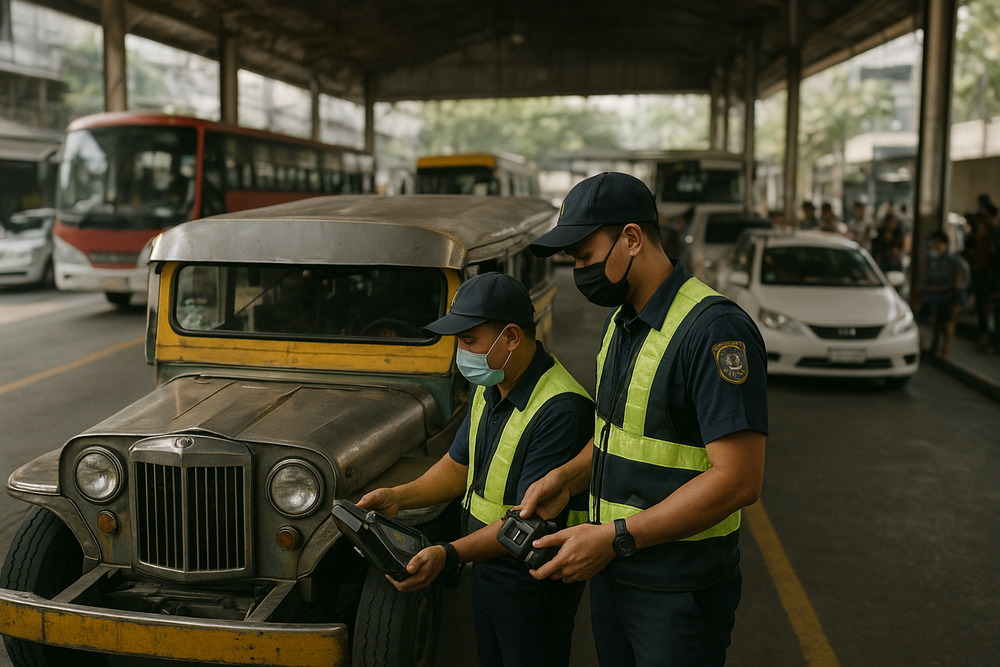
The Land Transportation Franchising and Regulatory Board (LTFRB) has announced it will begin using an automated process for vehicle roadworthiness checks, tapping a nationwide network of motor vehicle inspection centers in a move officials say will tighten safety standards for public transport and protect commuters from dilapidated vehicles.
The initiative, unveiled on January 26, 2026, is set to roll out across the Philippines, starting with public utility vehicles (PUVs) such as jeepneys, buses, and taxis. It marks a significant step in the government’s broader push for digital transformation under the Public Transportation Modernization Program (PTMP).
Automated Checks, Visual Inspections
Under the new system, LTFRB will use its motor vehicle inspection centers nationwide to conduct automated roadworthiness assessments that combine digital testing with visual inspections.
“Gagamitin natin ang mga motor vehicle inspection centers natin nationwide [para] dumaan na sa automated process ang pag-check ng roadworthiness,” LTFRB Chair Vigor Mendoza II said.
These inspections will go beyond brakes and emissions. Inspectors will also check the general condition and cleanliness of vehicles—an issue that has drawn persistent complaints from passengers.
“‘Yung ating motor vehicle inspection center, kasama na diyan ang visual inspection ng mga sasakyan,” Mendoza added, underscoring that roadworthiness includes what commuters see and experience every day.
Accountability Pushed Down the Line
To ensure the policy carries teeth, LTFRB is pairing automation with stricter enforcement on the ground. The agency will form dedicated enforcement teams and maintain a pool of mystery riders to monitor compliance discreetly.
Regional accountability is central to the plan. “If we catch a vehicle on the road na sira-sirain, we will hold the regional directors accountable for this,” Mendoza said.
The warning reflects a sharper stance from the regulator: dilapidated vehicles may soon find their franchises at risk, as LTFRB tightens rules on franchise renewal for operators that fail to meet safety and condition standards.
Trial Run With Transport Leaders
To demonstrate how the system will work in practice, LTFRB has scheduled a run-through on Thursday, January 29, inviting transport leaders to observe the inspection process firsthand.
“Sa Huwebes, magra-run through. Inimbitahan natin ang transport leaders, magra-run through tayo sa motor vehicle inspection center kung ano ang titignan, gaano kabilis ang proseso ng pag-inspect,” Mendoza said.
The agency hopes the exercise will ease concerns among operators about delays and show that the inspections are designed to be efficient as well as strict.
Part of a Bigger Digital Shift
The automated inspections form part of LTFRB’s ambition to fully digitalize all its transactions by the end of 2026. This includes online applications and verification for Certificates of Public Convenience and Provisional Authority.
“We are working under the marching order of the President for the digital transformation of all government services,” Mendoza said earlier this month, noting that the shift aims to cut red tape and eliminate fixers from the system.
In simple terms, the agency is trying to make regulation work like a well-oiled machine: fewer human bottlenecks, clearer rules, and a paper trail that can be audited.
Focus on PUVs, Not Private Cars
The decision to prioritise public vehicles has drawn support from some quarters in the Senate. Senator Rafael Tulfo, who chairs the Senate Public Services Committee, has urged regulators to halt mandatory inspections for private vehicles and focus instead on smoke-belching and poorly maintained PUVs.
“Suspend that first (private motor vehicle inspection). Study this first and reduce the burden on private vehicle owners,” Tulfo said during a hearing.
For daily commuters—the vast majority of whom rely on public transport—the emphasis on PUVs is seen as a matter of equity, targeting where safety risks are highest.
What It Means for Commuters
If enforced consistently, the new system could mark a turning point for passengers long accustomed to breaking down buses, rattling jeepneys, and poorly maintained taxis.
LTFRB argues that automated inspections, combined with digital records and surprise checks, will reduce the number of unsafe vehicles on the road, improving reliability, comfort, and safety. While operators may face short-term disruptions as inspections ramp up, the agency says the long-term goal is a cleaner, safer, and more predictable public transport network.
As the PTMP moves toward completing route rationalisation by 2026, the message from regulators is clear: modernisation is no longer optional, and automation will be the tool used to enforce it.