At 20, Alexandra “Alex” Eala has achieved what generations of Filipino tennis players only imagined. In January, she became the first Filipina to break into the WTA top 50, reaching a career-high ranking of No. 49—a milestone that has reverberated far beyond tennis courts in Manila, Madrid or Melbourne. Her ascent is not only a sporting breakthrough; it is a story of persistence from a country where tennis has long lived in the shadows.
Eala’s rise, marked by giant-killing victories and a fearless style, has turned her into a symbol of possibility. From barangay courts to international stadiums, her journey offers a new reference point for young Filipinos searching for role models outside the nation’s traditional sporting pillars.
Breaking Barriers in a Breakout Season
The turning point came in March 2025, when Eala entered the WTA 1000 Miami Open as a wild card and left as one of the sport’s most discussed names. She defeated a succession of established players, including Madison Keys and world No. 2 Iga Świątek, to advance to the semifinals—an unprecedented run for a Filipina in a tournament of that stature.
“Alex Eala has long been hailed as the future of Philippine tennis — a prodigy carrying the hopes of a nation yearning for a breakthrough on the global stage. Now, at only 20, she is beginning to fulfill the prophecy,” one assessment noted at the height of her Miami surge.
The momentum carried through the rest of the year. Eala finished 2025 ranked No. 50, captured a WTA 125 title in Guadalajara, reached the final in Eastbourne, and claimed her first Grand Slam main draw victory at the US Open. By early 2026, she had pushed her ranking even higher, confirming that Miami had not been a one-off.
From Quezon City to the World Stage
Born on May 23, 2005, in Quezon City, Eala picked up a racquet at four and never let go. Left-handed and standing 5’9”, she quickly distinguished herself in junior competitions, winning the 2022 US Open girls’ singles title—the first Filipino to claim a junior Grand Slam crown.
That victory opened doors to Europe, where she began training at the Rafael Nadal Academy in Spain. There, under the guidance of coach Joan Bosch, Eala refined her technique and temperament, learning to compete against peers from nations with deeper tennis traditions and stronger infrastructures.
Her professional debut came in 2020. By 2023, she was knocking on the door of the top 200. In 2024, consistent performances at ITF and WTA events pushed her to a career-high of No. 143—and laid the groundwork for her explosive season a year later.
A Young Career, Measured Progress
Eala’s statistics underline a career gaining pace rather than racing ahead. She holds an overall singles record of 196–118, with a positive 40–26 mark in 2025. Early in 2026, she reached the semifinals of the WTA 250 in Auckland before exiting in the first round of the Australian Open—a reminder of the thin margins at the sport’s elite level.
Such exits have not dampened expectations, but they have tempered them. Analysts see in Eala not a finished product, but a player still learning to sustain form across an unforgiving calendar.
“I think I noticed her like a lot of people did when she made her run at the Miami Open last March,” said tennis analyst Ben Rothenberg. “She made the semifinals there really as a complete underdog… and she beat a lot of big players, most notably Madison Keys.”
Inspiring Beyond the Baseline
In the Philippines, where tennis remains an expensive pursuit—often costing families tens of thousands of pesos annually—Eala’s success has taken on a broader social meaning. Her path, aided by scholarships and international training, has shown young athletes that elite opportunities can exist beyond economic constraints.
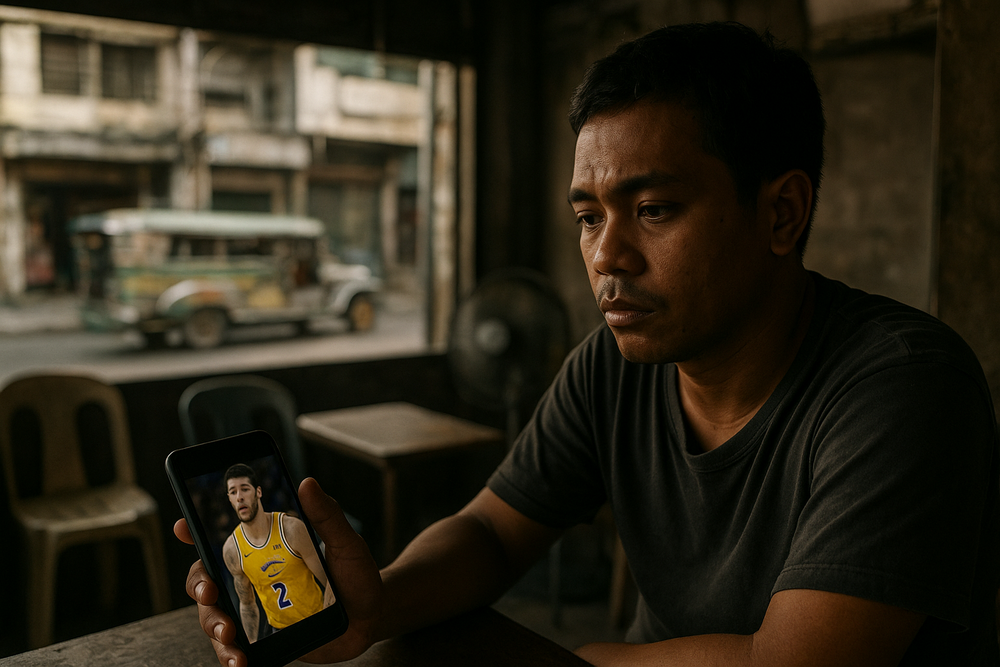
Her story has travelled through everyday settings: discussed in jeepney rides, watched on televisions in sari-sari stores, and shared on social media feeds. For many families, especially those considering sports as a viable path for daughters, Eala represents discipline, education and international exposure rather than uncertainty.
Government support has followed her rise, with sports officials citing her success as evidence that long-term investment in athletes can yield global results. Critics, however, point to the absence of a wider tennis system at home, warning that one star cannot substitute for infrastructure.
Carrying Hope, Embracing Reality
Eala herself has not framed her success as an ending. With career prize money surpassing US$1.36 million and a place among the world’s top 50, she remains, by tennis standards, at the beginning of her journey.
Her challenge now is consistency—turning landmark victories into routine presence in the later rounds of tournaments. Yet even as the expectations grow heavier, the meaning of her rise is already clear.
In a sport where geography and wealth often dictate opportunity, Alex Eala has redrawn the map. She has not only made history for the Philippines; she has given a generation permission to believe that the world’s biggest courts are not out of reach.