The Metro Manila Subway Project, billed as the Philippines’ long-awaited answer to choking traffic and punishing commutes, is running into a familiar urban obstacle: land. Nearly seven years after its groundbreaking, the country’s first underground rail system is still battling delays caused not by engineering limits, but by the painstaking task of acquiring right of way through some of Metro Manila’s most valuable and tightly held properties.
As of December 2025, the Department of Transportation (DOTr) says it has secured 90.76 per cent of the land required to build the 33-kilometre subway stretching from Valenzuela City to Parañaque City, including a direct link to NAIA Terminal 3. While that figure marks a sharp improvement from earlier years, the remaining sliver of land has proven costly in time, money and public patience.
A Landmark Project Slowed by the Smallest Gaps
The Metro Manila Subway Project (MMSP) is designed to carry 300,000 to 400,000 passengers daily, cutting cross-city travel times and easing pressure on surface roads such as EDSA, one of Southeast Asia’s most congested highways.
Yet progress underground has been dictated by negotiations above it. Right-of-way (ROW) acquisition, particularly in exclusive residential villages and dense business districts, has repeatedly stalled construction. Tunnel boring machines cannot advance where ownership disputes or compensation talks remain unresolved, turning missing parcels into physical roadblocks.
Overall construction stood at 26 per cent completion as of November 2025. Partial operations, once promised as early as 2022, are now targeted for 2028, with full operations pushed to late 2031 or 2032.
Corinthian Gardens and the Cost of Consensus
No area better illustrates the problem than Corinthian Gardens in Quezon City. Since 2019, the government has negotiated with homeowners over access to streets such as Sanso, Ocampo and Tabuena, which sit along the subway’s alignment.
For years, talks stalled amid concerns over property values, safety and disruption. By September 2025, the DOTr had issued 32 compensation offers worth more than ₱820 million, with only 20 initially accepted.
A breakthrough came in December 2025, when the Corinthian Gardens Homeowners Association finally agreed to the government’s offer, clearing the way for tunnelling works to begin in early 2026.
DOTr Acting Secretary Giovanni Lopez framed the milestone as a turning point. “2025 was truly a banner year for our ROW as we accelerated land acquisition so commuters could immediately benefit from the subway and NSCR,” he said.
Delays, Revised Timelines and a Ballooning Bill
The subway’s timeline has shifted repeatedly. Launched in February 2019 and dubbed the government’s “Project of the Century,” construction formally began later that year. The COVID-19 pandemic then halted work and slowed negotiations between 2020 and 2022.
Partial operations were first rescheduled to 2025, then to 2028. Full opening dates moved from 2027 to 2029, and now to 2031–2032.
The cost has risen in parallel. The project is now valued at ₱488.5 billion, largely financed through loans from the Japan International Cooperation Agency (JICA). For 2026, the DOTr has allocated ₱74.5 billion across flagship transport projects, including the subway.
Despite the setbacks, Lopez said the numbers add up. “So ang tingin namin, based on our calculations, kapag meron lang na, based on budget also no, makakaya natin full operations nito 2032, or last quarter 2031. And we’re talking about the entire stretch from Valenzuela all the way to NAIA na po,” he said.
Building Capacity Underground
To break the bottleneck, the DOTr expanded its Right-of-Way and Site Acquisition (ROWSA) office from 200 to 900 personnel. Interagency teams now work alongside local governments and private developers to resolve alignment and compensation issues.
On the construction side, international and local joint ventures — including Japanese firms with deep tunnel-boring experience — are handling contract packages across the route. Skills training, coordinated with TESDA, aims to address shortages in specialised underground construction work.
Still, disruptions are unavoidable. Residents near active tunnelling zones have reported restricted access and concerns over vibrations, underscoring the trade-offs of building beneath an already crowded metropolis.
Privatisation, Partnerships and the Long Game
Facing limited fiscal space, the government is preparing to hand over operations and maintenance of the subway to the private sector under a public-private partnership (PPP) model. The Asian Development Bank has provided advisory support on market consultations, due diligence and bidding.
DOTr Secretary Jaime Bautista said the approach is meant to secure long-term reliability. “By extending ADB’s advisory services on the Metro Manila Subway project and North-South Commuter Railway, we can fine-tune the selection process for the most qualified and experienced private sector operators of these rail projects once completed,” he said.
Lopez was more blunt about the motivation: “We have to get creative after realizing our projects face limited fiscal space allocation. Thus, our decision to turn to our ever-supportive private sector and financial institution partners.”
Why It Matters to the Daily Commuter
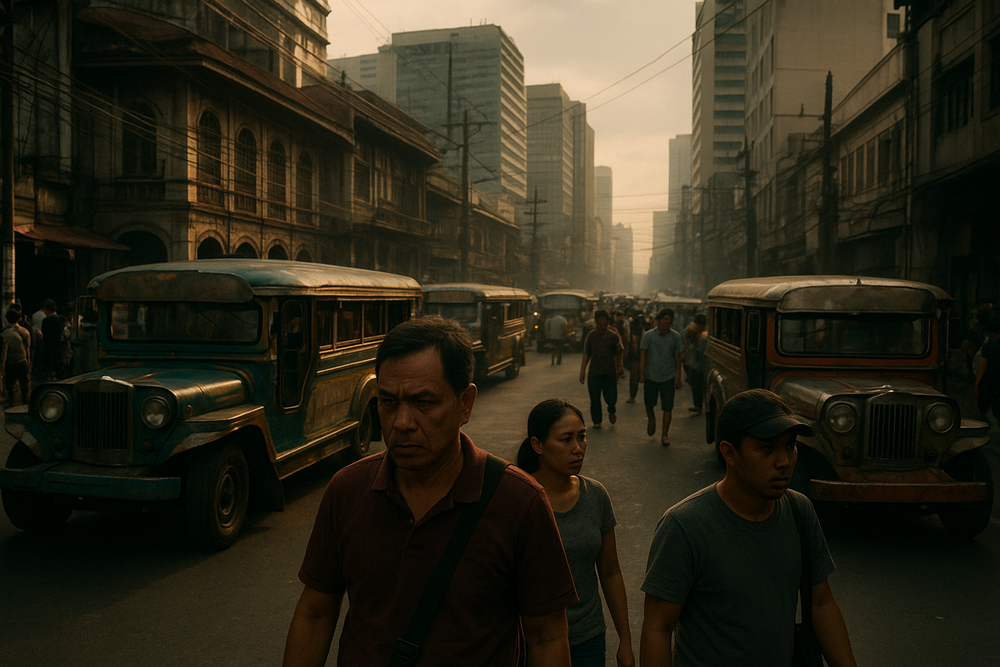
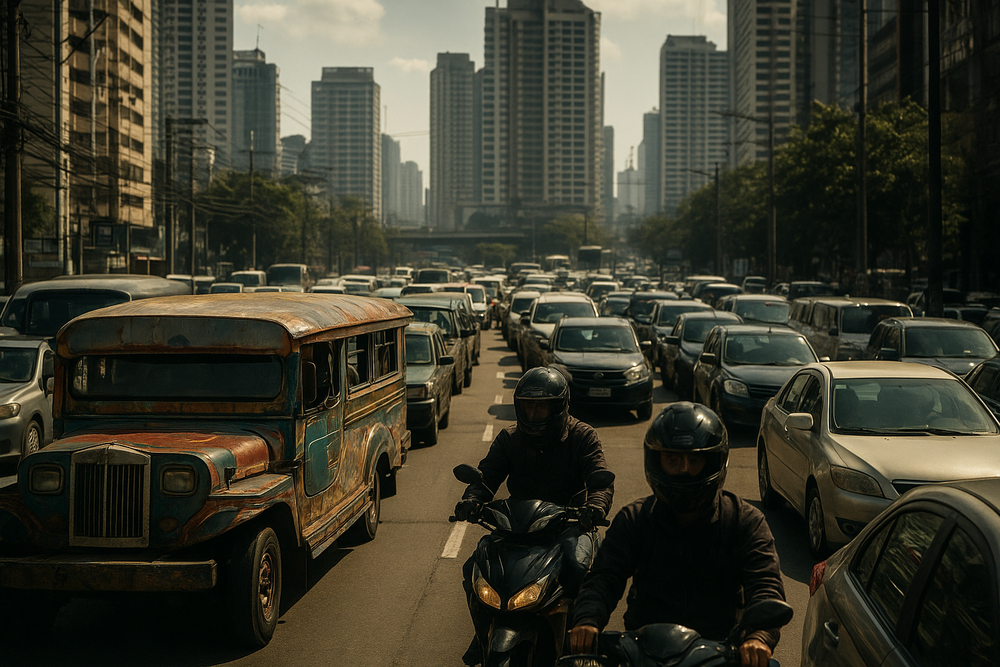
For millions of Filipinos, the subway’s delays translate into lost hours each day. Average commuters often spend one to three hours travelling to work, relying on overcrowded buses and jeepneys while fuel prices and transport costs climb.
Once complete, the MMSP promises to redraw the city’s mental map. A trip from Valenzuela to NAIA, which can now take hours, would be reduced to a predictable and weather-proof journey. Economists argue that faster mobility could also steady prices by improving logistics across the capital.
Yet the long gestation has bred scepticism. Critics note that with partial operations pencilled in for 2028, the project will likely outlast the current administration, testing public confidence in large-scale infrastructure pledges.
An Underground Vision, Still in Negotiation
The Metro Manila Subway is often described as a cure for congestion, but its history suggests a more sobering lesson. In dense cities, the most formidable barriers to progress are not always rivers or rock, but titles, deeds and hard-to-reach agreements.
With just under ten per cent of land still to be acquired and a tight timetable ahead, the coming year will determine whether the project can finally move from promise to momentum. Until then, Manila’s future remains, quite literally, stuck in negotiations above ground.