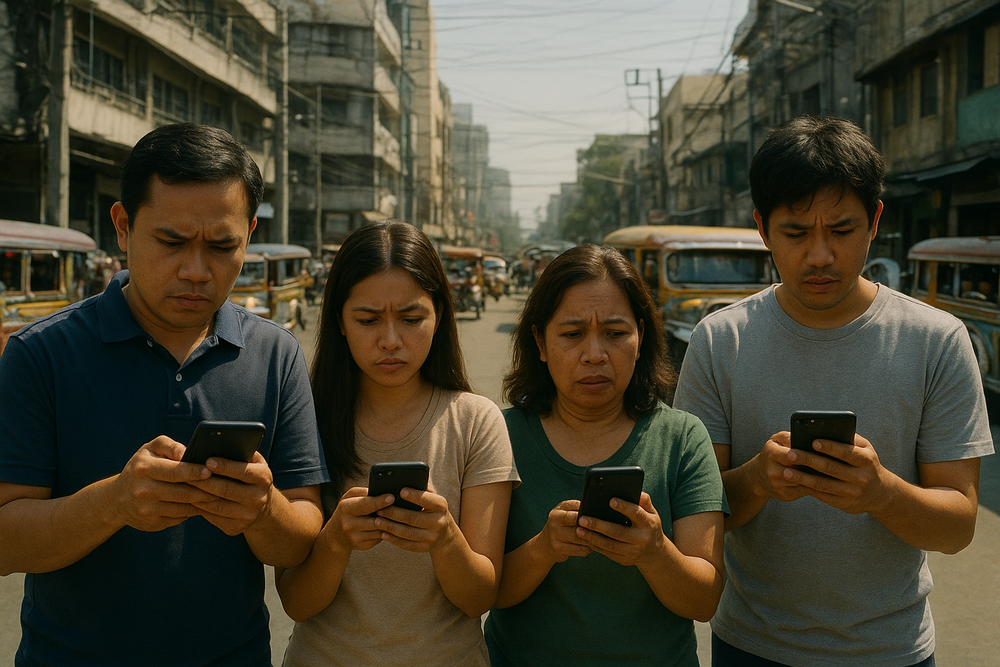
Artificial intelligence and deepfake technology are expected to play a far more prominent—and troubling—role in the lead-up to the Philippines’ 2025 elections, as authorities and experts warn that the country is entering an era where fabricated images, videos and voices could decisively shape voter behaviour.
The warning comes against a backdrop of what officials describe as an unprecedented surge in AI-driven fraud and disinformation. In 2023 alone, the Philippines recorded a 4,500% increase in deepfake-related fraud, underscoring how rapidly the technology has moved from niche experimentation to a powerful tool for deception.
A New Kind of Campaign Threat
Deepfakes—convincing but entirely fabricated audio or video recordings generated by AI—are increasingly indistinguishable from real footage. Experts say their use in political campaigns risks blurring truth and fiction at precisely the moment voters are making critical decisions.
The danger is not theoretical. In October 2025, a medical doctor reportedly lost ₱93 million after being duped by an investment scam built around a manipulated video of President Ferdinand “Bongbong” Marcos. While the case was not directly tied to the election, it demonstrated how even educated professionals can be misled by realistic AI-generated media.
Election authorities fear similar techniques could be used to fabricate scandals, invent endorsements or falsely implicate candidates in wrongdoing, spreading faster than fact-checkers or regulators can respond.
COMELEC’s Landmark AI Rules
In response, the Commission on Elections has rolled out what it describes as one of the world’s first comprehensive national frameworks regulating the use of AI in election campaigns. COMELEC Resolution No. 11064, which took effect on 26 September 2024, applies to the 2025 general and local elections, as well as parliamentary polls in the Bangsamoro Autonomous Region in Muslim Mindanao.
“COMELEC’s resolution marks one of the world’s first national efforts to formally regulate AI in election campaigns,” the commission said, citing its constitutional mandate under Article IX‑C. The rules are intended, it added, to prevent digital tools from “distorting voter perception or undermining the integrity of the electoral process.”
Under the resolution, candidates, political parties and their supporters must disclose when AI technology is used in campaign materials, whether in videos, images or audio clips. Digital campaign platforms—including social media pages, websites and podcasts—must also be registered with COMELEC within prescribed deadlines.
What Is Banned—and What Is Required
The rules draw a sharp line between transparency and deception.
- Prohibited: Deepfakes and synthetic media designed to mislead voters, the use of fake accounts or bots, and coordinated inauthentic online behaviour.
- Mandatory: Clear disclosure of AI-generated or AI-altered content, digital watermarks or cryptographic metadata to verify authenticity, and registration of all official online campaign platforms.
Failure to comply can result in content takedowns, fines, criminal charges or disruption of campaign activities.
“Whether in a video, image, or audio clip, voters must be informed if the content was generated or modified by AI,” COMELEC said. “This requirement seeks to prevent manipulation, misinformation, and the circulation of fabricated media.”
Tech Platforms Brought Into the Net
Recognising that regulation without enforcement would be toothless, COMELEC has struck agreements with major technology platforms, including Meta, TikTok and YouTube. These partnerships create direct channels for reviewing and removing harmful or undeclared AI-driven content.
AI developers have also felt the pressure. The Philippine government briefly banned the Grok AI tool in late 2025, citing concerns over deepfakes, before lifting the ban in January 2026 after its developer, xAI, agreed to introduce safeguards against misuse.
Microsoft, meanwhile, has positioned itself as an ally in election security, offering AI detection tools and cybersecurity training while warning that foreign influence actors are actively using AI-generated media to shape political narratives in the Philippines.
Civil Society Warns Against Overreach
While few dispute the threat posed by deepfakes, parts of civil society have urged caution. The National Citizens’ Movement for Free Elections (NAMFREL) has opposed outright bans on AI in elections, arguing that heavy-handed laws could be abused.
“[AI regulation] may curtail technological innovation and inadvertently limit the benefits of AI in enhancing electoral processes,” NAMFREL said, advocating instead for transparency, accountability and clear disclosure.
The group has also warned against punitive anti-disinformation laws that could be weaponised politically. Other analysts have noted that, in a polarised environment, even well-intentioned rules risk being seen as favouring those in power.
The Voter at the Centre
For ordinary Filipino voters—many of whom rely heavily on social media for political information—the stakes are high. A parallel surge in cybercrime has seen 52 million personal credentials exposed by the third quarter of 2025, increasing the risk of scams, identity theft and targeted disinformation during the campaign period.
COMELEC has enlisted fact-checking groups and news organisations to bolster voter education, but experts say the imbalance remains stark: sophisticated, well-funded disinformation operations can outpace the resources of those attempting to counter them.
Still, there is cautious optimism. “A multi-pronged coalition of civil society, the tech sector and the government shows promise at combatting the worst of AI-fuelled misinformation,” one regional analysis noted. For a democratic process already under strain, its success—or failure—may determine whether voters can still trust what they see and hear on their screens.
As the campaign for Eleksyon 2025 gathers momentum, AI may prove to be both a tool and a test: of regulation, of public vigilance, and ultimately of the resilience of democracy itself.