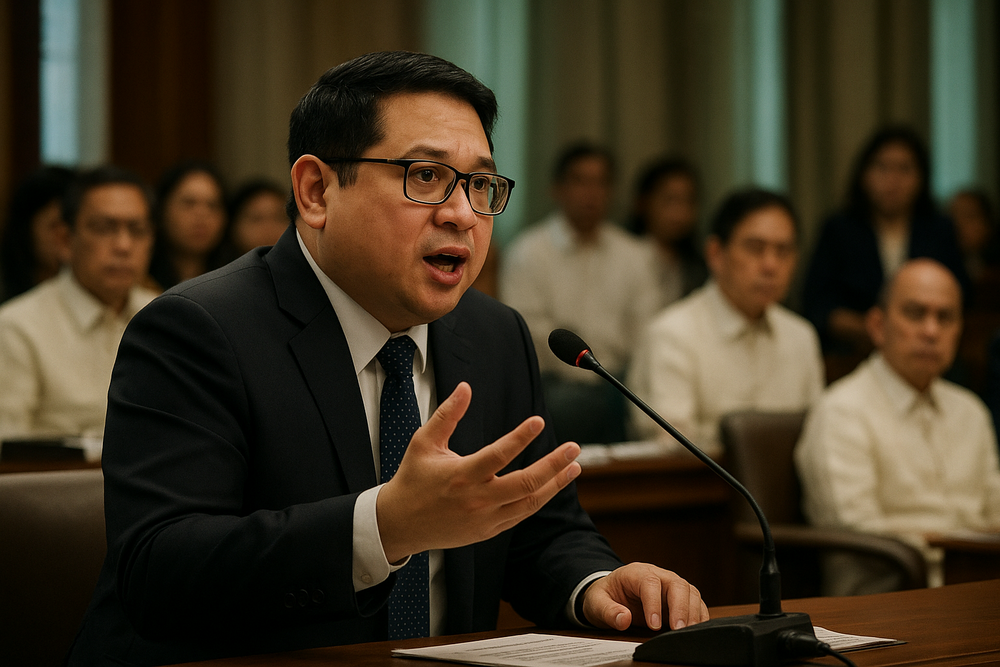
The misuse of public funds meant to keep students in school drew sharp scrutiny in the Philippine Senate this month, as Senator Bam Aquino called for tougher, voucher-specific penalties to clamp down on fraud in the government-funded Senior High School Voucher Program. Speaking at a hearing on modernising support for private basic education, Aquino warned that existing laws fail to deter schools and individuals who exploit the system—often at the expense of poor and working-class families.
A Push for Harsher Sanctions
Aquino, who chairs the Senate Committee on Basic Education, proposed imposing separate and higher penalties for fraud tied directly to the voucher programme. He argued that crimes such as “ghost student” enrolment—where schools falsely list non-existent pupils to claim government subsidies—require consequences beyond those covered by general laws like syndicated estafa or document falsification.
“Iyong isa sigurong puwede nating madagdag sa committee report ay a separate penalty for schools or for individuals who are defrauding our students,” Aquino said during the hearing. He added that lawmakers should not hesitate to escalate sanctions against offenders, stressing that the theft of education funds crossed a deeper moral line.
The ‘Ghost Students’ Scheme
The concerns surfaced after an official from the Private Education Assistance Committee (PEAC), which administers vouchers under the programme, disclosed abuses involving schools with provisional permits. These institutions were found to be enrolling “ghost students” to illegally draw funds from the state.
The voucher scheme, part of the broader Government Assistance to Students and Teachers in Private Education (GASTPE), was designed to keep private schools viable while easing congestion in public classrooms. Instead, investigators warned, loopholes had allowed some operators to treat the system as an open till.
Why Existing Laws Fall Short
While authorities can prosecute fraud under existing criminal statutes, Aquino said these measures lack the precision and deterrent power needed for voucher-related abuses. The problem, he argued, lies not only in financial theft but in its social cost—diverting resources meant for learning in some of the country’s most overcrowded schools.
“Kasi pag ninanakaw natin pera na dapat napupunta sa mga kabataan, parang ibang level po iyon ng kasamaan,” Aquino said, calling on lawmakers to enshrine stronger penalties in pending legislation to modernise support for private basic education.
DepEd Tightens Controls
The Department of Education (DepEd) has responded by strengthening safeguards in the E‑GASTPE system, tightening monitoring and verification of voucher claims. Officials said these reforms aim to preserve the programme’s core objective: expanding access to senior high school while protecting public funds.
Still, Aquino signalled that administrative fixes alone would not be enough. He said only clear statutory penalties would discourage malpractice on a national scale, particularly in provinces where oversight can be thin.
Impact on Families and Schools
For families earning modest incomes, voucher fraud has tangible consequences. Every peso lost to fictitious enrolments is money unavailable to real students—often forcing them back into overcrowded public schools or leaving parents to shoulder fees they cannot afford.
Private schools, many of which are grappling with declining enrolment, have also called for an expansion of the voucher programme. Yet the Senate inquiry underscored that any future growth must be matched by stricter accountability.
What Comes Next
Aquino said the committee would recommend including voucher-specific penalties in its report, with the aim of incorporating them into forthcoming legislation. The message, he said, must be unequivocal.
“Itaas natin iyong penalty na iyon,” Aquino urged—a call reflecting a broader push to protect education funding and restore trust in a system meant to give students, not institutions, a fair chance.