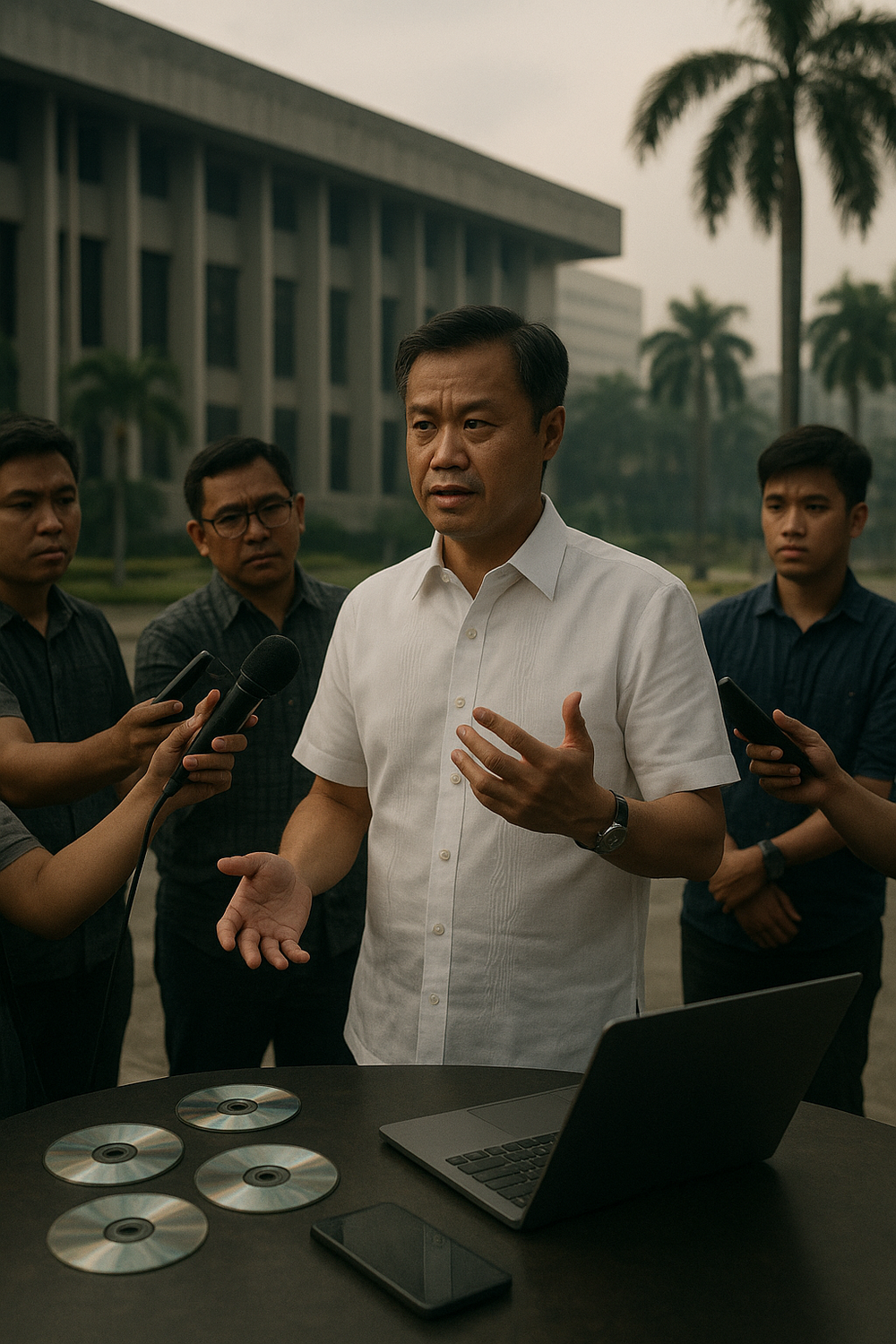
Senator Sherwin Gatchalian has moved to dismantle the Optical Media Board (OMB), arguing that a government agency built to police CDs and DVDs has been overtaken by a world of streaming, cloud storage and online piracy. The proposal, filed as Senate Bill No. 1654 on January 17, 2026, seeks to abolish the OMB and fold its powers, staff and resources into the Intellectual Property Office of the Philippines (IPOPHL).
The measure reflects a broader reckoning within the Philippine government over whether institutions created for a physical-media economy can still justify their cost and relevance in a digital age.
An Agency Shaped by a Bygone Era
The OMB was established to regulate and crack down on illegal reproduction and distribution of optical media products such as CDs and DVDs. At its height, pirated discs were openly sold in markets and malls, posing a visible threat to the film, music and software industries.
But Senator Gatchalian contends that the ground has shifted decisively. “Designed for a disc-based piracy economy, the OMB is no longer the optimal agency to address the challenges of a digital age,” he said in explaining the bill.
Physical discs, once the main vehicle for piracy, have become largely irrelevant for consumers. Illegal content now circulates through websites, peer-to-peer networks and messaging platforms—spaces that fall more naturally under the remit of intellectual property enforcement rather than product regulation.
Consolidating Power Under the IP Office
Under the proposed legislation, all functions, assets and responsibilities of the OMB would be transferred to IPOPHL, the country’s main agency for administering and enforcing intellectual property laws.
Gatchalian argues that this consolidation would streamline enforcement and eliminate institutional overlap. “Rather than sustaining an agency whose role is no longer pertinent to current circumstances, it would be more beneficial to redirect resources to organizations equipped to tackle challenges posed by emerging technologies and the digital marketplace,” he said.
Supporters of the move say IPOPHL is better positioned to confront online piracy, given its existing mandate, legal tools and engagement with digital platforms and rights holders.
Staff Protected, at Least on Paper
A recurring concern in past attempts to abolish government agencies has been the fate of their employees. Senate Bill No. 1654 attempts to neutralise that issue.
The bill explicitly provides that OMB Secretariat personnel will be absorbed into IPOPHL, with no reduction in salaries or benefits. While this offers formal protection, the experience of previous mergers suggests that workers may still face changes in roles, reporting lines and work culture once consolidation begins.
For now, the proposal emphasises continuity rather than retrenchment, presenting abolition as an administrative realignment rather than a cost-cutting purge.
A Second Attempt After a Stalled Effort
This is not the first time lawmakers have tried to dismantle the OMB. In 2023, Senator Jinggoy Estrada filed a similar bill, citing many of the same arguments about obsolescence. That measure never progressed beyond the committee stage and lapsed when the 19th Congress ended in June 2025.
Gatchalian’s renewed push suggests that momentum for reform has not faded. As chair of the powerful Senate Finance Committee, he carries significant influence over budgetary priorities—an advantage that could prove decisive as senators weigh whether the OMB still warrants public funds.
Questions Over Capacity and Continuity
While criticism of the OMB’s relevance is widespread, the proposal is not without unresolved questions. One is whether IPOPHL has the operational capacity to absorb the OMB’s duties without weakening enforcement during the transition.
Another is whether the OMB’s specialist experience—however narrow—will translate effectively into a body focused primarily on intellectual property rights rather than product-based regulation.
The proposed law does not yet detail how these challenges will be managed in practice, leaving those answers for later implementing rules or future hearings.
Limited Impact on Daily Life, For Now
For ordinary Filipinos, the abolition of the OMB is unlikely to bring immediate, visible change. Optical discs have largely disappeared from daily use, and enforcement actions against physical piracy no longer dominate public spaces.
Any broader impact would be indirect, potentially shaping how aggressively the government tackles digital piracy—a factor that can influence content availability, subscription prices and the health of creative industries.
For the moment, however, the issue remains squarely within the corridors of government.
Early Days in the Legislative Process
As of January 18, 2026, Senate Bill No. 1654 remains at an early stage, with no committee hearings scheduled. Its progress will depend on whether senators rally behind the case that the OMB has outlived its purpose—or whether concerns over institutional capacity and enforcement gaps slow its advance.
What is clear is that the debate has shifted from whether piracy exists to which arm of the state is best equipped to fight it. In that sense, the bill marks not just an attempt to close an agency, but a symbolic turning of the page on an era when piracy came stamped on a shiny disc.