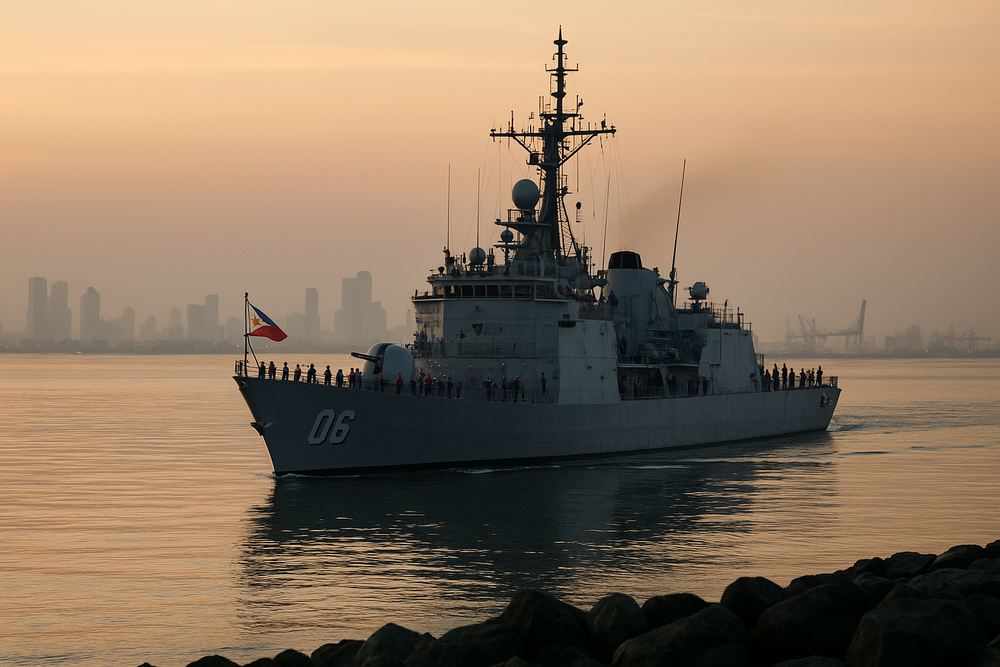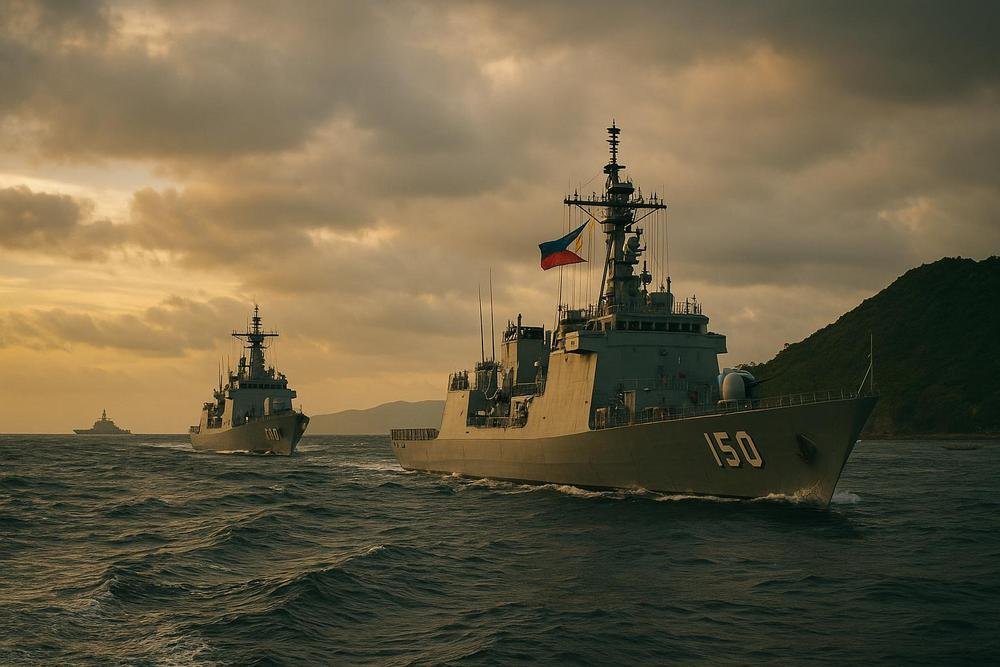
The Philippine Navy has deployed two of its frigates, the BRP Emilio Jacinto and BRP Diego Silang, to intercept a Chinese Jiangkai II-class frigate reportedly loitering just 41 nautical miles off Capones Island, Zambales. This move marks one of the latest escalations in a string of maritime encounters between Philippine authorities and Chinese vessels in contested waters of the West Philippine Sea. Concurrently, the Armed Forces of the Philippines (AFP) initiated a counter-information campaign, publicly rejecting Chinese claims made about the incident.
PH Navy Challenges Chinese Presence Near Capones Island
According to official Philippine Navy monitoring statements, the Chinese frigate’s presence at this proximity to the Philippine coastline constitutes an unlawful entry into the country’s Exclusive Economic Zone (EEZ). The Navy immediately dispatched the BRP Emilio Jacinto and BRP Diego Silang to intercept and monitor the Chinese vessel, signaling the Philippines’ firm stance on defending its sovereign maritime rights based on the 2016 arbitral award and national maritime laws.
This incident forms part of a sustained pattern throughout 2025, wherein Chinese maritime law enforcement and naval vessels have repeatedly been detected operating between 65 and 100 nautical miles off the coast of Zambales. Philippine maritime agencies, including the Philippine Coast Guard (PCG) and Navy, have continually maintained a presence in the area, conducting enforcement patrols and issuing radio warnings to Chinese vessels to cease these activities deemed illegal under Philippine and international law.
Legal Framework Underpinning Philippine Maritime Defense
The Philippines asserts its maritime jurisdiction grounded on multiple legal frameworks: the United Nations Convention on the Law of the Sea (UNCLOS, 1982), which establishes a 200-nautical-mile EEZ entitlement; the domestic Republic Act No. 9522 defining Philippine baselines; and the Republic Act No. 10654 or Maritime Zones Act that empowers enforcement within these zones. Philippine authorities frequently cite the landmark 2016 Permanent Court of Arbitration ruling that invalidated China’s “nine-dash line” claim in the South China Sea, reinforcing the Philippines’ calls against unauthorized Chinese operations within its EEZ.
Radio transmissions issued by the Philippine Coast Guard exemplify this stance. One PCG radio warning stated, “You are advised that you are currently sailing within the Philippines exclusive economic zone… You do not possess any legal authority to patrol within the Philippines exclusive economic zone. You are directed to cease and desist from conducting illegal maritime patrols…”
Context: Rising Maritime Tensions in the West Philippine Sea
This standoff off Zambales reflects a broader contest for influence and control in the West Philippine Sea during 2025. Earlier in the year, the Philippine Navy and Coast Guard repeatedly confronted Chinese Coast Guard cutters, notably large vessels such as the Nansha-class cutter 5901, which frequently operated near Philippine territorial waters.
In January, U.S. and Philippine naval forces—led by the USS Carl Vinson carrier strike group alongside Philippine frigates—conducted joint patrols emphasizing maritime security and freedom of navigation in these contested waterways. These operations underscored the enduring defense cooperation between the two countries amid rising regional tensions.
Despite the proximity and assertiveness of these Chinese vessels, no casualties or ship losses were reported during the latest interception near Capones Island. Nonetheless, prior incidents around Scarborough Shoal and other disputed features this year have heightened concern about potential clashes that could escalate into broader conflict.
Government and Military Response
The Department of National Defense and the Armed Forces of the Philippines maintain operational command and information management for maritime security efforts. The AFP’s counter-information campaign seeks to publicly dispel Chinese narratives concerning the interception, reaffirming the Philippine government’s position grounded in international and domestic law.
Meanwhile, the Philippine Coast Guard remains on the frontline, deploying assets such as the BRP Cabra and BRP Teresa Magbanua to enforce maritime boundaries, deliver radio warnings, and prevent unauthorized advances. PCG spokesperson Jay Tarriela underscored the importance of persistence: “If we fail to challenge this, China will succeed in establishing a precedent for its maritime forces’ illegal patrols in the future. Therefore, no matter how long it takes, the PCG vessels will always be present to prevent China from changing the status quo.”
Implications for Coastal Communities and Fisheries
For fisherfolk communities in Zambales and nearby provinces, the continued presence of Chinese vessels translates into immediate challenges. Restricted access to traditional fishing grounds diminishes their catch and livelihood, often forcing small-scale fishers to operate under increased risk without the protection or capability to counter the larger state-sponsored maritime forces.
The socioeconomic impact also extends to the local economy, with reduced income for coastal towns and amplified dependence on government relief programs or alternative livelihoods. While major commercial shipping lanes remain operational, persistent naval activity in Philippine waters could raise logistical costs and insurance premiums for maritime operators in the region.
Looking Ahead: Maritime Security and Regional Stability
As the Philippines continues to assert its territorial claims and enforce maritime law, it simultaneously navigates the complexities of regional diplomacy and defense cooperation. Coordination with allies, particularly through increasing joint patrols with the United States, remains a key strategic pillar.
Nonetheless, challenges endure. Questions about government readiness, vessel maintenance capabilities—such as previously reported auxiliary engine overheating in Philippine Coast Guard ships—and the need for strengthened local maritime assets persist in public discourse. Additionally, transparency regarding official counter-information efforts and diplomatic engagements will be crucial in managing public perception and maintaining national morale amid ongoing tensions.
Conclusion
The recent naval interception off Capones Island signals the Philippine government’s determined commitment to uphold its maritime sovereignty against expanding Chinese maritime assertiveness. Through combined naval deployments, legal assertions, and allied cooperation, the Philippines aims to preserve the status quo and safeguard the interests and security of its coastal communities. However, sustained vigilance, capacity-building, and diplomatic management remain essential to prevent escalation and protect maritime peace in an increasingly contested region.