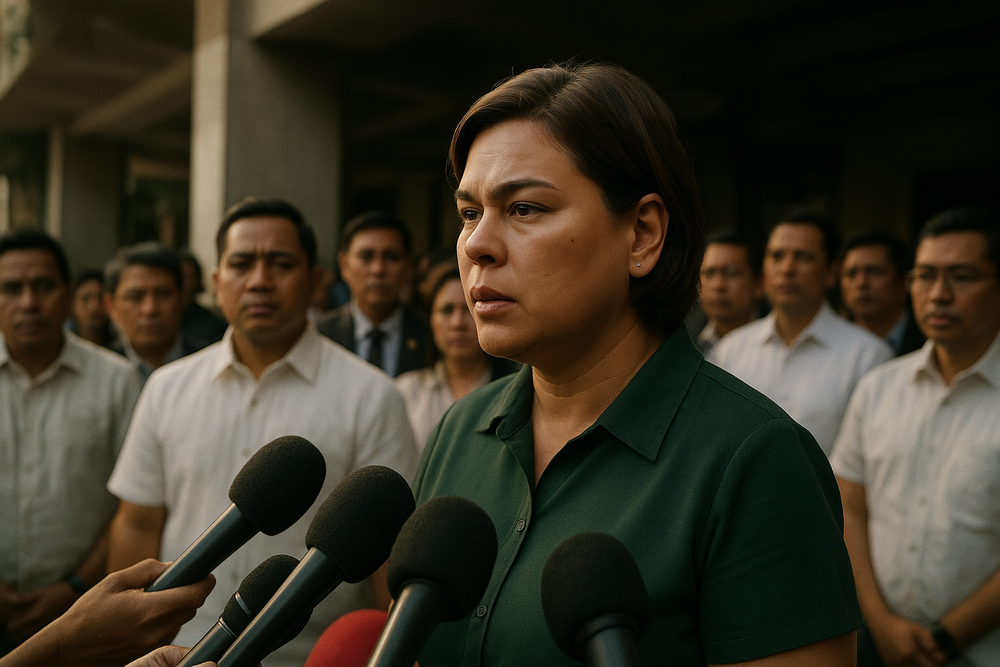
The fractured political landscape of the Philippines reached a volatile turning point on Friday afternoon as a coalition of civil society leaders, clergy, and academics filed a formal criminal complaint charging Vice President Sara Z. Duterte and 15 of her associates with Plunder. The complaint, lodged before the Office of the Ombudsman in Quezon City, accuses the country’s second-highest official of masterminding a “systematic scheme” to misappropriate P612.5 million in Confidential and Intelligence Funds (CIF) between late 2022 and 2023.
The legal action charges the respondents with Plunder, Malversation of Public Funds, Graft, and Betrayal of Public Trust. Unlike the impeachment attempt that was nullified by the Supreme Court in July 2025 on procedural grounds, this criminal complaint carries the weight of a capital offense. Plunder is non-bailable and punishable by reclusion perpetua, or life imprisonment, placing the Vice President in immediate legal jeopardy.
The filing culminates months of legislative inquiry that exposed a trail of irregularities, from the use of active-duty military officers as cash couriers to the submission of liquidation receipts bearing the names of fictitious entities, most notably the now-infamous “Mary Grace Piattos.”
The Anatomy of the Alleged Plunder
The complaint aggregates three distinct tranches of funding to reach the P50 million threshold required for a Plunder charge. According to the investigative dossier, the alleged misappropriation totals P612.5 million (approximately €10.2 million), drawn from both the Office of the Vice President (OVP) and the Department of Education (DepEd), which Duterte headed concurrently until mid-2024.
The most scrutinized transaction involves the P125 million transferred from the Office of the President to the OVP in December 2022. Records from the Commission on Audit (COA) reveal that the OVP liquidated these funds in just 11 days—between December 21 and December 31—averaging an expenditure of P11.36 million per day during the Christmas holidays.
Auditors flagged P73 million of this amount as “irregular, unnecessary, excessive, extravagant, or unconscionable.” Specific line items included P16 million spent on “safehouse” rentals over the 11-day period, a rate of roughly P1.45 million per day, which vastly exceeds market rates for luxury properties.
Additionally, the complaint targets P112.5 million withdrawn from DepEd accounts in 2023 via three checks issued to Special Disbursing Officer Edward Fajarda. Whistleblowers have alleged that these funds were not used for intelligence but were distributed in cash envelopes to influence procurement processes within the agency.
The “Mary Grace Piattos” Scandal
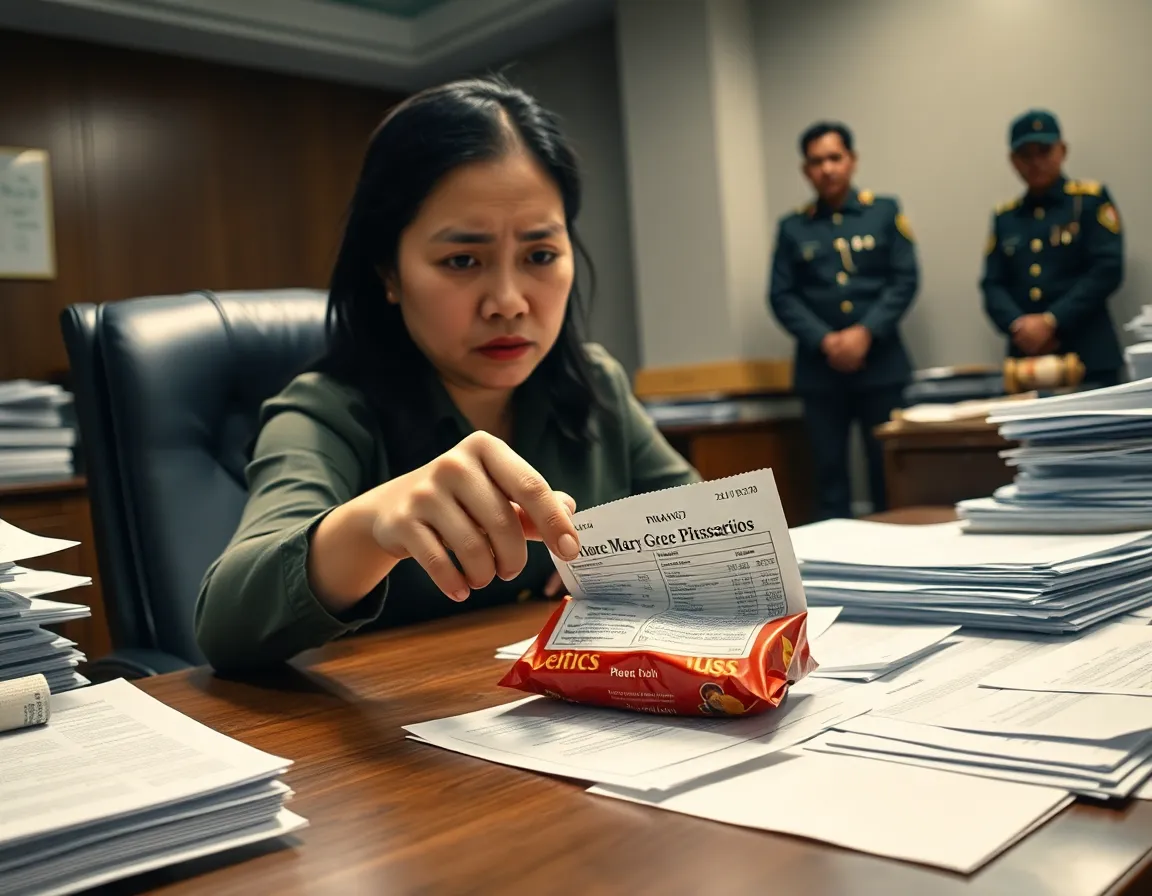
Central to the allegations of falsification is the documentary evidence submitted by the OVP to the Commission on Audit. To liquidate confidential funds, the OVP submitted Acknowledgment Receipts (ARs) purportedly signed by confidential informers. Legislative hearings revealed that hundreds of these receipts bore the names of fictitious individuals.
The most glaring anomaly was a receipt signed by a “Mary Grace Piattos,” a name lawmakers identified as a clumsy portmanteau of a popular café chain and a brand of potato chips. Other receipts listed names such as “Nova” and “Oishi,” also well-known snack brands.
Forensic verification by the Philippine Statistics Authority (PSA) confirmed in November 2024 that there is no record of birth, marriage, or death for any person named “Mary Grace Piattos” in the national civil registry. The complaint argues that the use of fictitious names constitutes Falsification of Public Documents, serving as the predicate act for Plunder: if the informer does not exist, the transaction is presumed to be a ghost payment, and the funds pocketed.
Military Officers as “Mules”
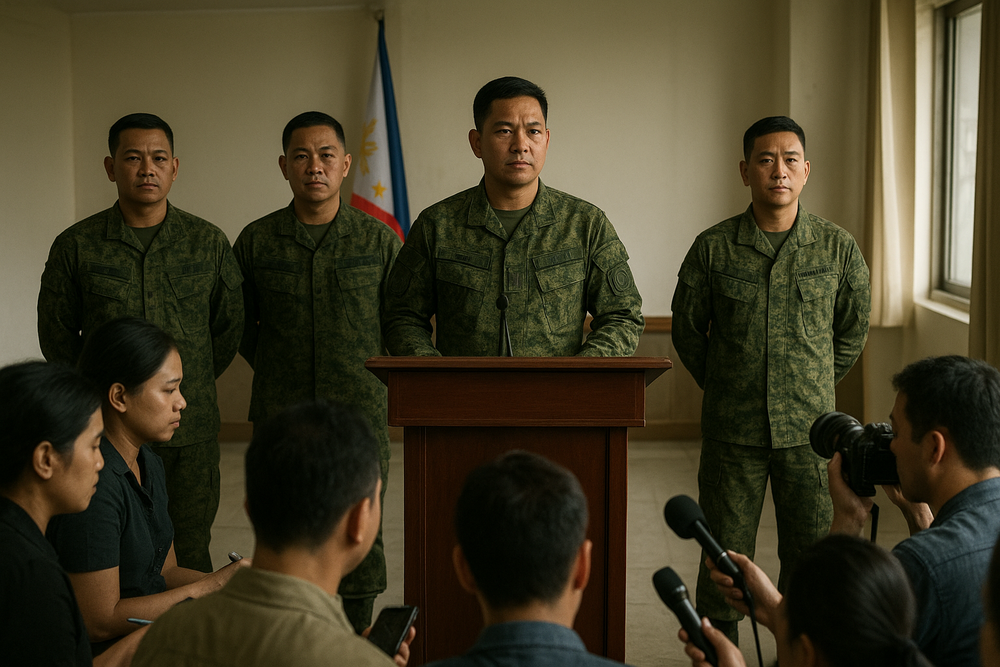
The investigation has also entangled the security sector, alleging a breach of the civilian chain of custody. Testimonies from OVP administrative staff detailed how Gina Acosta, a Special Disbursing Officer, would physically encash checks worth tens of millions of pesos at Landbank, place the cash in duffel bags, and transport it back to the OVP.
Upon arrival, custody of the funds was allegedly transferred to Col. Raymund Dante P. Lachica, then-commander of the Vice Presidential Security and Protection Group (VPSPG), and his subordinate, Lt. Col. Dennis Nolasco.
This arrangement violated government auditing rules, as military officers assigned to security details are not bonded public officers authorized to handle civilian funds. Furthermore, the VPSPG has no legal mandate to conduct the intelligence operations the funds were ostensibly meant to finance. The exposure of this practice led to Col. Lachica’s relief from command in October 2025, as the Armed Forces of the Philippines moved to distance itself from the controversy.
A Network of Complicity
The complaint identifies Duterte as the “Architect” of the scheme but extends liability to 15 subordinates who allegedly facilitated the disbursements. The “inner circle” includes:
- Zuleika T. Lopez (Chief of Staff): Described as the “gatekeeper,” Lopez attempted to flee to Los Angeles in November 2024 but was forced to return to testify. While she claimed “compartmentalization” excluded her from financial decisions, subordinates testified that she oversaw the operations.
- Gina F. Acosta (Special Disbursing Officer): Identified as the “bagman” responsible for the physical withdrawal and transport of cash.
- Sunshine Charry A. Fajarda (Former Assistant Secretary): Accused of enforcing the scheme within DepEd and delivering cash envelopes to procurement officials.
- Annalyn M. Sevilla (DepEd Undersecretary for Finance): Alleged to have facilitated the release of P112.5 million despite irregular documentation.
The Collapse of the UniTeam
The filing of these charges marks the final disintegration of the “UniTeam” coalition that propelled Ferdinand Marcos Jr. and Sara Duterte to power in 2022. The rift, initially sparked by budget disputes, escalated into open political warfare after the House of Representatives stripped the OVP of confidential funds for the 2024 budget.
The House successfully impeached Duterte in February 2025 with a vote of 215-66. However, the Supreme Court voided the impeachment in July, citing the constitutional one-year bar rule on impeachment proceedings. With the political avenue for removal stalled until February 2026, opponents have pivoted to the judicial system.
The Office of the Ombudsman is now under immense pressure to act. The evidence, particularly the PSA certifications and COA Notices of Disallowance, presents a formidable case for probable cause. If the Ombudsman files the case at the Sandiganbayan, the court could issue warrants of arrest, potentially leading to the preventive detention of the Vice President while the trial proceeds.