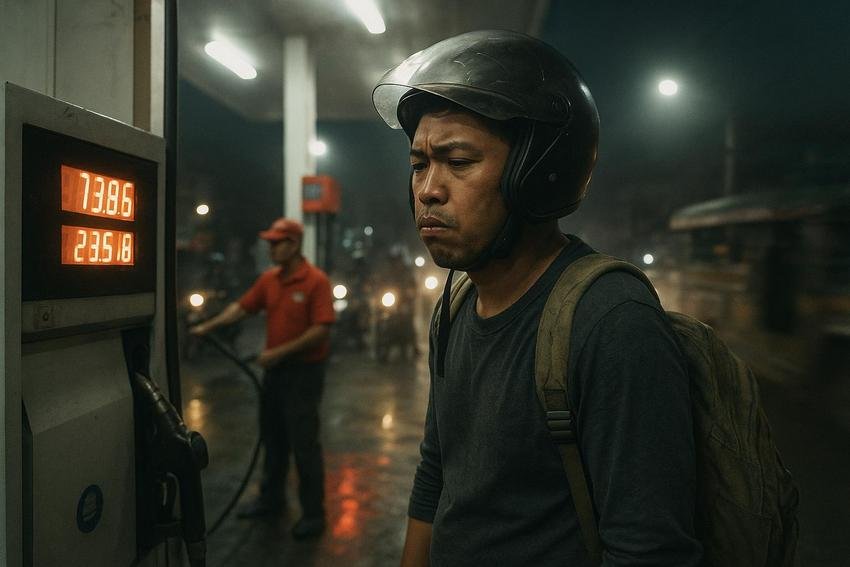
Gasoline prices in the Philippines rose by P1.20 per liter nationwide on Tuesday, December 9, 2025, marking the second successive weekly increase and adding further pressure to household budgets already strained by inflation. Major fuel retailers, including Jetti Petroleum, Seaoil, Petron, and PTT Philippines, implemented the adjustment at 6 a.m., while diesel and kerosene prices remained unchanged.
Global Conflicts and Regional Supply Tightness Drive Increase
The latest hike stems from a confluence of international and regional factors that continue to disrupt fuel price stability. Escalating geopolitical tensions, most notably Ukraine’s recent offensive targeting Russian oil facilities, have constrained global supply. This volatility has pushed up global premiums and freight costs, lifting the price consumers pay at the pump.
At the regional level, restricted gasoline exports from China and South Korea, two of Asia’s largest producers, have tightened supply across the continent. Recent data indicate that Asian demand for gasoline remains robust, further deepening the imbalance between available supply and market needs.
Industry and Government Highlight External Pressures
Leo Bellas, president of Jetti Petroleum, underscored the role of constrained output from regional refiners, stating, “Online exports regional refineries have remained hindered by diminished volumes from China and South Korea.” That supply shortfall comes at a time when demand from transport and logistics sectors is holding steady or increasing, amplifying the impact on prices.
The government echoed this assessment. Rodela Romero, assistant director at the Department of Energy, attributed the hike to “intensifying geopolitical conflicts, particularly following Ukraine’s recent offensive against Russia’s oil facilities,” reinforcing the message that domestic pricing remains vulnerable to global developments.
Gasoline Up, Diesel Holds Steady
This week’s price movement places gasoline squarely in the spotlight. Diesel and kerosene, often used in freight and industrial sectors, saw no change in pricing. Analysts point to easing freight premiums and stable Mean of Platts Singapore (MOPS) averages for diesel as factors helping to offset upward pressure on that fuel segment. Additionally, recent foreign exchange rate fluctuations have played a moderating role.
Just a week earlier, on December 2, gasoline prices rose slightly while diesel declined. Forecasts published on December 5 anticipated this week’s gasoline increase to fall between P1.20 and P1.40 per liter, estimates that now appear well-founded.
Inflationary Ripple Effects
The adjustment feeds into broader concerns about living costs and inflation. Public transport operators, ride-hailing drivers, and private motorists will feel the pinch first, with prices for goods and services that depend on transport likely to follow. For working families, each peso at the pump subtracts from already tight monthly budgets.
This latest surge again highlights the volatile intersection between geopolitics and pocketbook economics. As external conflicts flare and supply-demand imbalances linger, the Philippines remains acutely exposed to price swings far beyond its borders.
Growing Debate Over Energy Policy
The increase has reignited calls for more sustainable and resilient energy policies. Critics say the country’s overreliance on imported fuel leaves it vulnerable to shocks it cannot control. While the Department of Energy has encouraged diversification and local sourcing, such solutions remain long-term in nature and do little to ease present-day pressures.
In the short term, consumers have few options beyond reducing fuel use or absorbing higher transportation and product costs. Calls for targeted subsidies or temporary fuel tax relief are growing louder, though the government has yet to announce any formal policy responses.
Looking Ahead
With no imminent resolution to the Russo-Ukrainian conflict and regional export constraints persisting, fuel analysts suggest that volatility will likely remain high in the coming weeks. Any developments affecting oil production or supply chains could further sway the trajectory of domestic prices.
For now, Filipino motorists and commuters brace for another uphill climb in fuel expenses — a reflection of larger forces playing out on the global stage, but felt most acutely at local service stations across the archipelago.