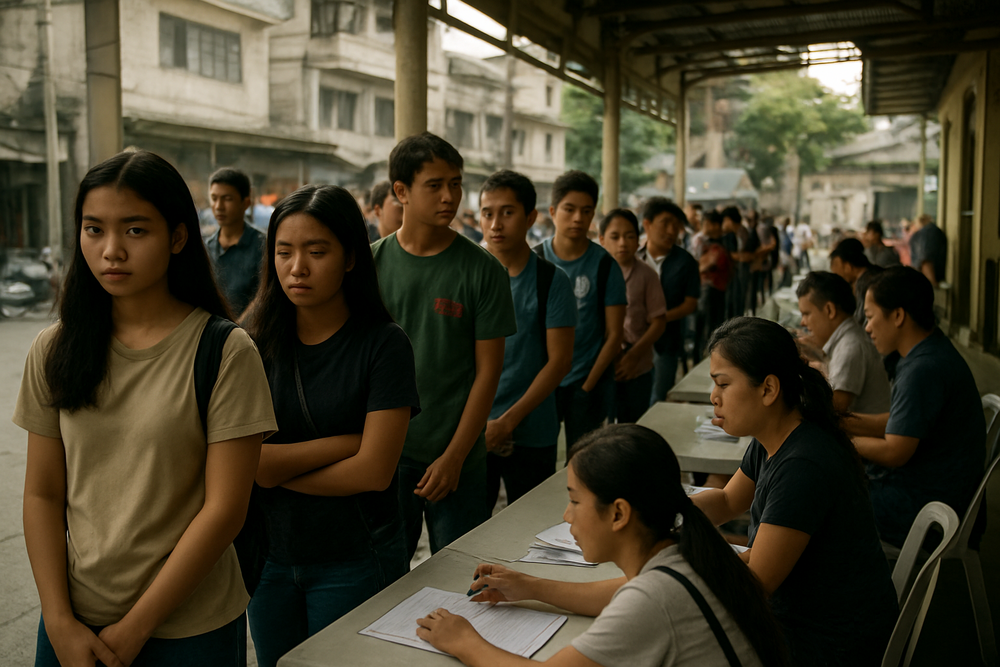
More than 1.3 million Filipinos have already signed up to vote in the 2026 Barangay and Sangguniang Kabataan Elections (BSKE), the Commission on Elections (Comelec) said, marking a strong early turnout as the country prepares for one of its most grassroots democratic exercises.
As of January 18, 2026, 1,356,410 individuals had completed voter registration for the BSKE, according to official Comelec figures. Registration remains open until May 18, 2026, with election day set for November 2, 2026. Comelec earlier set a target of 1.4 million new voters, a benchmark now within close reach.
Urban Regions Drive Early Registration Surge
Registration has been especially robust in the country’s most populous and urbanised regions. Region IV‑A (Calabarzon) recorded the highest number of applicants at 271,033, followed by Central Luzon with 159,473 and the National Capital Region (NCR) with 157,421.
In contrast, less densely populated areas such as Mimaropa and Western Visayas posted significantly lower numbers, underscoring persistent regional disparities in voter engagement. Analysts inside the commission see the pattern as a reflection of population density, mobility and access to registration facilities.
Youth Participation Fuels Barangay Democracy
A striking share of the registrants are young Filipinos preparing to vote or run under the Sangguniang Kabataan (SK), the country’s youth councils. Of the total applicants, 327,575 were SK registrants aged 15 to 17, with 322,402 of them registering for the first time.
Regular voters aged 18 and above accounted for 1,028,835 applicants. This group included 367,859 new registrants and 13,174 reactivations, reflecting renewed participation among voters whose registrations had lapsed.
Gender data shows a modest but consistent tilt: 718,457 women compared with 637,953 men, a pattern election officials say mirrors national demographic trends.
Flexible Registration Aimed at Workers and Students
Comelec has kept registration centres open seven days a week, from 8 a.m. to 5 p.m., at both local Comelec offices and temporary satellite sites hosted by local government units. The extended hours are designed to accommodate workers and students who would otherwise struggle to register on weekdays.
The Special Register Anywhere Program (SRAP) at the Comelec main office in Intramuros, Manila, has drawn 2,186 applicants, many of them residents seeking convenience while working or studying away from home.
Transfers also formed a small but significant part of the data, with 1,152 voters transferring from other cities or municipalities and 384 moving within the same locality—a reminder of the high mobility of the Filipino workforce.
Elections Shaped by Legal Reset
The surge in registrations follows a major reset of the electoral calendar. In August 2025, President Ferdinand Marcos Jr. signed a law postponing the BSKE from December 2025 to November 2026. The measure extended the terms of incumbent barangay officials to four years, while keeping limits on SK re‑elections.
Comelec resumed nationwide registration on October 20, 2025, after an initial August registration window that drew an estimated 2.7 million applicants, roughly 65 per cent of them youth.
One notable exception remains: the Bangsamoro Autonomous Region in Muslim Mindanao (BARMM), where BSKE registration and polls are suspended due to the postponement of the region’s first parliamentary elections.
Barangay Stakes Felt in Everyday Life
The barangay, often described as the country’s political front door, plays an outsized role in daily life—from neighbourhood safety and basic services to youth programmes and local dispute resolution. With 42,011 barangays recorded nationwide as of March 2025, even small shifts in participation can ripple through communities.
Comelec officials see the growing registration numbers as momentum toward broader inclusion. As the commission put it in a data summary: “As of January 18, 2026, a total of 1,356,410 individuals registered to vote for the 2026 BSKE.”
With four months of registration still ahead, election officials expect the final count to climb further. Whether the early enthusiasm translates into high turnout on election day will be the next test—but for now, the groundwork for local democracy appears firmly in motion.